
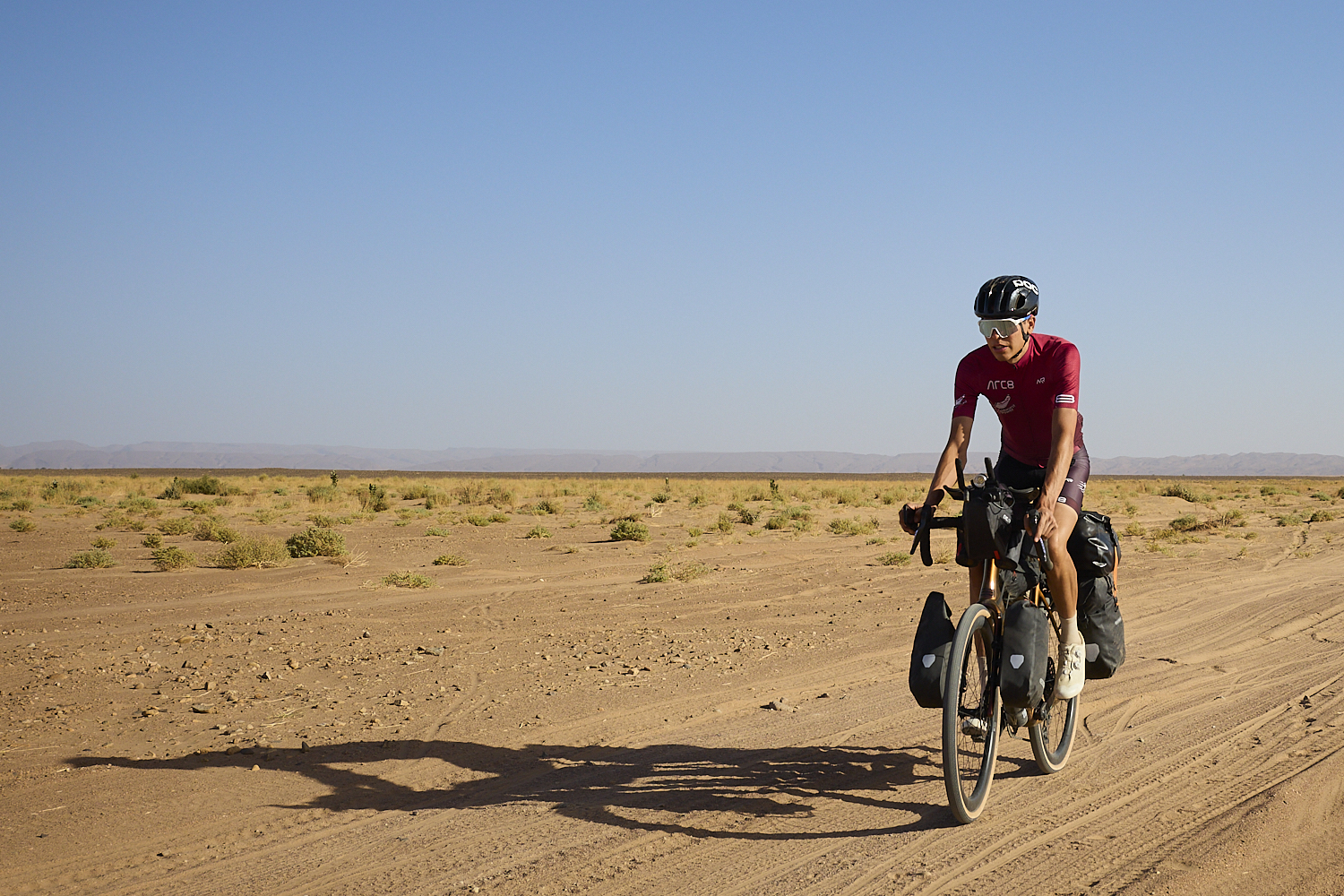
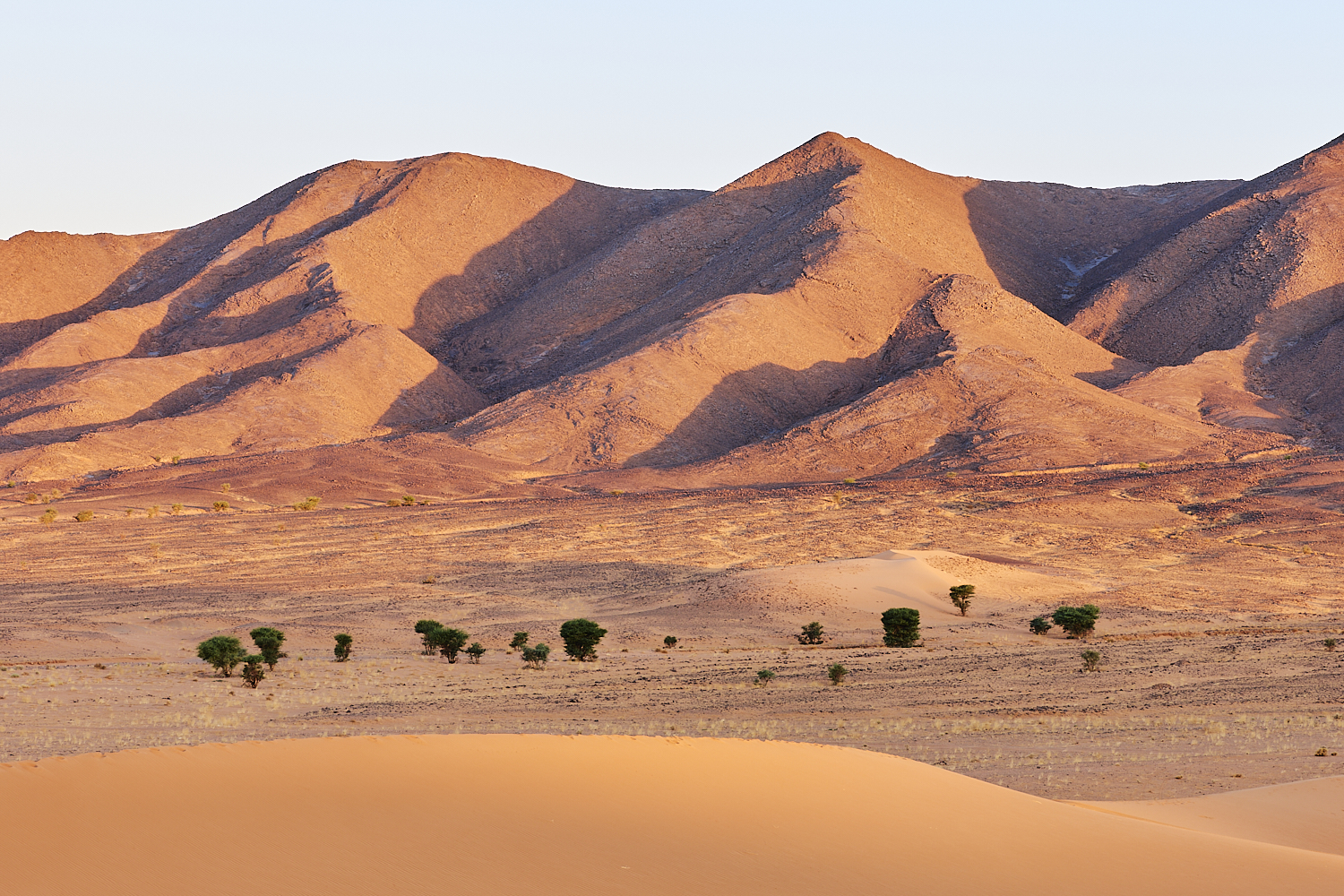
I have already covered more than 100 km on a highway without seeing a single tree or passing through a village. The incredible vastness of the Sahara impresses and fascinates me time and again. For cycling, however, it also demands thorough preparation: the next settlement – at the same time my destination for the day – is still more than 100 km away. It is therefore no surprise that not many cyclists make their way into this region. On Strava – a platform for athletes – I am the first person to have completed this stretch in one go, even though it is the main road from Tan-Tan to the provincial capital Smara in Western Sahara.
With a tailwind at my back, I feel as if I am flying through the Sahara. Even though dozens of kilometers can lie between individual bends in the road, it never really becomes boring. I am far too deep in the flow, swept along by the speed. At an almost unbelievable 39 km/h – at least for me, and with luggage – I barrel southwards. This must be how Tadej Pogačar or Mathieu van der Poel feel during every endurance training ride. I am a little astonished when two dromedaries still overtake me: riding effortlessly on the back of a pickup truck, they move even faster than I do 😉
The following day, I am brutally brought back down to reality. Instead of a tailwind, I now face a headwind – again for a distance of more than 200 km without a single place to stay or get food along the way. After just 40 km, my legs and my head already feel tired. Suddenly, the vastness of the Sahara seems very monotonous, and after several days in the desert I experience – for the first time, at least briefly – the feeling that I have seen enough of the Sahara.
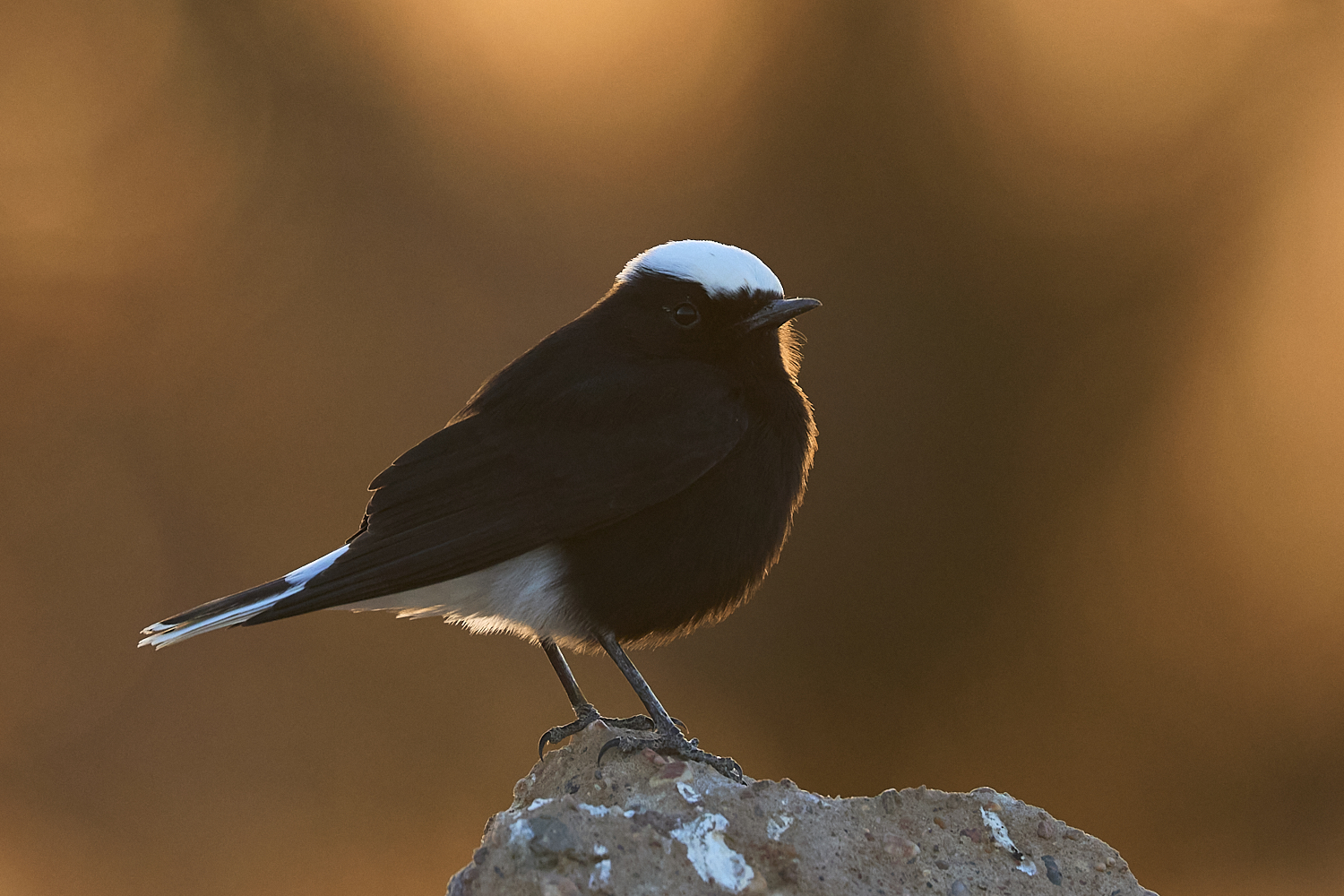
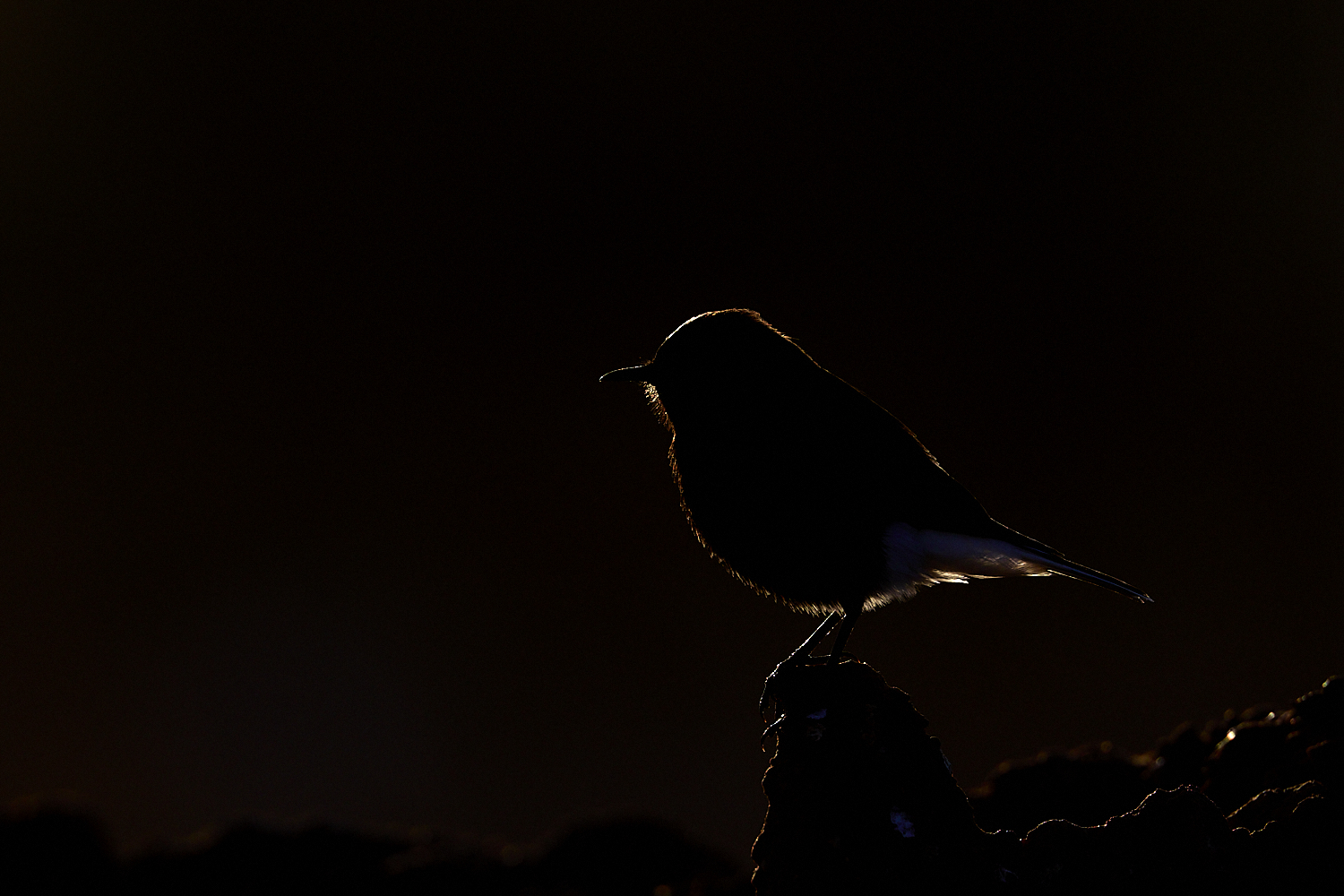
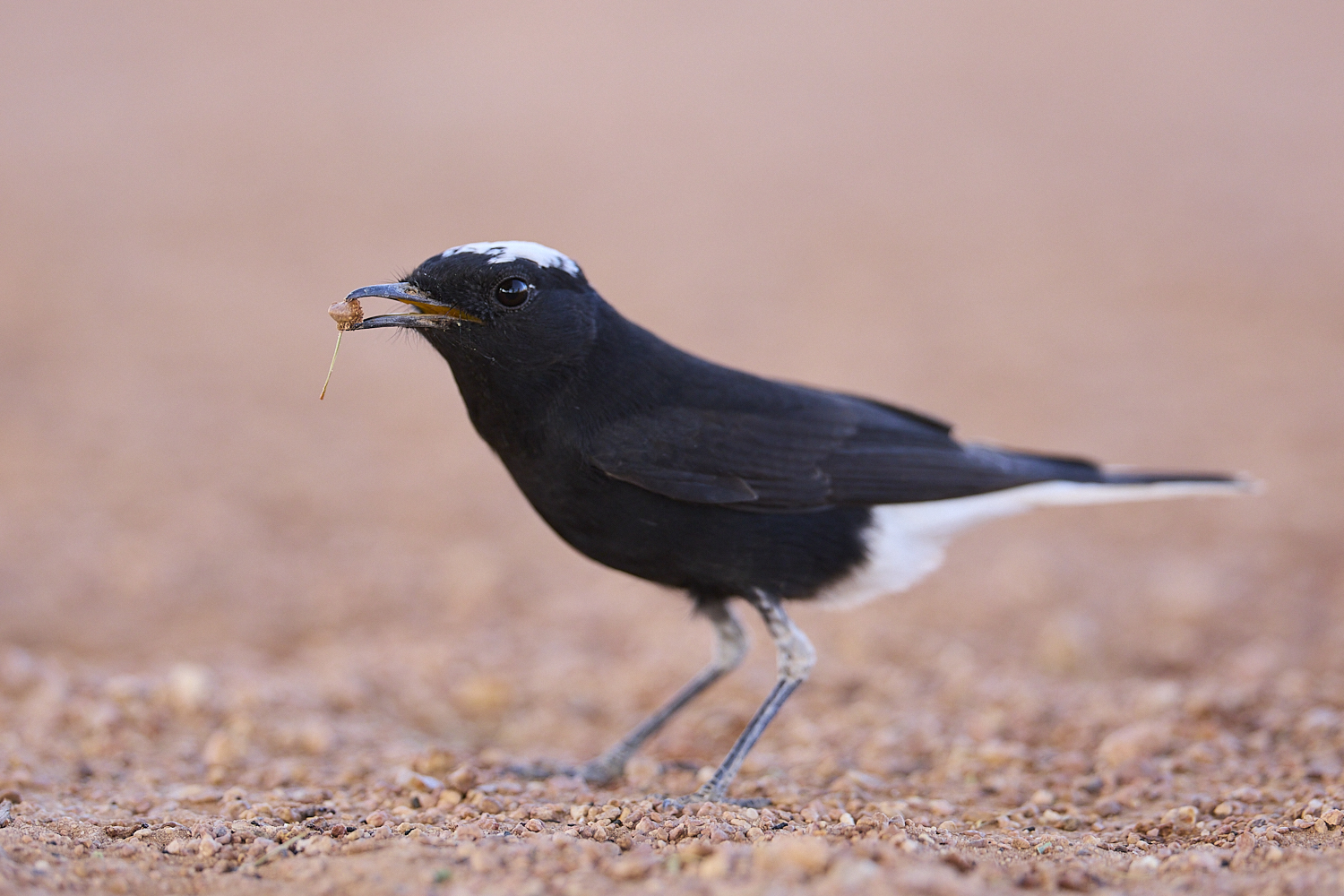
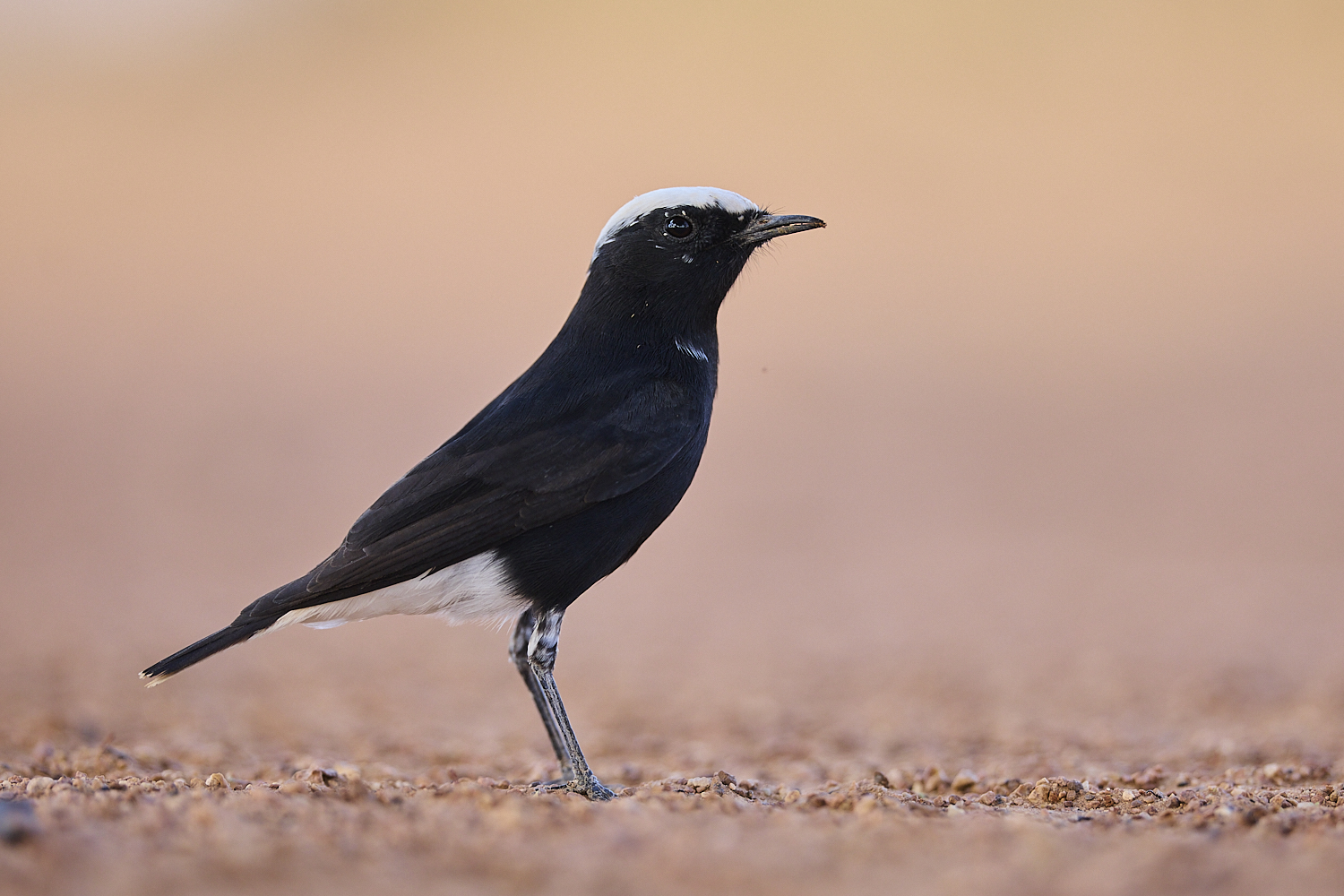
As I battle against the wind, what feels like hours pass without a single bird sighting. When I do spot a bird, it is usually a white-crowned wheatear. Today, however, I definitely have neither the time nor the energy to take photographs. I focus entirely on riding at a reasonably steady pace and somehow making it to Laayoune (Western Sahara) before nightfall. I reach the desert city at sunset, completely exhausted, after nearly ten hours in the saddle – today decidedly more struggle than enjoyment.
In the weeks before, while still in the desert, the white-crowned wheatear has been the bird species I encounter most frequently. Getting these birds in front of the camera, however, is a completely different story. Almost as if by a display effect, they seem to disappear every single time as soon as I take out the camera – or even just think about photographing them. After countless attempts, I finally get lucky once and find a reasonably photogenic individual.
However, even this individual heads off into the vastness of the Sahara Desert after just a few images.
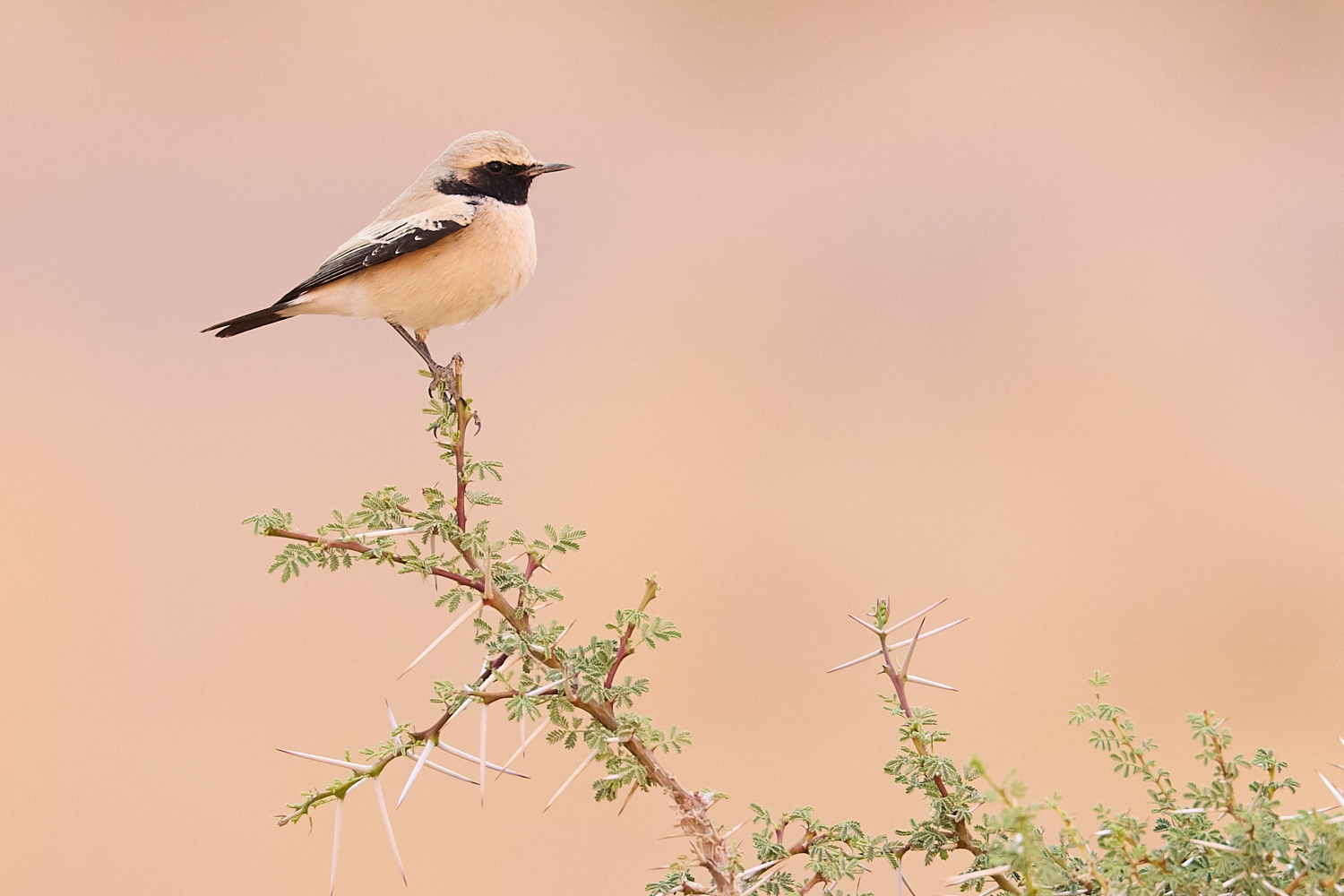
As long as acacia trees are growing, the landscape has never really felt monotonous to me, despite hours of riding between individual towns. Perhaps this is because I had previously only known acacias from wildlife documentaries and therefore always have the feeling that I might soon encounter a giraffe or something similar. The acacias not only provide shade for dromedaries and donkeys, but also for tired cyclists like me. While I am resting in the shade of an acacia, a Desert Wheatear suddenly lands next to me. It has its eye on the ants and other insects (and larvae).
It keeps coming by to get a snack.
If even photographing what feels like the most common bird in the desert – the Desert Wheatear – has been a challenge, how on earth am I supposed to succeed with the rarer species? With no great expectations, I therefore set off into the desert, far away from paved roads, in search of subjects.
Sand dunes may be beautiful to the eye, but they make cycling difficult to impossible. Fortunately, the Sahara in Morocco is more of a rocky desert, which, however, still poses quite a challenge for the tires (and all the equipment).
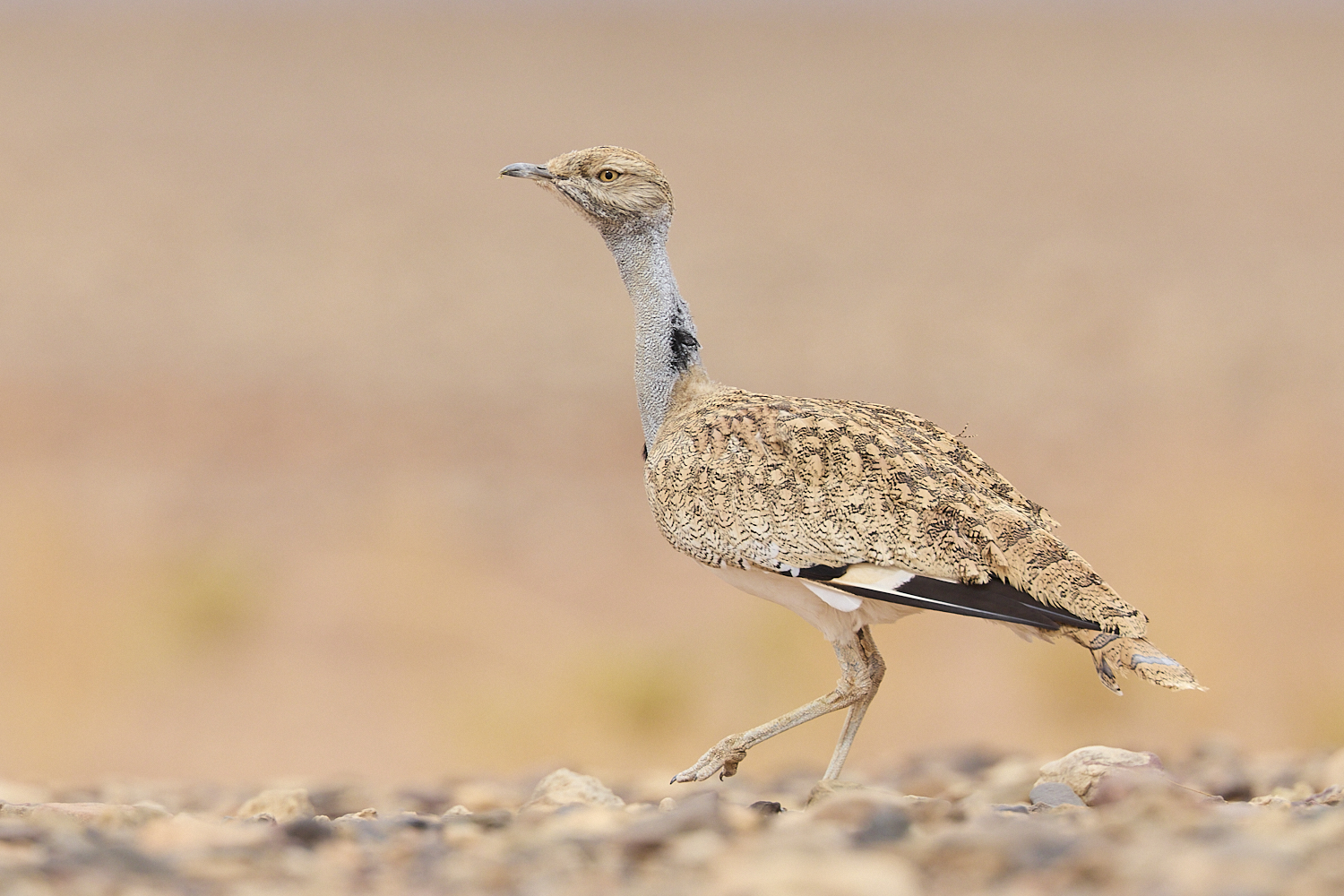
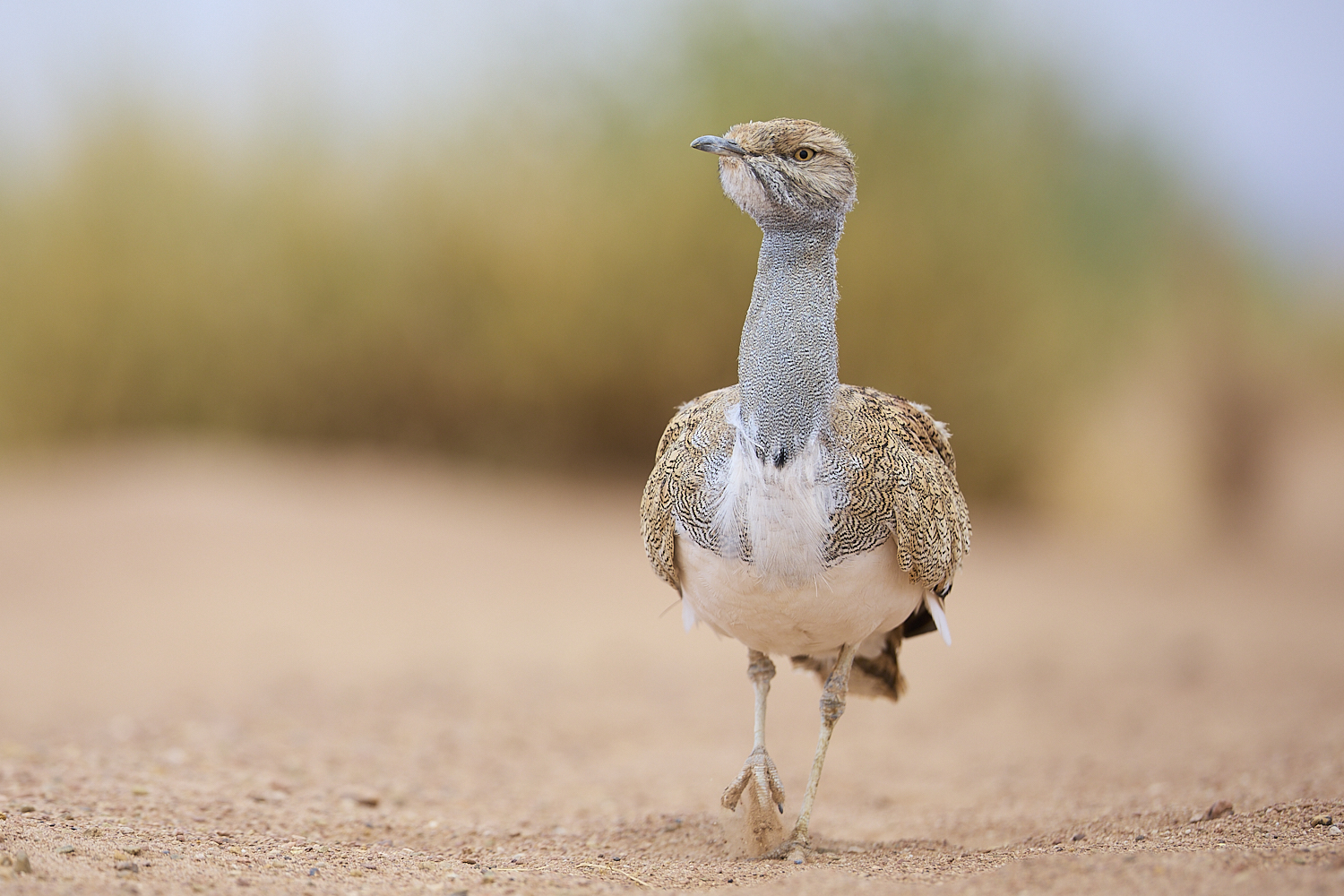
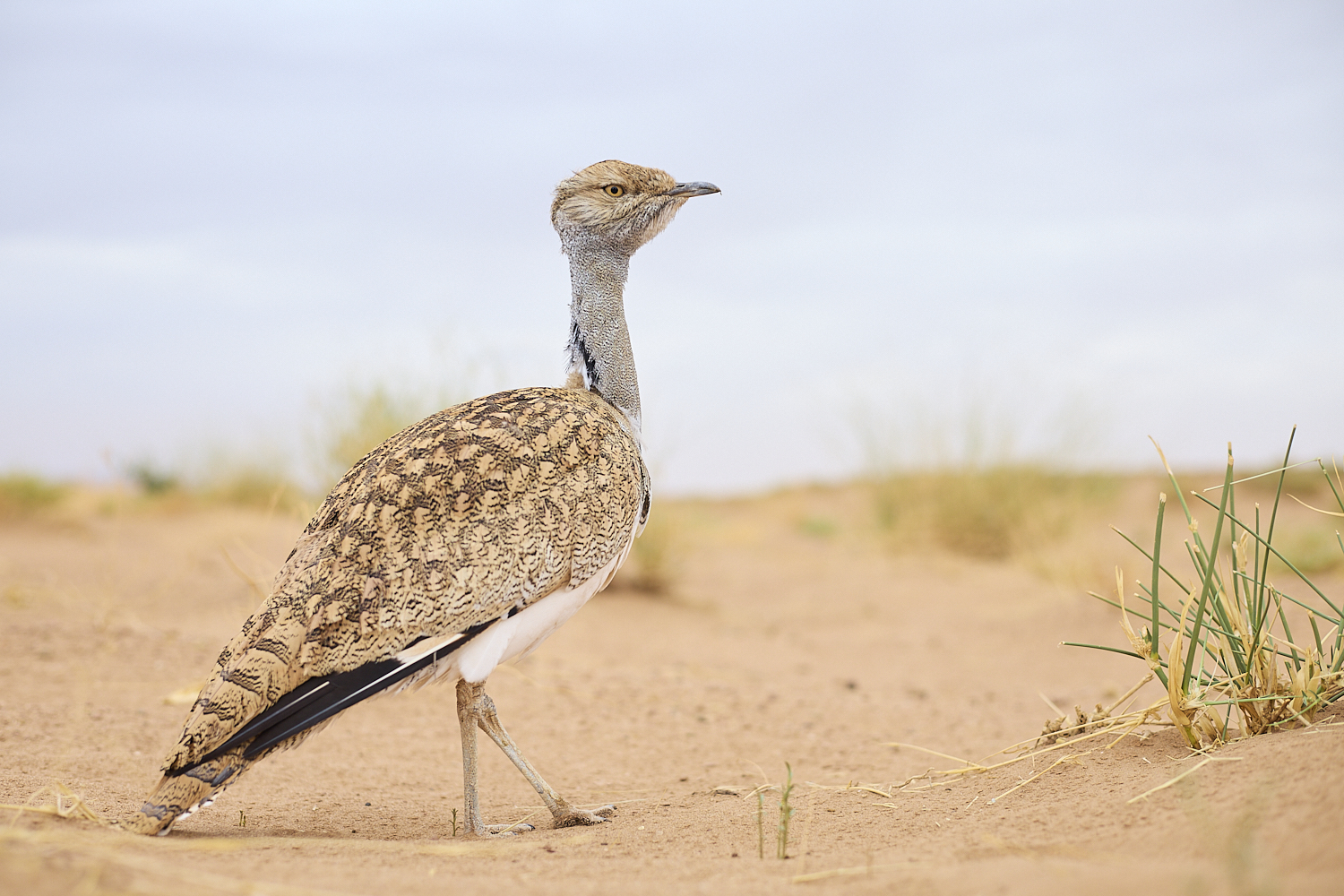
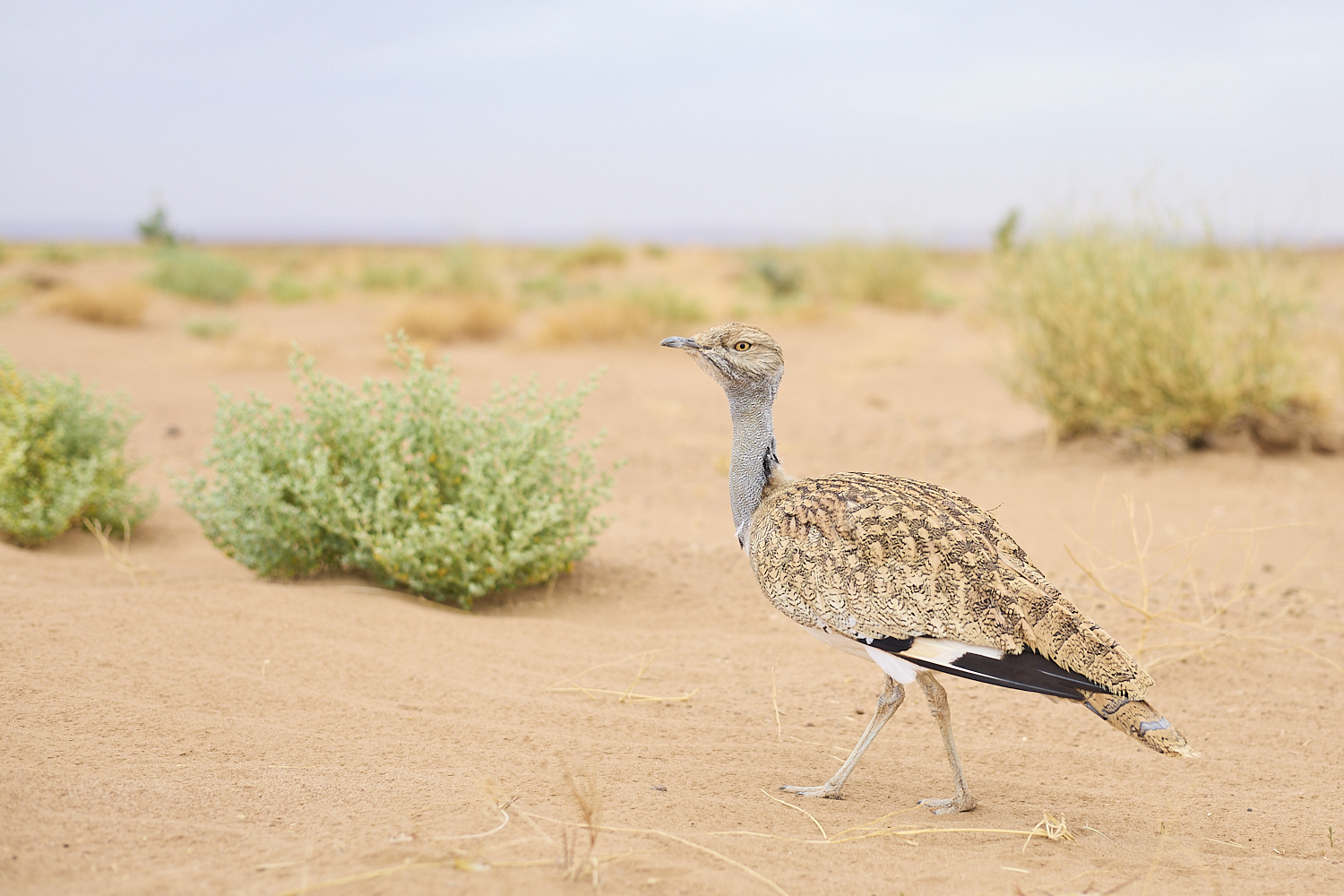
Suddenly, a pile of stones seems to be running away in front of me – an African houbara! If only I could photograph it! Due to hunting and habitat destruction, their populations in Morocco have declined sharply. They now occur only in fragmented populations far from civilization and roads. Despite my excitement, I try to keep a cool head and make a wide detour around it, keeping a crouched position as much as possible. I lie down on the rocks and wait. To my delight, it continues walking in the same direction, allowing me to photograph it from the side.
As soon as it is far enough away, I stand up and once again walk in a wide arc around it. This works surprisingly well; undisturbed, it continues on its way.
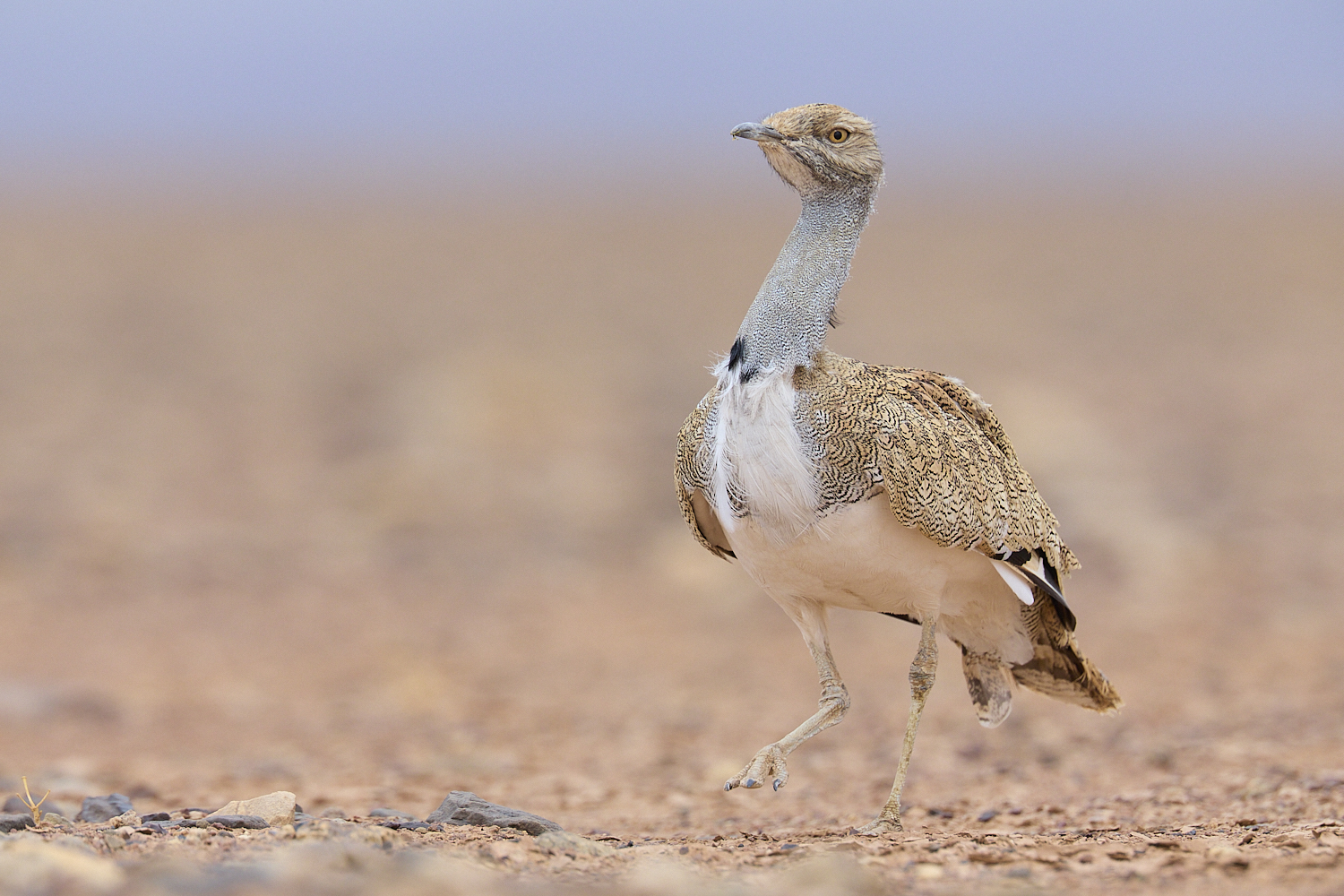
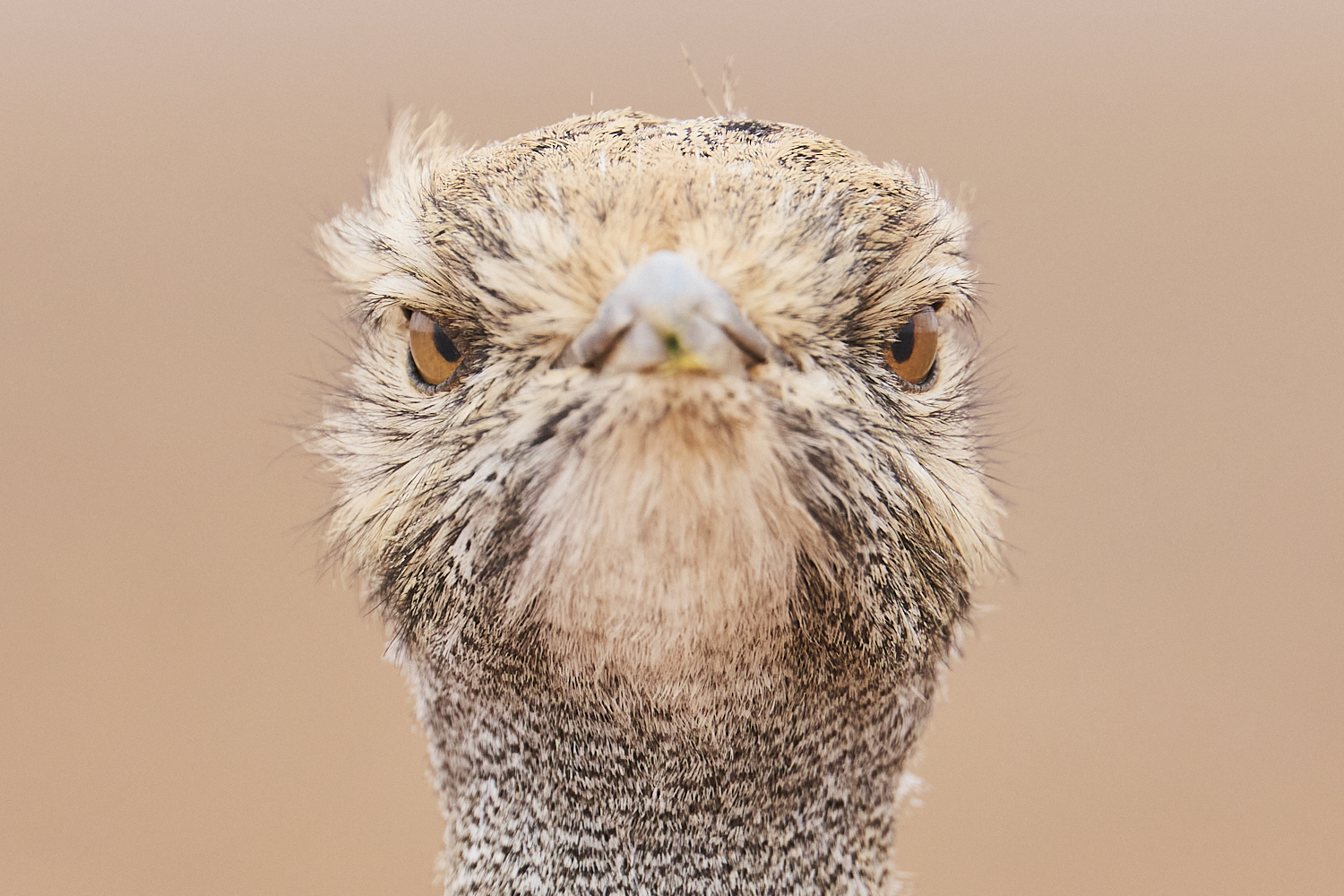
So I repeat the game once more and this time lie directly in its path. Somehow, it seems to have lost its fear and even appears curious. What is this strange object lying in its way? With a slightly stern look, it sizes me up.
I can hardly believe my luck to have found an African houbara that is almost posing like a model.
After several thousand photos with the telephoto lens, I even dare to switch to the wide-angle lens.
From a distance, the African houbara is perfectly camouflaged, its plumage blending in with the stones and sand.
Absolutely thrilled – as one would be after such an encounter – I try in the following days to find the houbara again. I would have loved to photograph it once more at sunrise or sunset in the golden light. By now, I actually know where in the vast expanse of the desert I should look for my subject. Yet, for several days, I find nothing but traces of the houbara. What luck I had on that first day!
Instead, I come across a desert wheatear, posing in the morning sun.
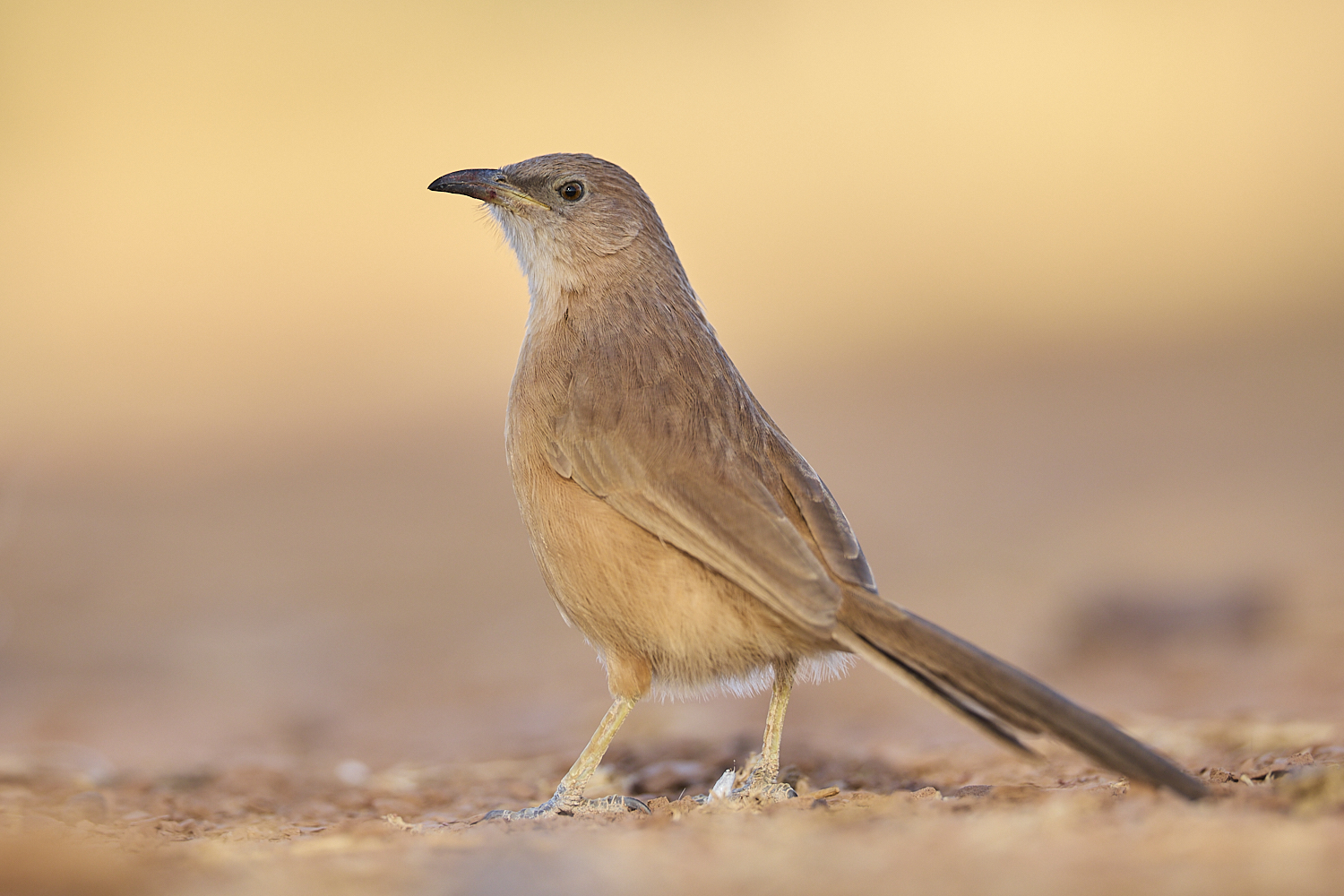
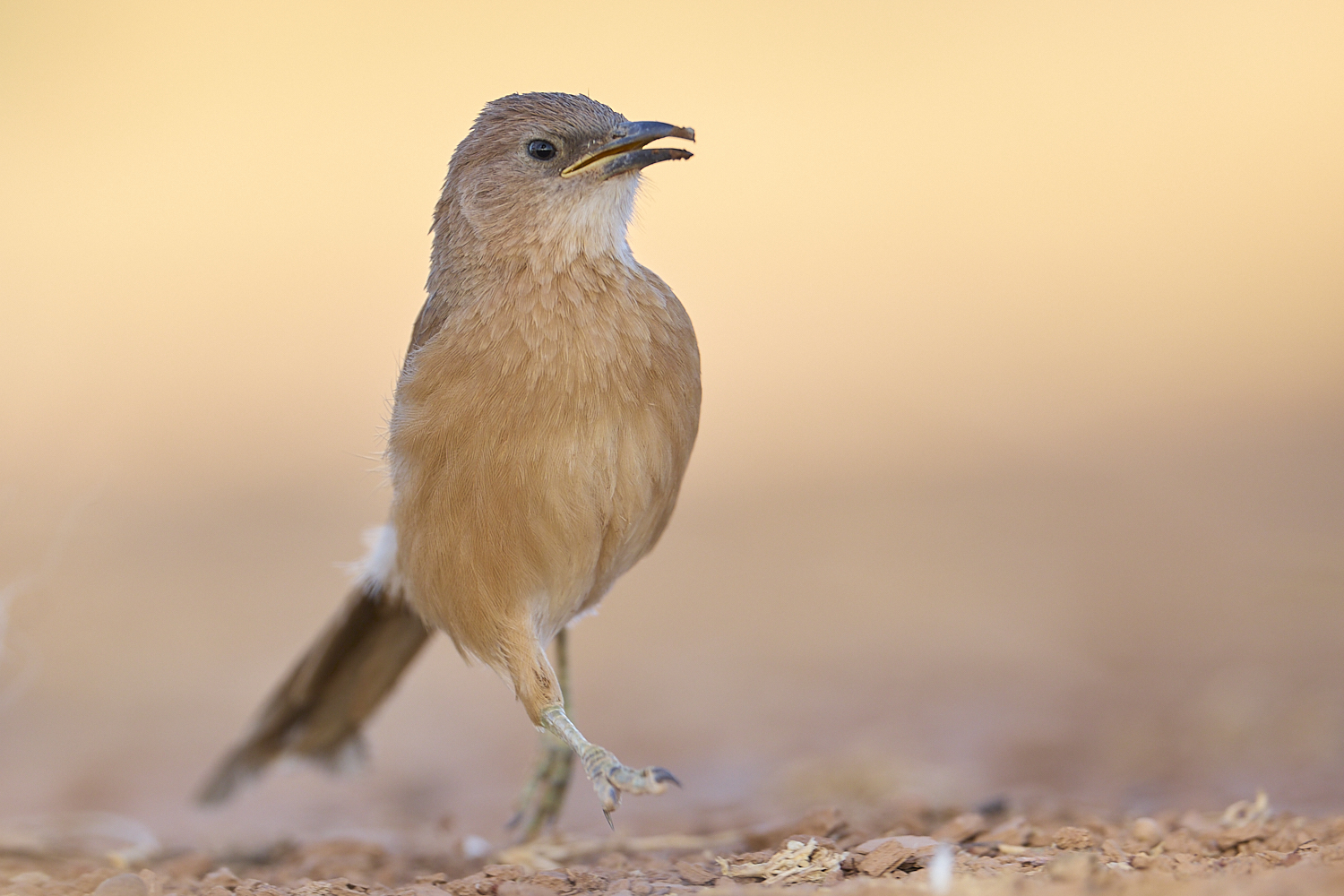
While I’m once again resting in the shade of an acacia tree in the morning, I’m suddenly pulled out of my drowsy state by the chattering calls of the fulvous warbler. They come flying in from several directions at once.
It doesn’t take long before the babblers are bustling all around me, searching for something to eat.
The excitement is short-lived, as the fulvous babblers soon move on.
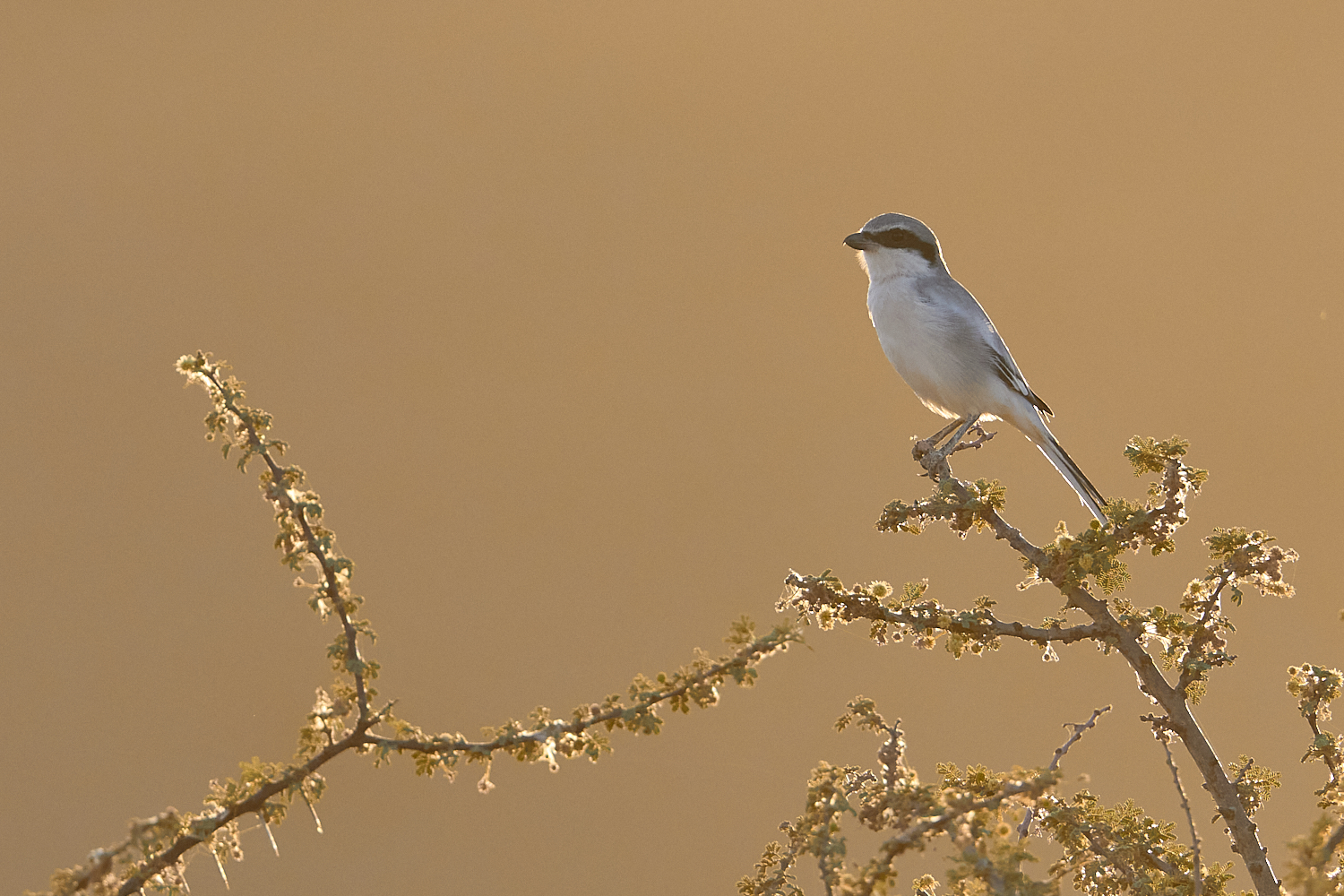
The great grey shrike, on the other hand, takes things much more leisurely. While cycling, I repeatedly spot the shrike perched atop a small acacia or bush. Its color and posture make it recognizable from a distance. Some individuals simply remain still on their perch as I ride past. However, they are not easy to photograph either – once I point the lens at them, they usually vanish quickly.
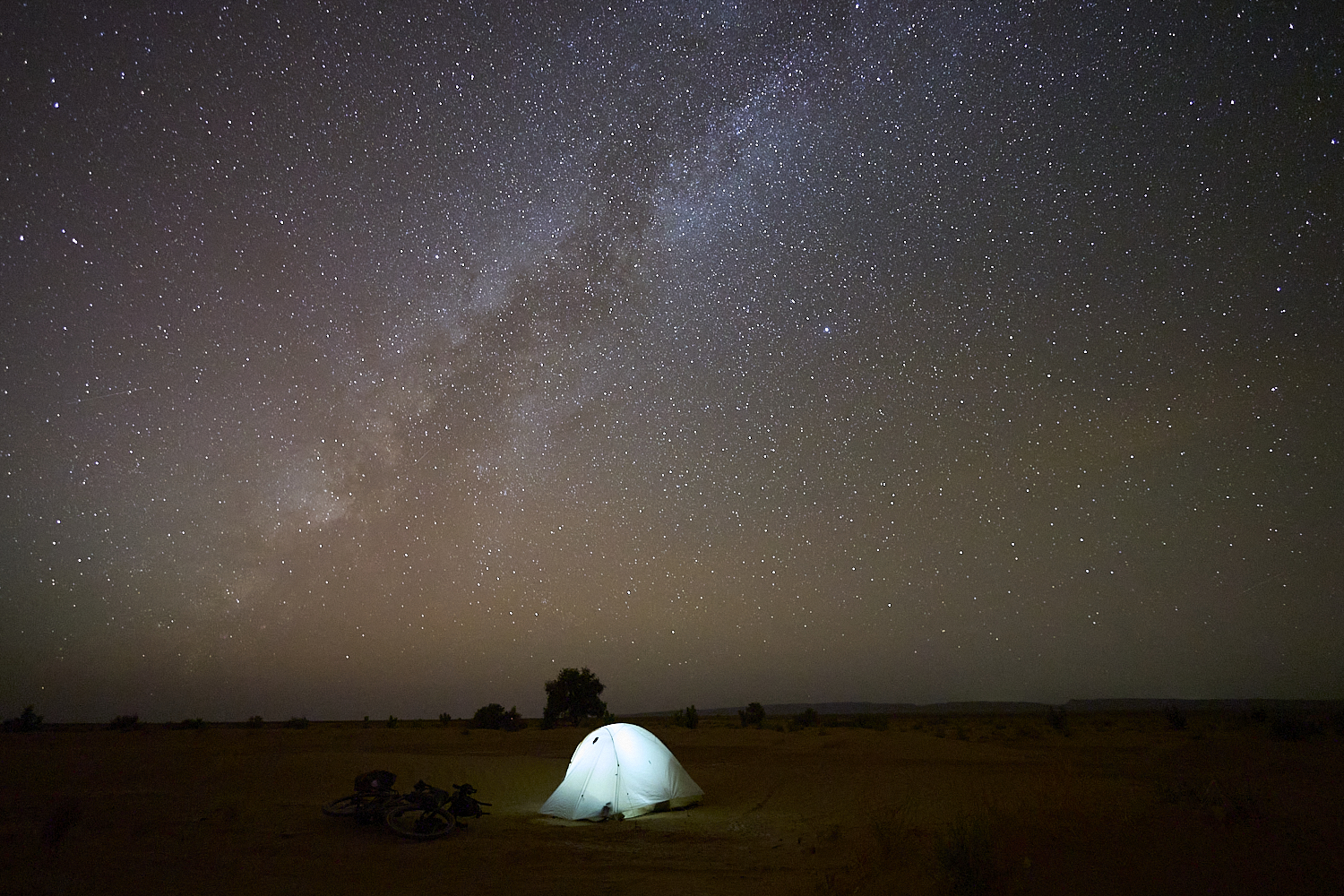
Even though I would have loved to photograph the African houbara again, I was at least able to capture some other bird species and enjoy a few nights camping in the Sahara. The silence of the night, far from civilization, and the sparkling stars have something magical about them.
After my unsuccessful attempts with the African houbara, I returned to the paved road. The long hours of cycling in the desert, without passing through a single village, will stay with me for a long time. Traffic was also very sparse, as one would expect given the low population density. So most of the time, I had the roads to myself. And when I did encounter a car, it was not uncommon for the driver to wave at me and give a thumbs-up. That always brought a smile to my face, even though I was already quite tired from the effort.
Leave a reply