
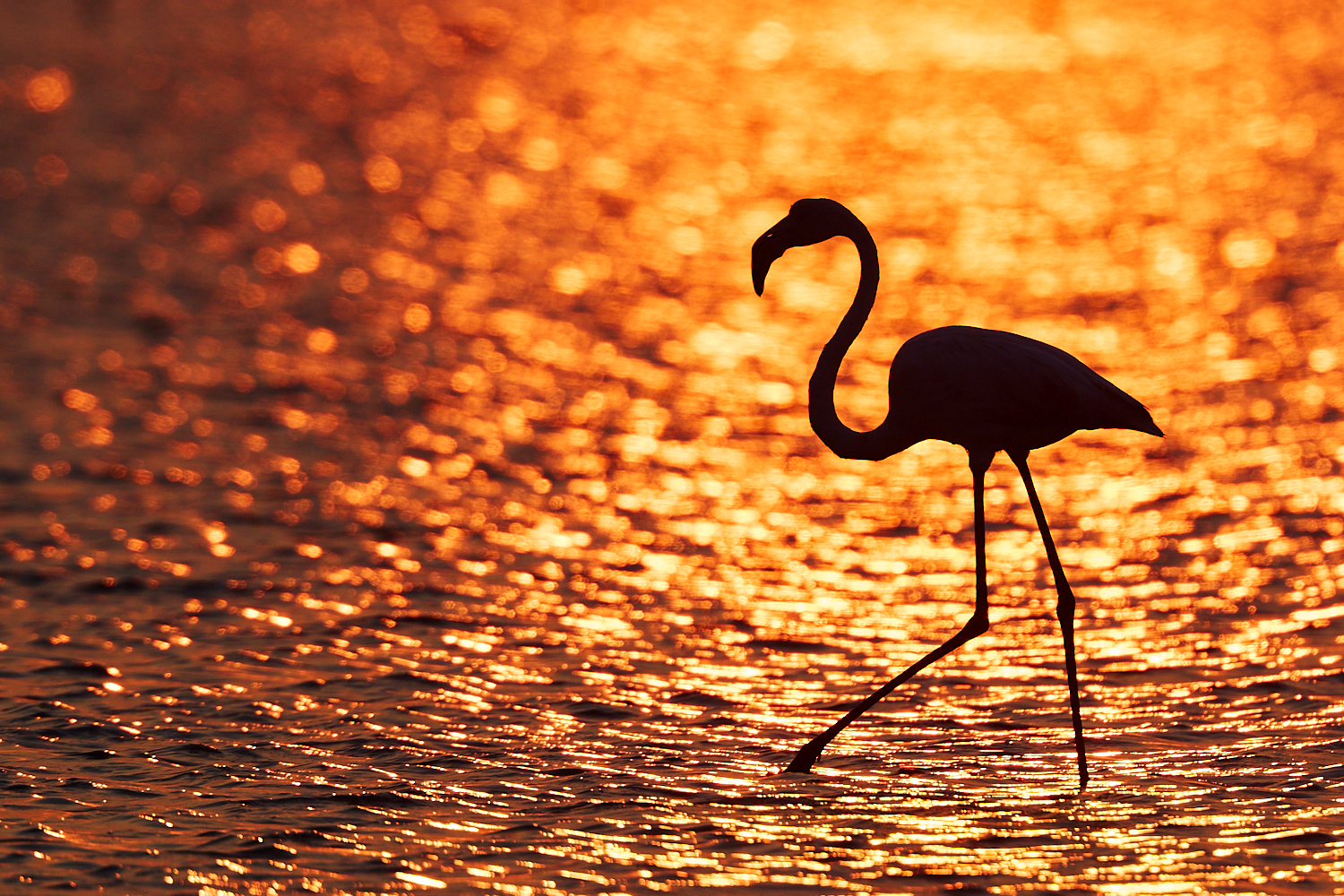
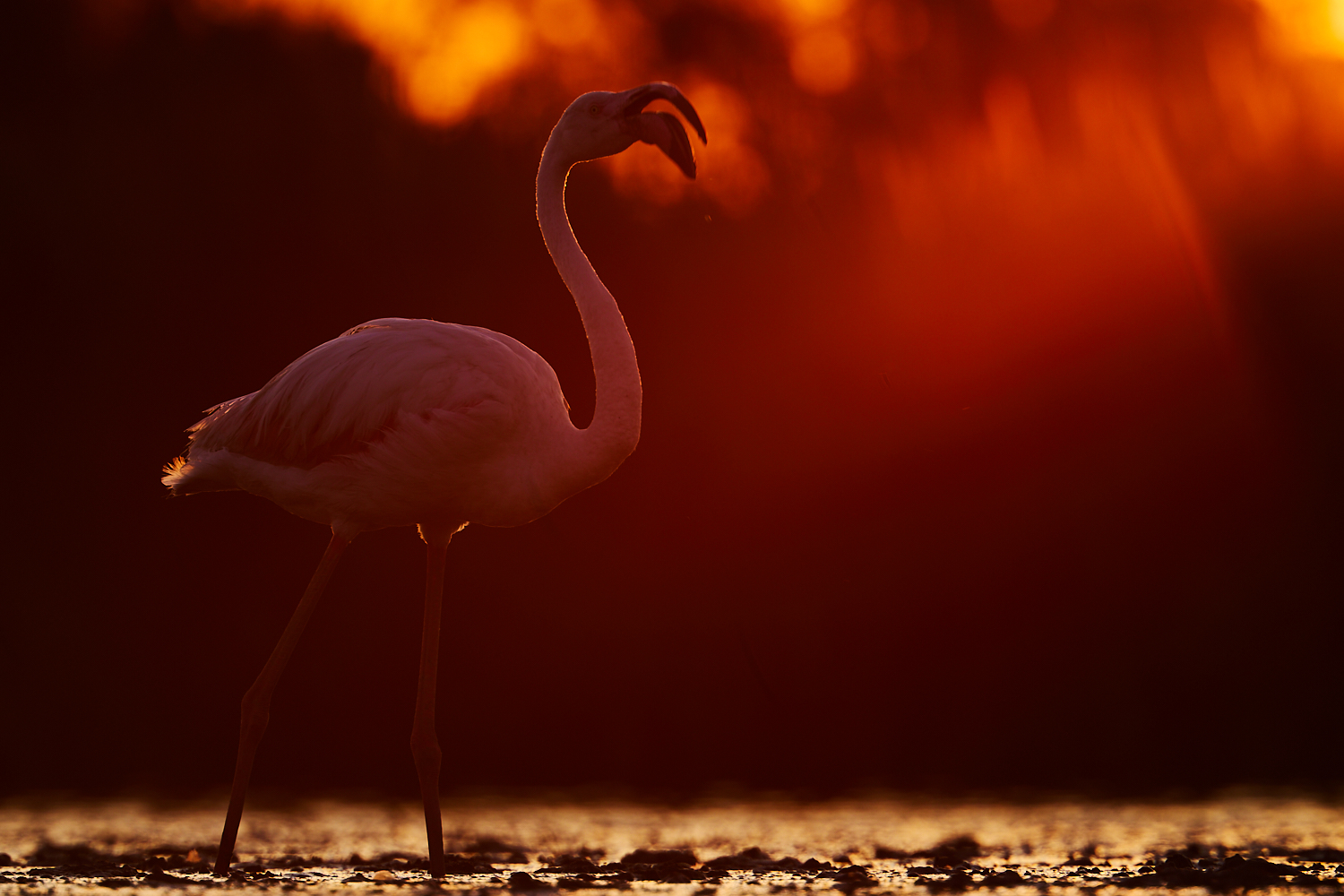
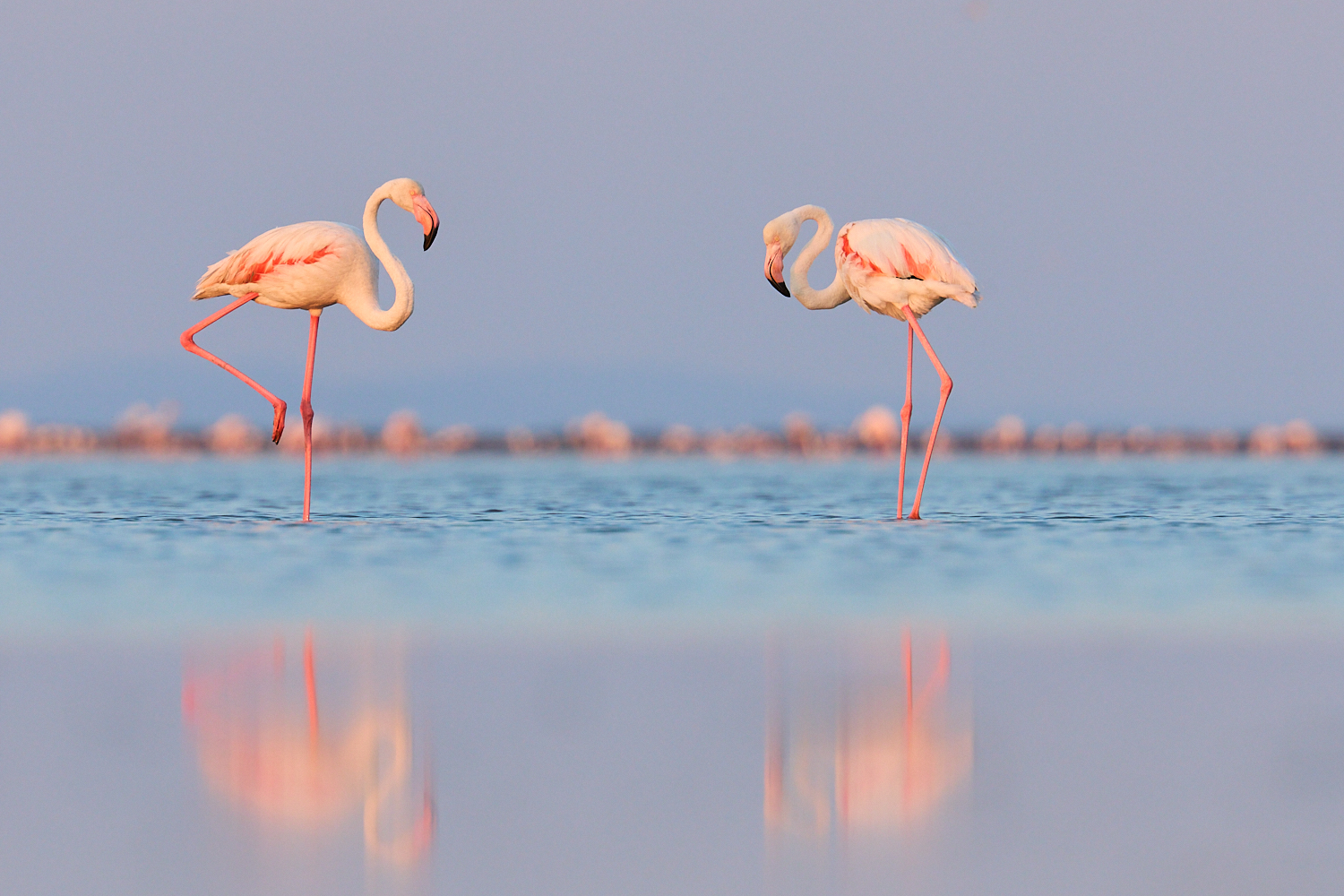
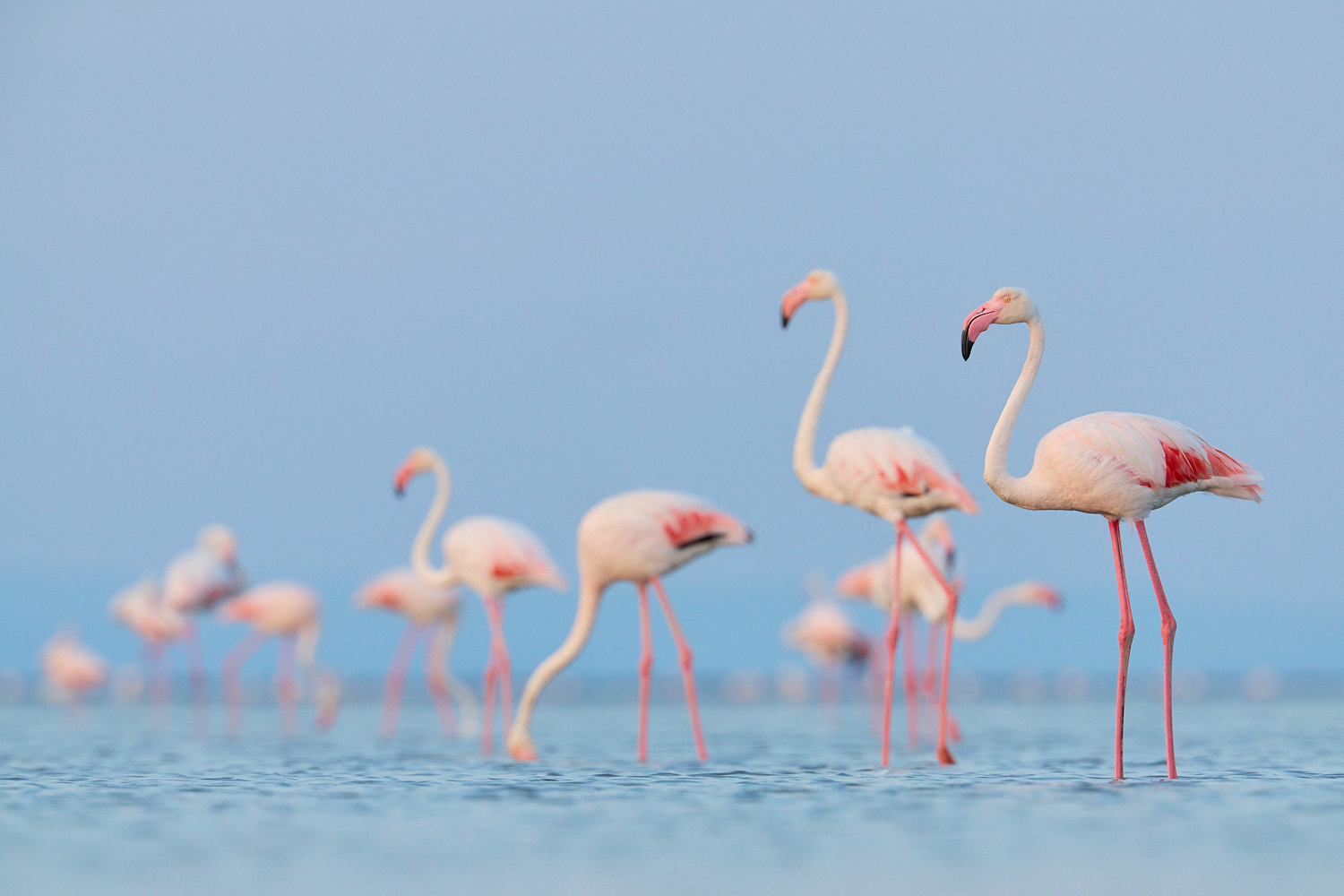
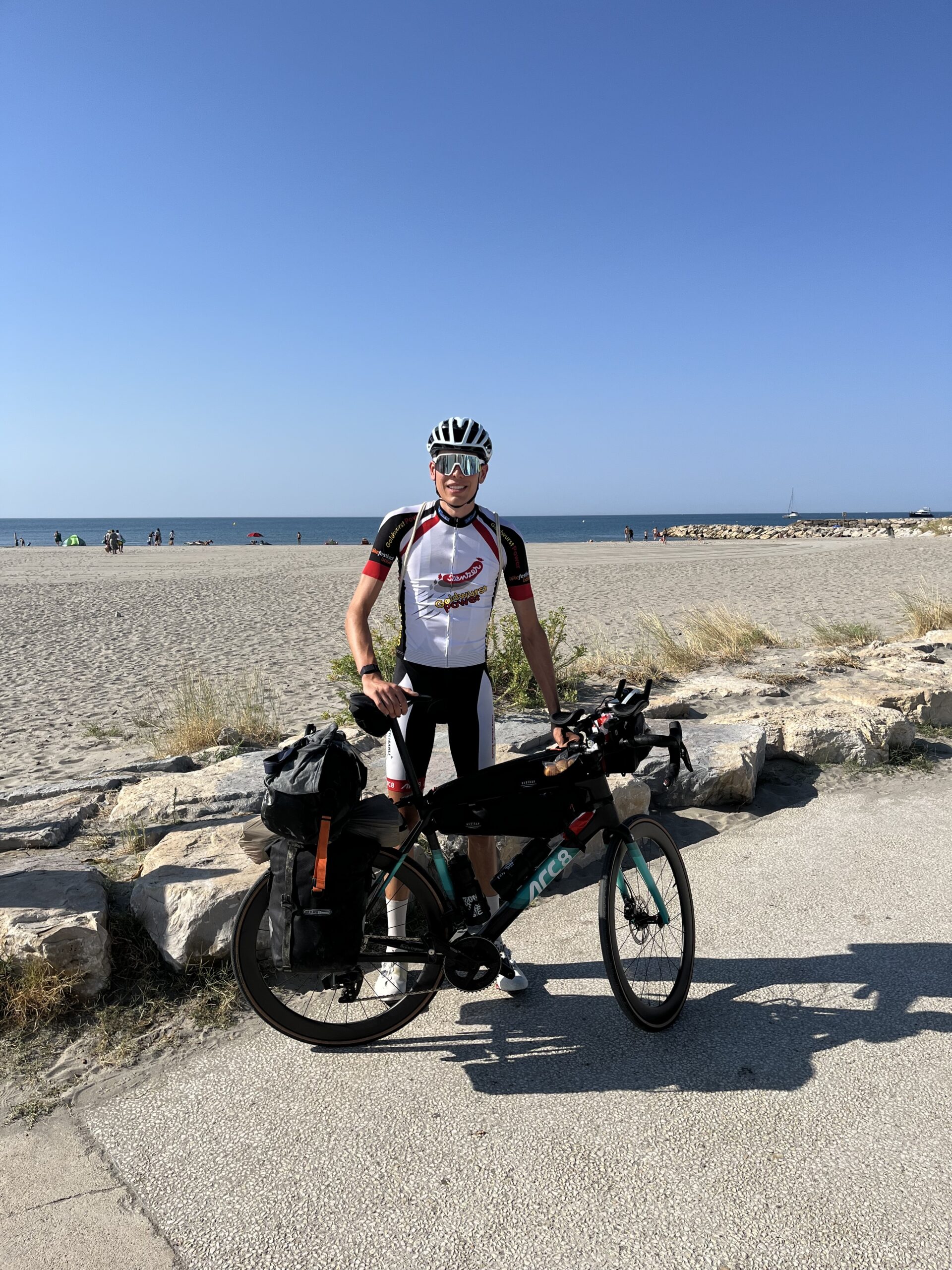
The sun beats mercilessly down on the asphalt, while the olive trees and cypresses provide a distinctly Mediterranean atmosphere. With my arms resting on the aero bars and the sound of the carbon rims slicing through the air, I almost feel like I’m flying through southern France as in the Tour de France – and that’s despite carrying 30 kilograms of gear on the bike. For once, the wind is coming from the right direction, pushing speeds well above 30 km/h on the final stage toward the Rhône delta and the Mediterranean. Completely in the flow and dreaming of flamingos, I decide to keep going as long as possible without stopping. I pass a supermarket 70 km from the finish (and 150 km from the start) without hesitation. Surely there will be another one in the next hour, I think.
My flow state continues all the way to the next and last larger town before the destination. Since there is again no supermarket along the route and I don’t want to stop, I ride on with a good mood, ready to tackle the last 40 km. But hardly have I left the town when the strain of the stage begins to show. After more than six hours at an average of 240 watts, I realize I’ve eaten and drunk a little too little. The last 30 kilometers drag on and become a real challenge. At least I barely manage to maintain 240 watts into the town, finishing with an average speed of over 30 km/h over seven hours of riding. This was the highest average (watts and km/h) of the tour, cycling from home to the Mediterranean with all my photo gear in order to photograph “CO2 neutral” (aside from the extra calories required).
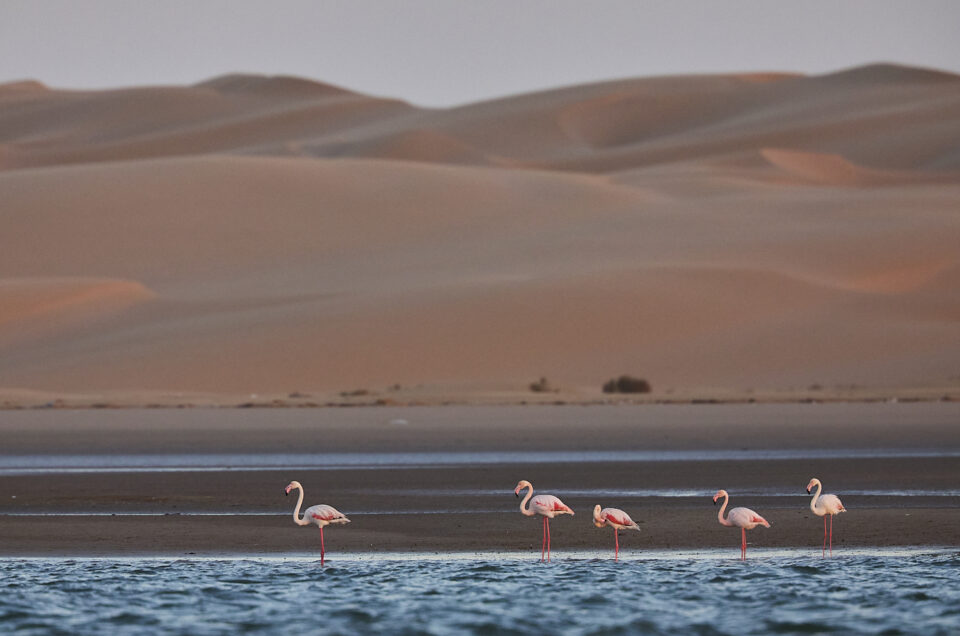
Completely exhausted, I am disappointed to find that not a single halfway decent restaurant is open, so I head to the next supermarket and work my way through the sandwich selection. I spend a full 30 minutes eating in front of the store before I’m ready for the leisurely remainder of the ride. Now it’s time to switch from training mode to safari mode. It doesn’t take long before I hear and locate my subjects. As the sun slowly sinks, I peel off my sweaty cycling clothes and slip into my camouflage gear. I slowly try to creep closer to the flamingos and get into a low position.
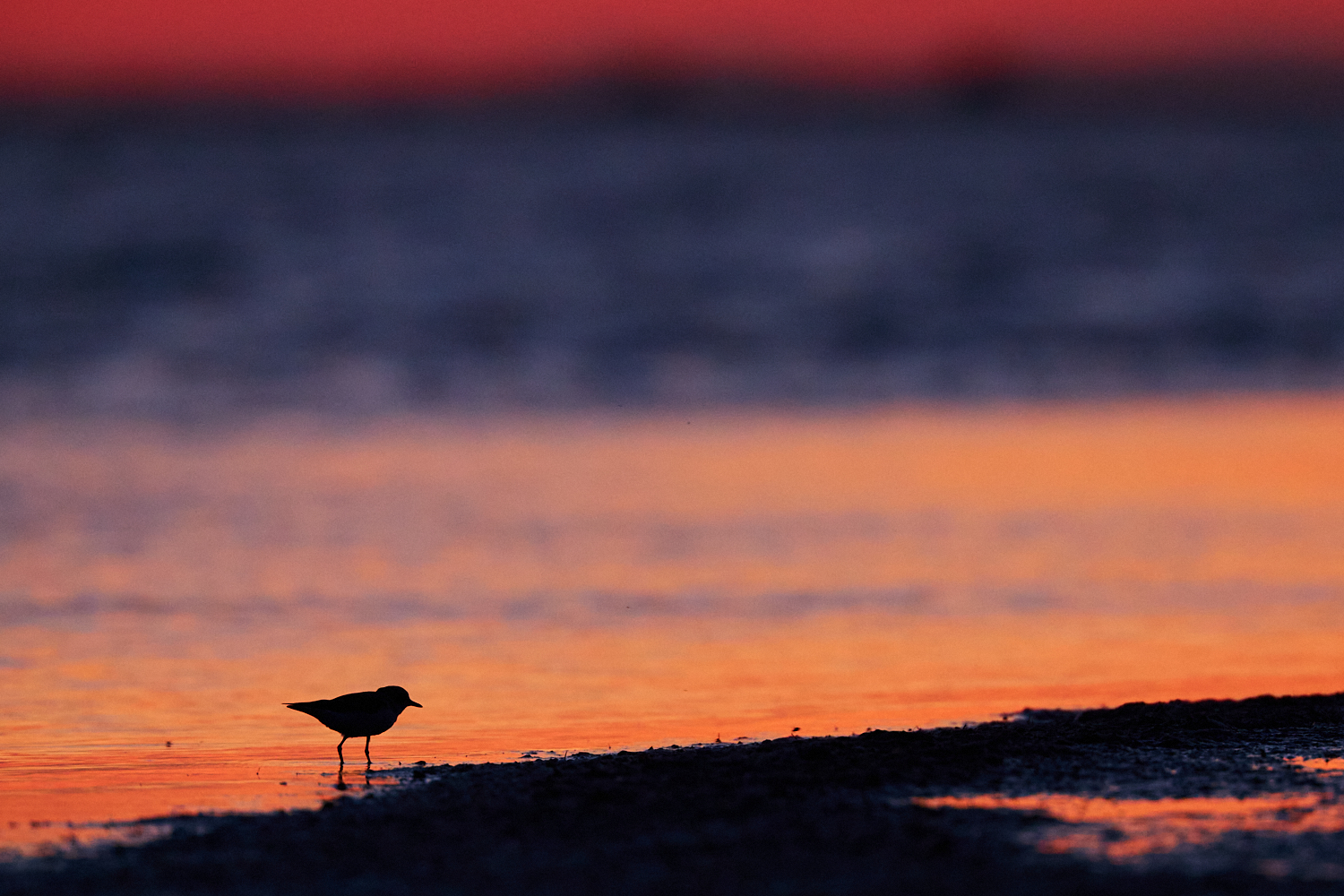
Then, suddenly, I startle. My thigh muscles cramp violently, almost taking my toes with them. Of course, the flamingos have long since noticed me and, despite my obviously weakened state, keep a respectable distance. Their chatter almost sounds like they’re laughing at my incompetence. Tired, I watch the sun steadily sink toward the horizon. By sunset, I have barely any photos on the memory card – I could have ridden slower without missing anything. Just before darkness falls, a little ringed plover lands nearby, allowing me to get at least a few shots.
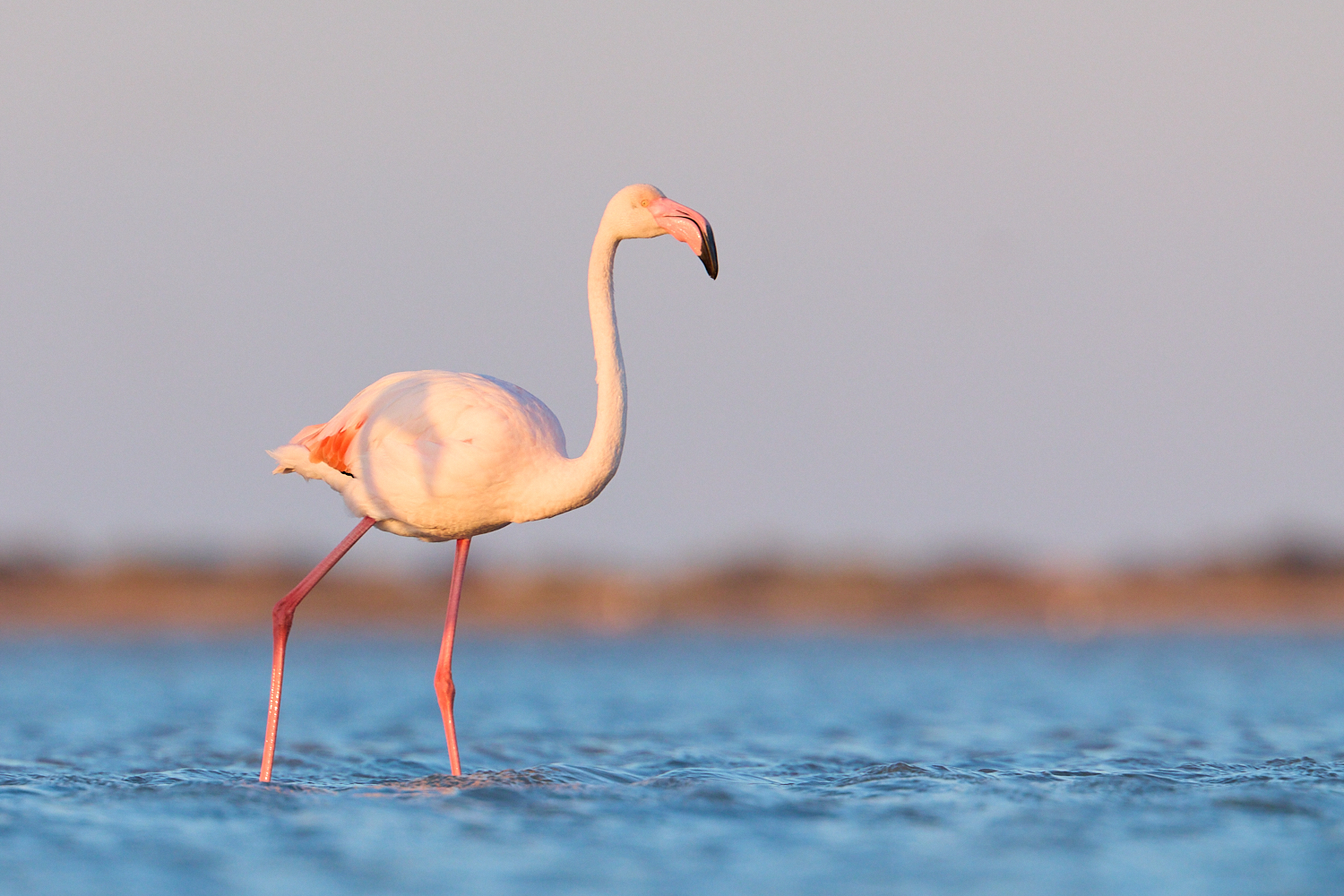
Early in the morning, I try again at the same spot and lie in wait: a new day hopefully brings new opportunities. Without cramps, I can wait much more relaxed, and above all, the flamingos don’t seem to notice me. A few hours later than planned, I finally get the first flamingo shots of the tour. Can you spot the second flamingo head in the picture?
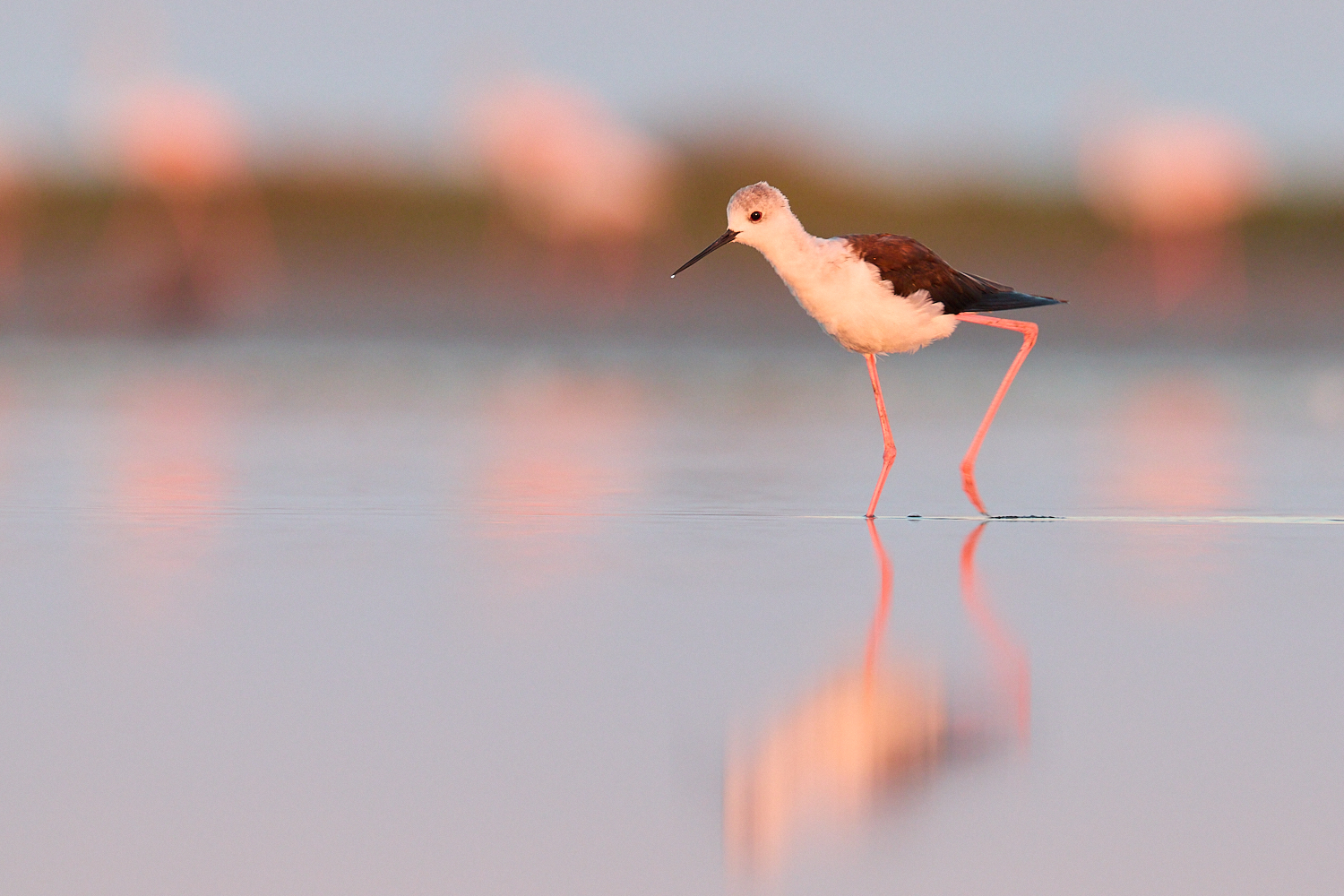
Even though I primarily wanted to devote my time in the Camargue to the flamingos, they are a bit reluctant over the next few days. Usually, it’s just a small thing that’s missing, but nothing seems to work perfectly. In return, other birdwatching subjects put on a show, like this black-winged stilt with the pink flamingos in the background.
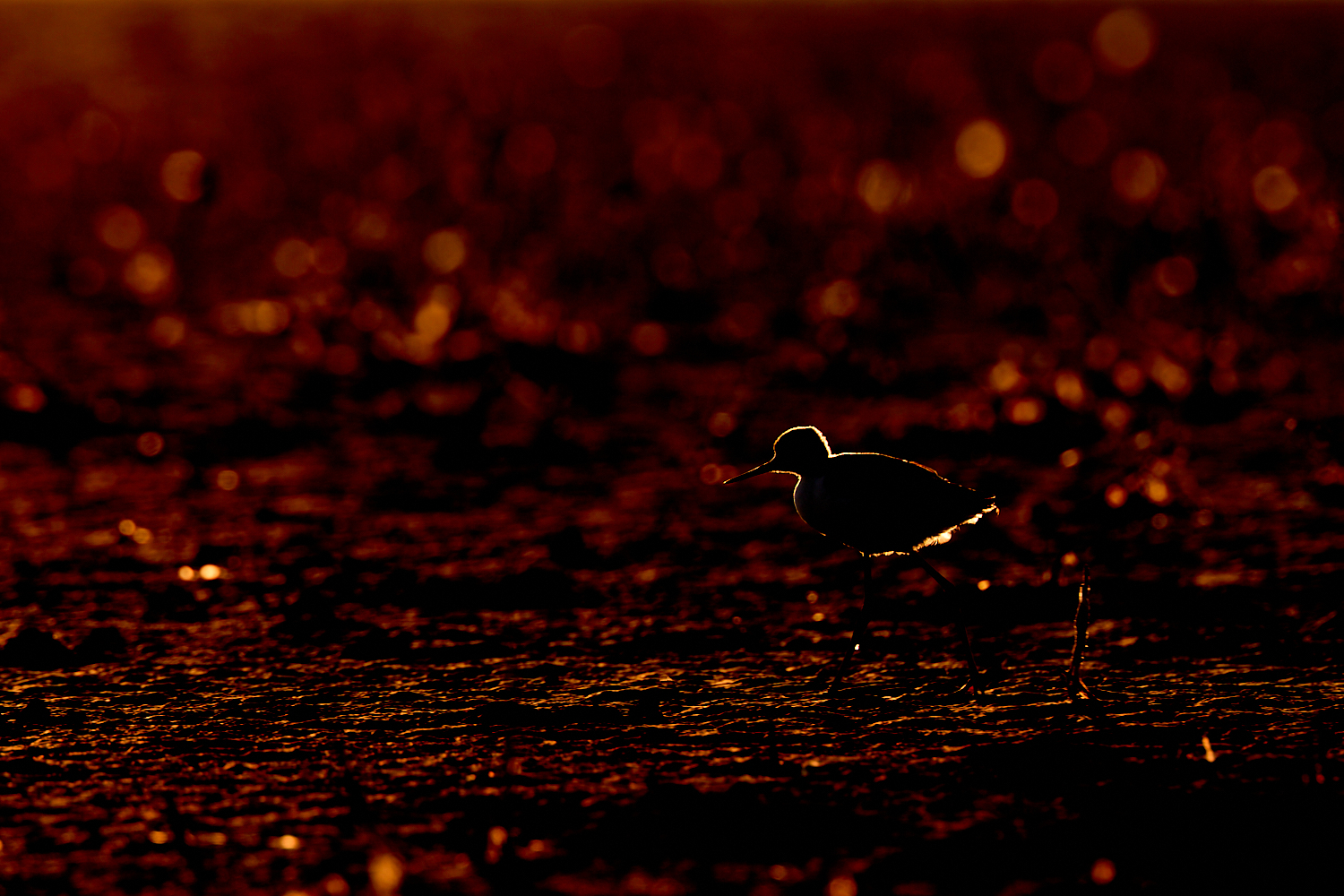
For most of the young birds, I’m a bit late in early August, and the chicks are already almost as large as their parents, as is the case with the black-winged stilts. In the evening light, I try to capture the glow around their plumage. With these lively little fellows, it’s anything but easy, as they can leave the narrow area with the backlit reflections in seconds. Moreover, they prefer staying in the shallow water rather than on the mudflat.
At first, I was already happy that, when the flamingos failed to appear, I could at least photograph the stilt family repeatedly. However, I had underestimated the flying skills of the juveniles. The next day, they are already in a different, less accessible spot.
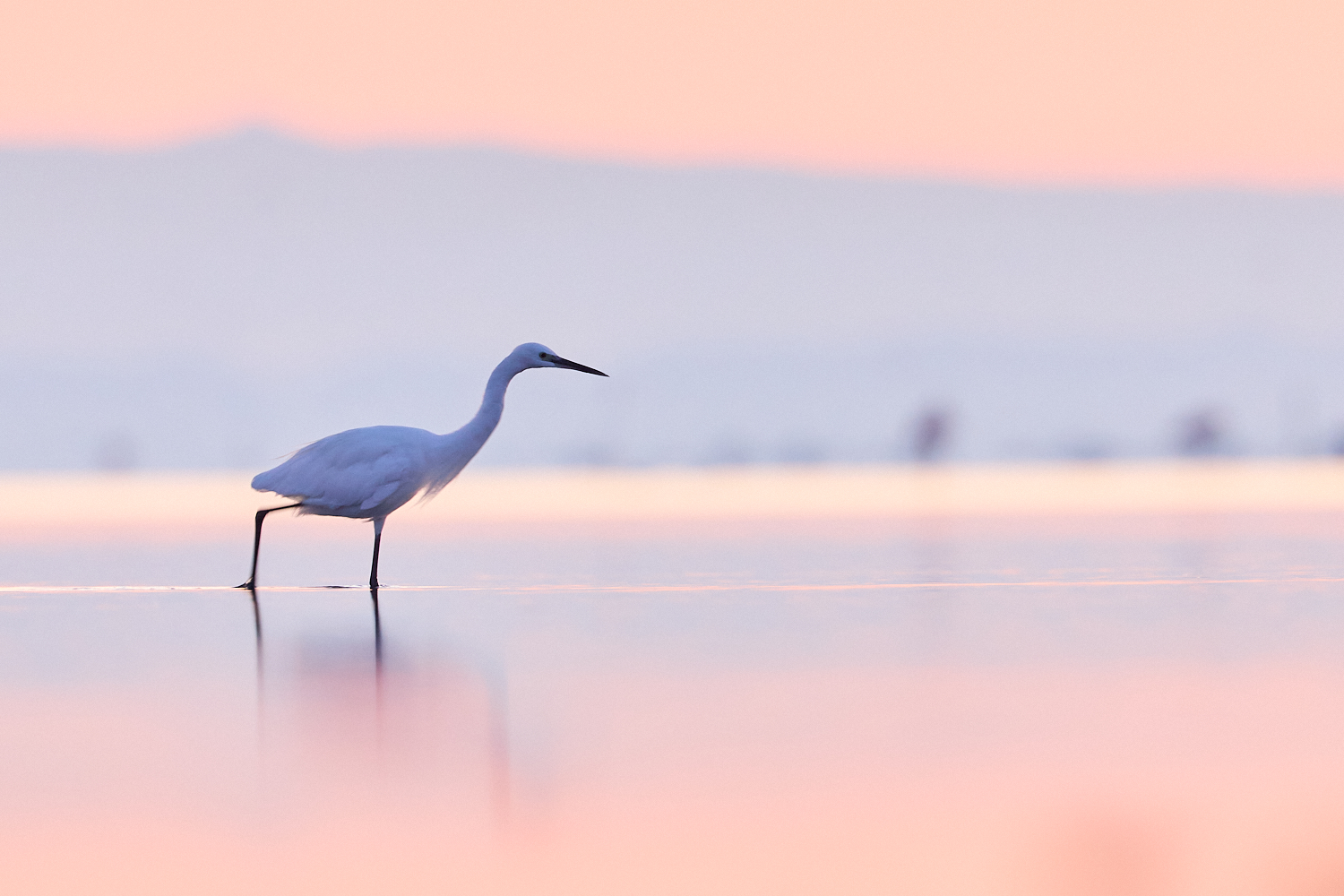
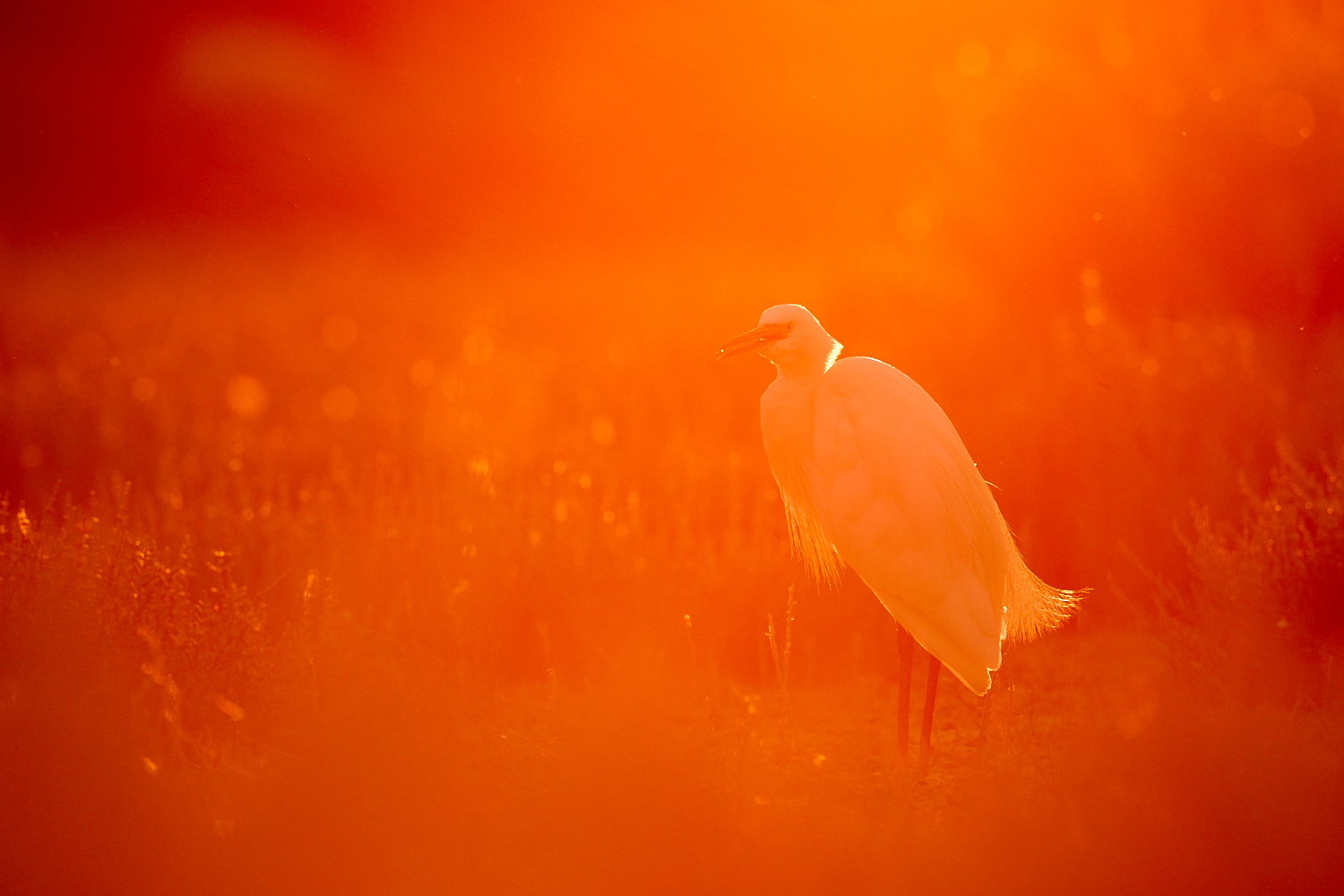
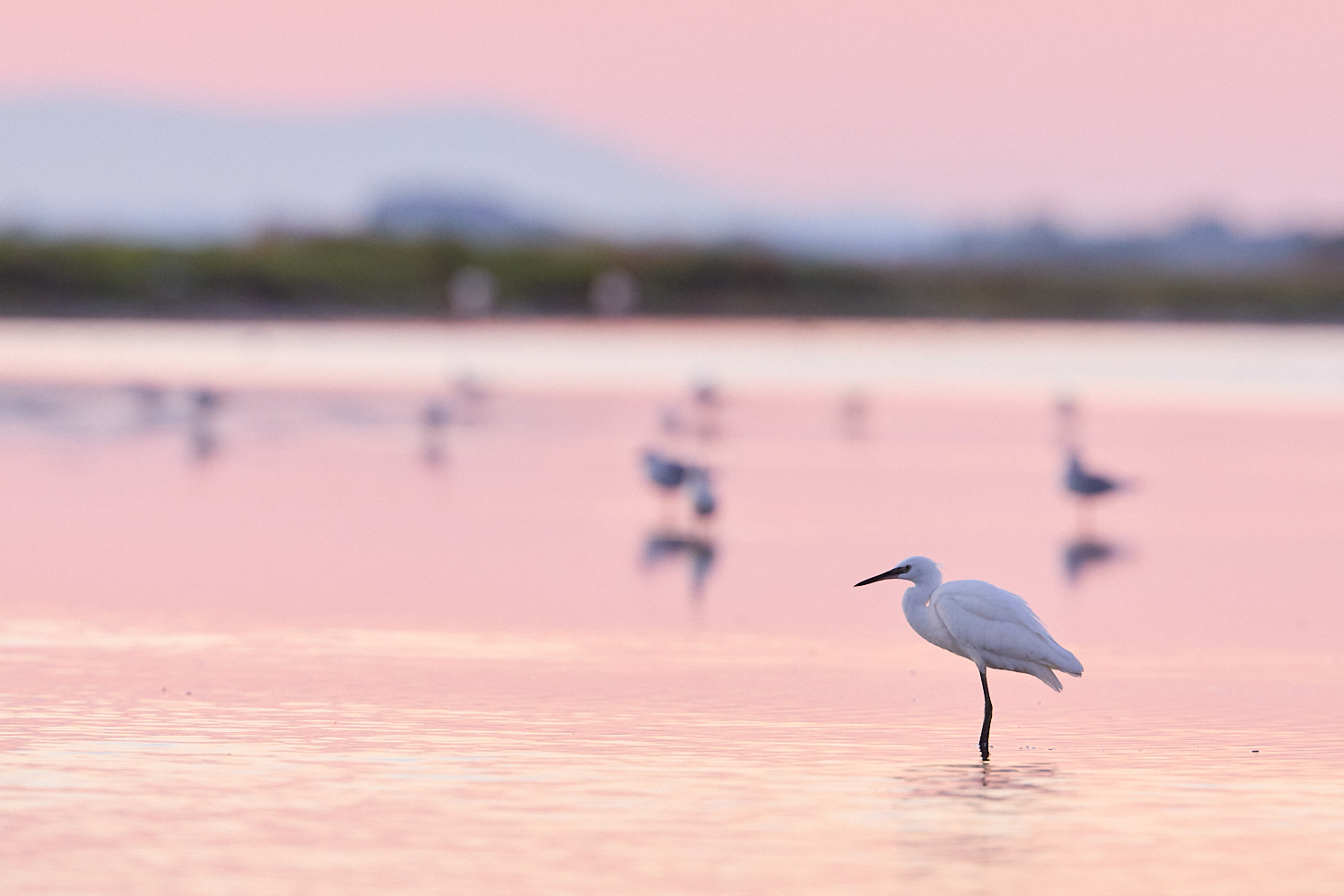
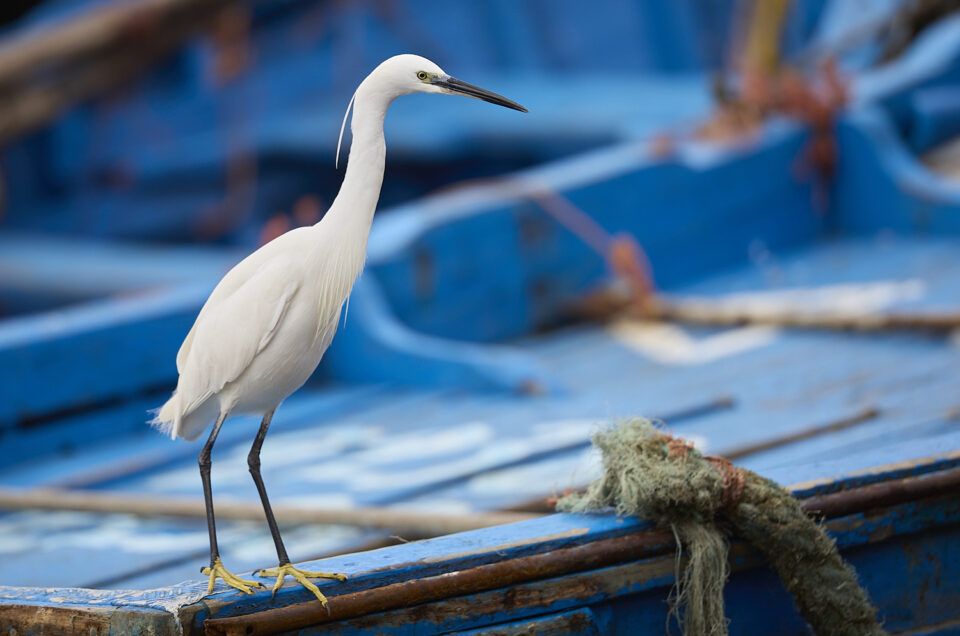
The little egrets are more reliable, though. One is usually somewhere nearby. So I turn my attention to the egrets, which were wiped out in France just 100 years ago because of their prized feathers. In the meantime, thanks to protected status, they have become widespread again.
In clear weather, the giant of Provence – Mont Ventoux – can be seen from the Camargue. Among cycling fans, it is probably one of the most famous, if not the most famous, mountains. So it’s no surprise that I have dreamed of taking bird photos with Mont Ventoux in the background. A few days earlier, Jonas Vingegaard had tried to put Tadej Pogacar under pressure for the lead in the Tour de France on Mont Ventoux. For me, however, those days were not about the yellow jersey, but about capturing the most spectacular lighting situations and photos. Lying in the mud, I waited until a little egret would finally move in front of the vague outline of Mont Ventoux. However, this only worked to a limited extent, and the Mont Ventoux can only be recognized as such with a little imagination.
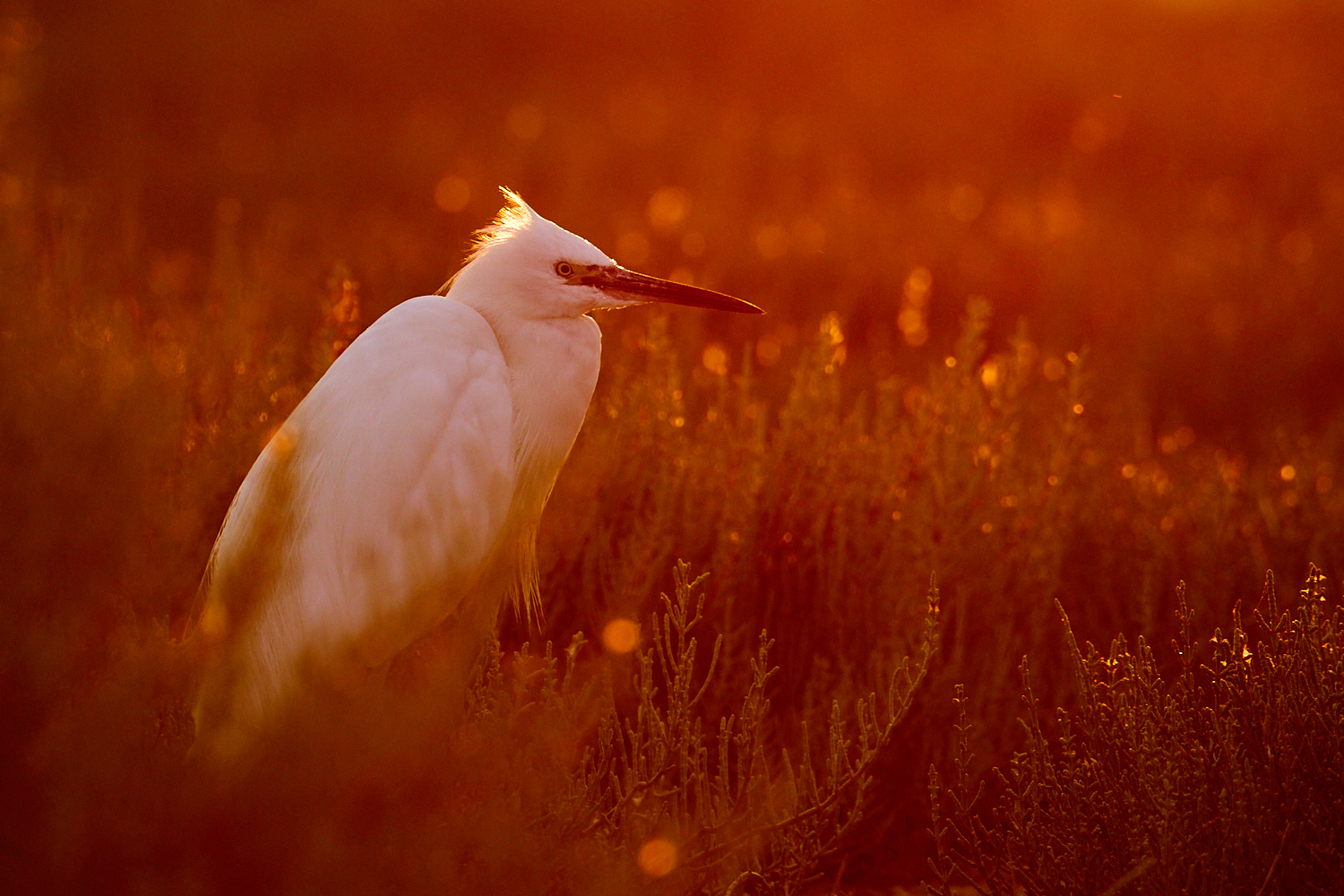
In the evening, however, a little egret stands directly in front of the setting sun.
Clouds have been rather scarce throughout the tour, so in the mornings before sunrise and in the evenings after sunset I can marvel at the magnificent shades of pink in the sky. The atmosphere – with hundreds of birds in the lagoon, the calls of the flamingos repeatedly interrupted by the cawing of overflying terns, and the pleasant temperatures—has something magical about it.
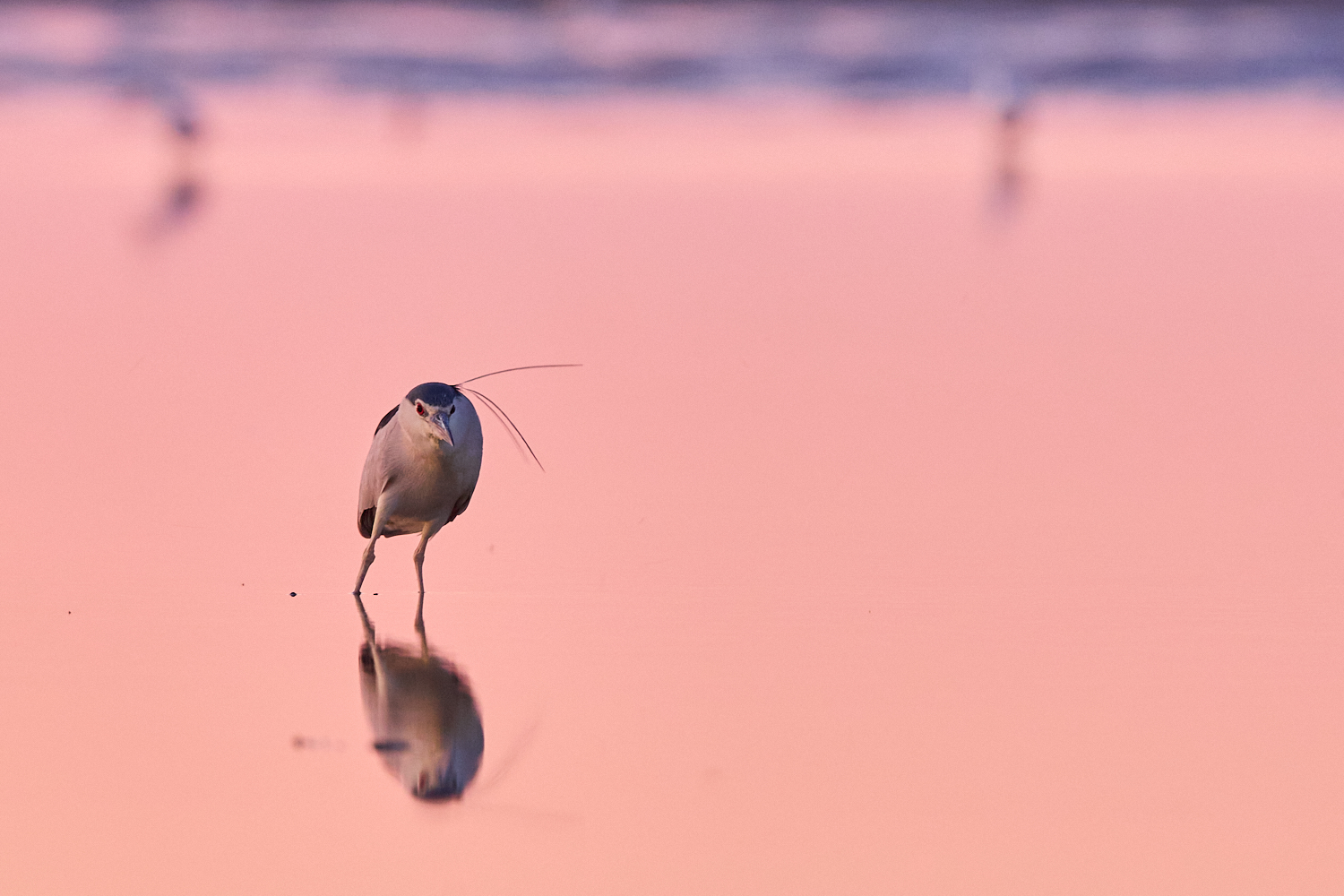
After sunset, the night herons – living up to their name – also become active. While during the day they usually hide somewhere in the dense vegetation, they now venture into the lagoon to hunt. At least their hairstyle is already perfectly set for a night out.
Soon, however, it becomes so dark that the autofocus is overwhelmed, and I pack up the equipment. I slowly move away from the lagoon, trying to enjoy the atmosphere as long as possible before night fully sets in.
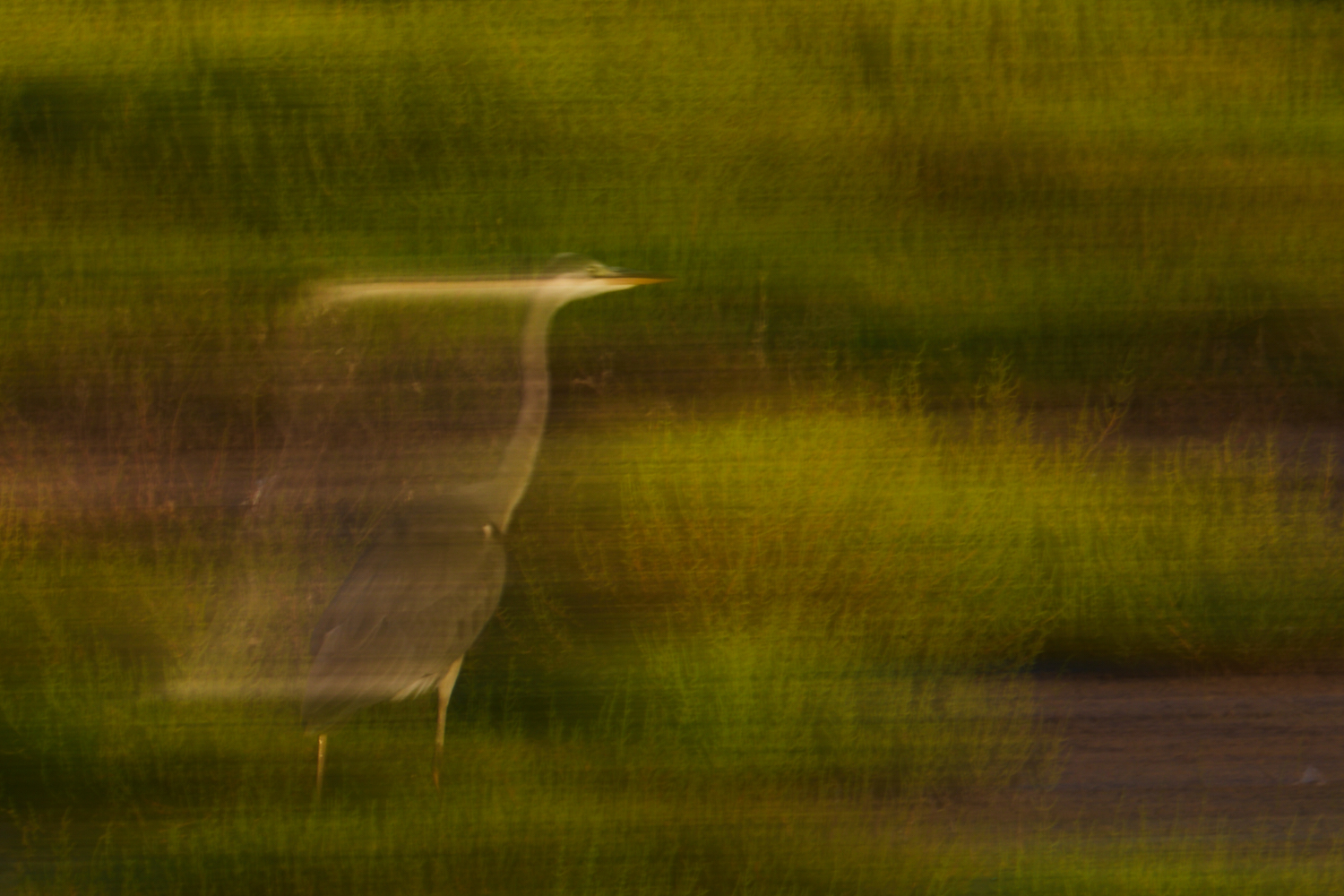
In contrast to the evening, the light in the morning actually only gets worse after sunrise. On the plus side, there is more time to experiment with the camera. On the way back, I try to capture the grey heron with a longer exposure. Soon enough, however, my growling stomach pushes me toward breakfast, and I end the experiment with the grey heron.
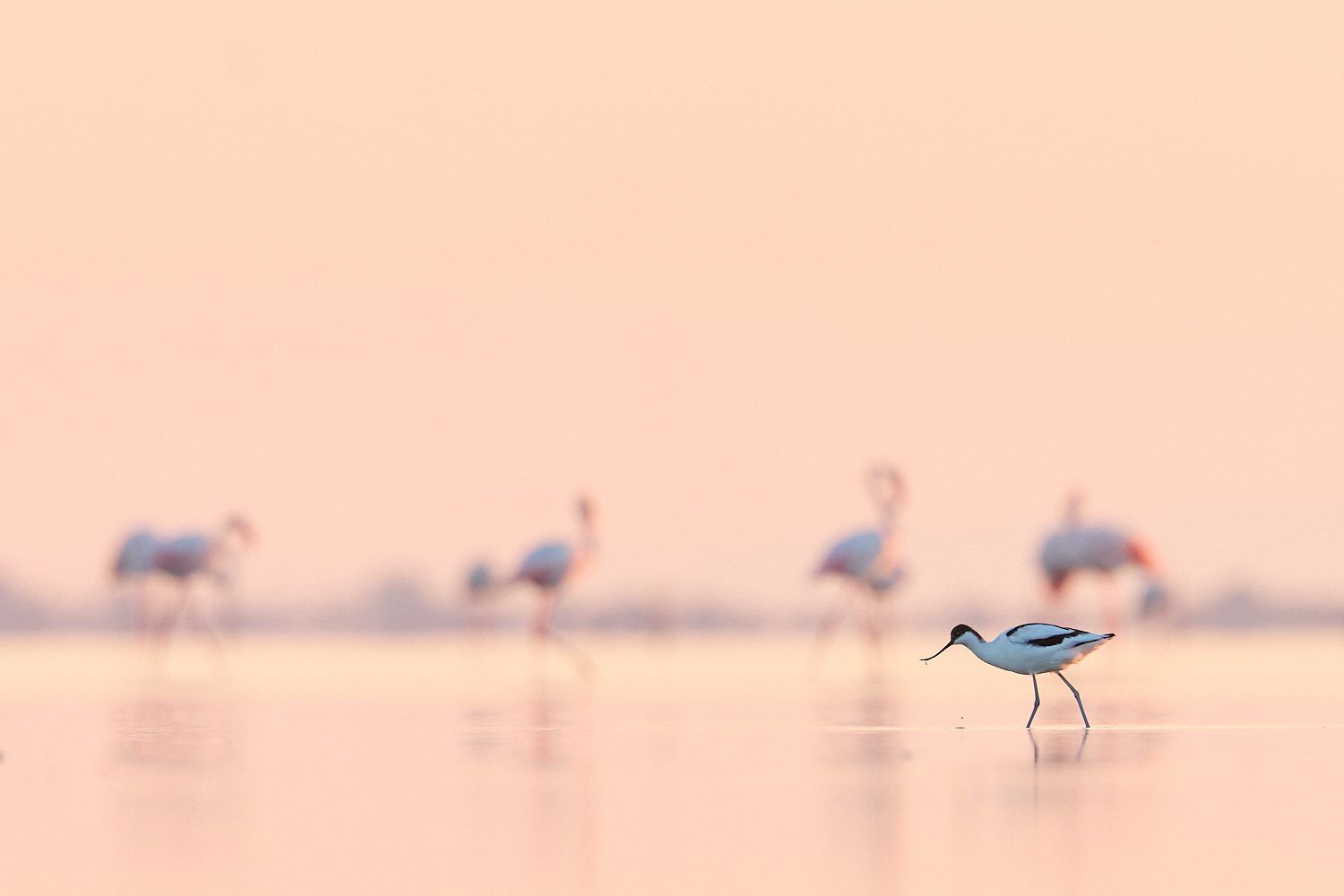
While the flamingos are sometimes a bit shy in the morning, a few waders unexpectedly appear in front of me, like this pied avocet.
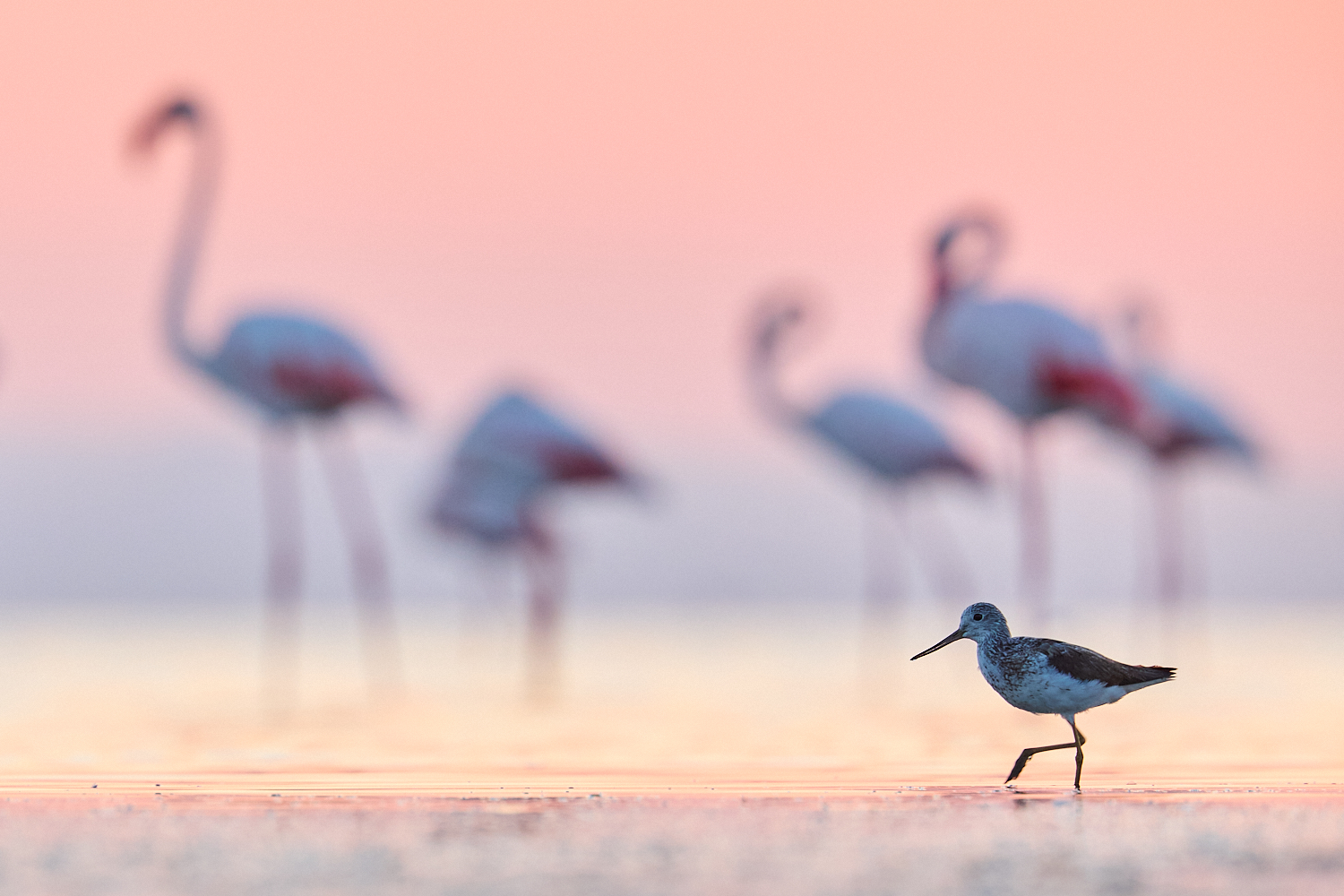
Just as the flamingos finally come within photo range, a cheeky greenshank walks through the front and pushes itself into the foreground.
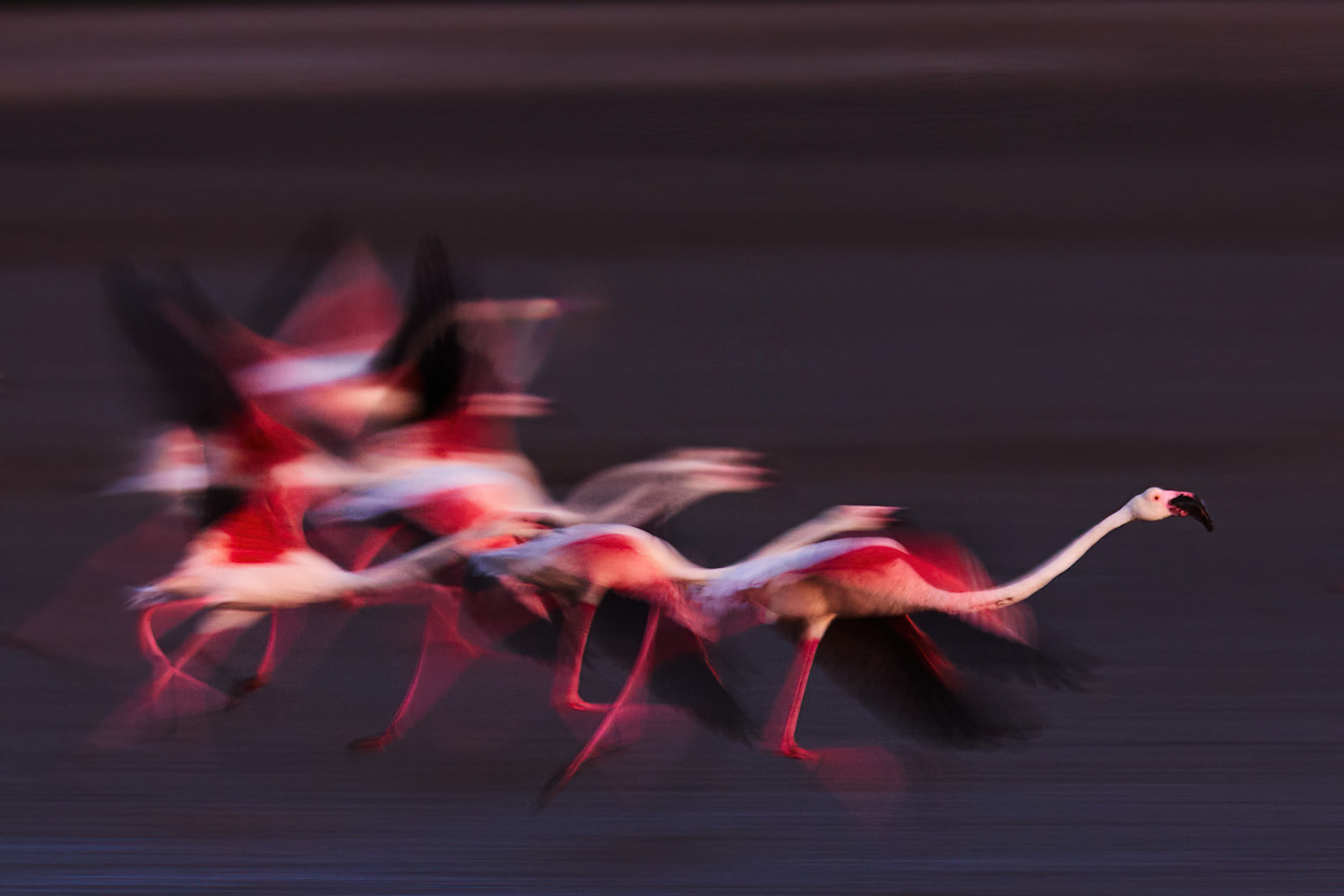
But now to the flamingos, which I photographed as the main subjects after the brief interlude with the greenshank. Unlike other wading birds such as herons, flamingos can’t take off immediately; they first have to run to get airborne. For me, this moment is always a welcome opportunity to test my panning technique with the camera. However, it seems to me that the flamingos could use a bit more stability training (or strength training). With their long necks, their heads usually wobble wildly. This detracts from the style points and is certainly not very efficient. No matter how hard I try to pan the camera as steadily as possible, the subject wobbles so much. At least one flamingo seems particularly athletic and confident in its movement. Is it a coincidence that it holds the lead position? 😉
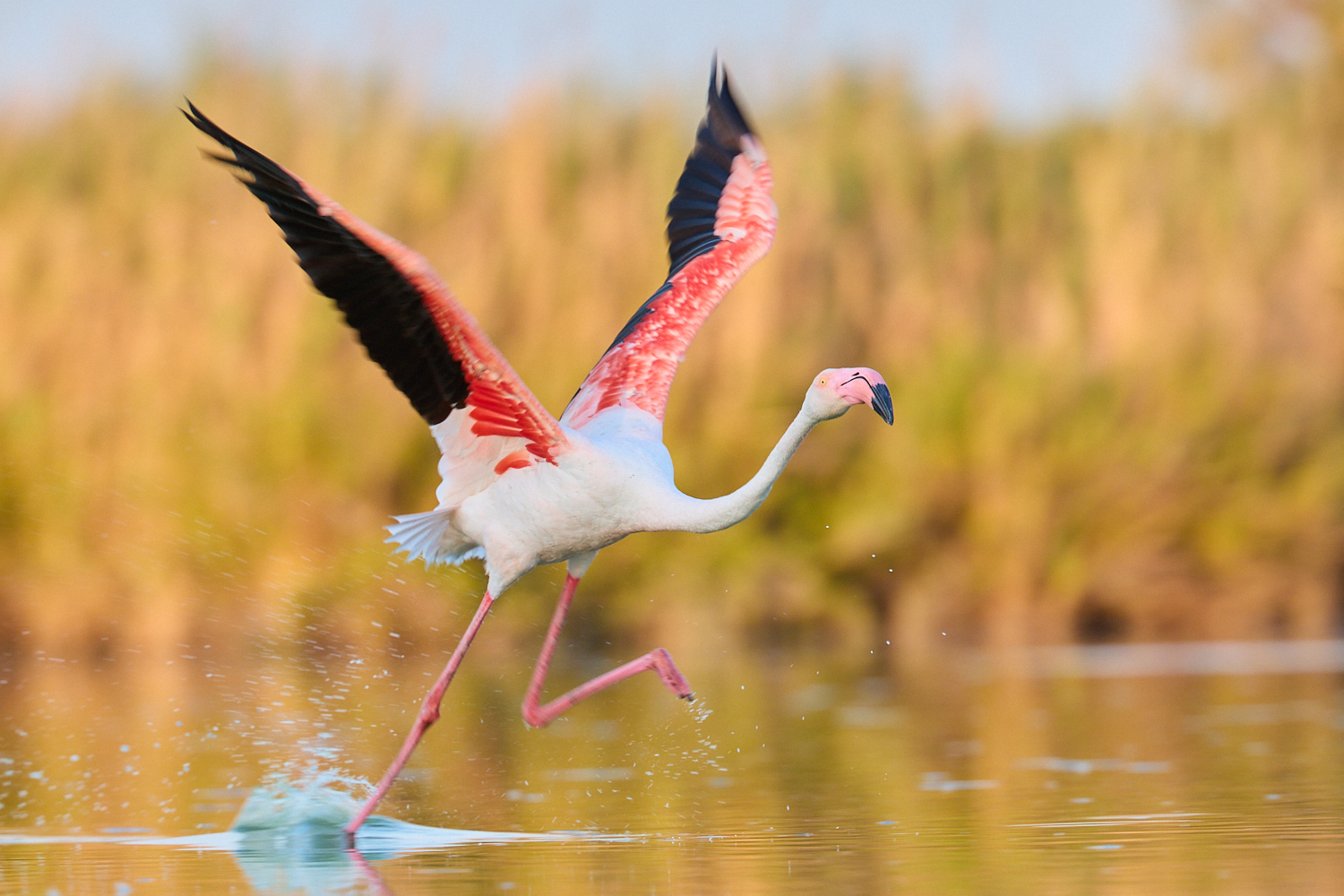
Depending on the situation, I sometimes skip the panning technique – mostly intentionally, and occasionally by accident when pressing the wrong camera button – and photograph a flamingo taking off in the classic way.
During my stay in the Camargue, it is mostly windy, which keeps the annoying mosquitoes in check but also creates waves that blur the reflections. On the plus side, the backlight produces interesting patterns.
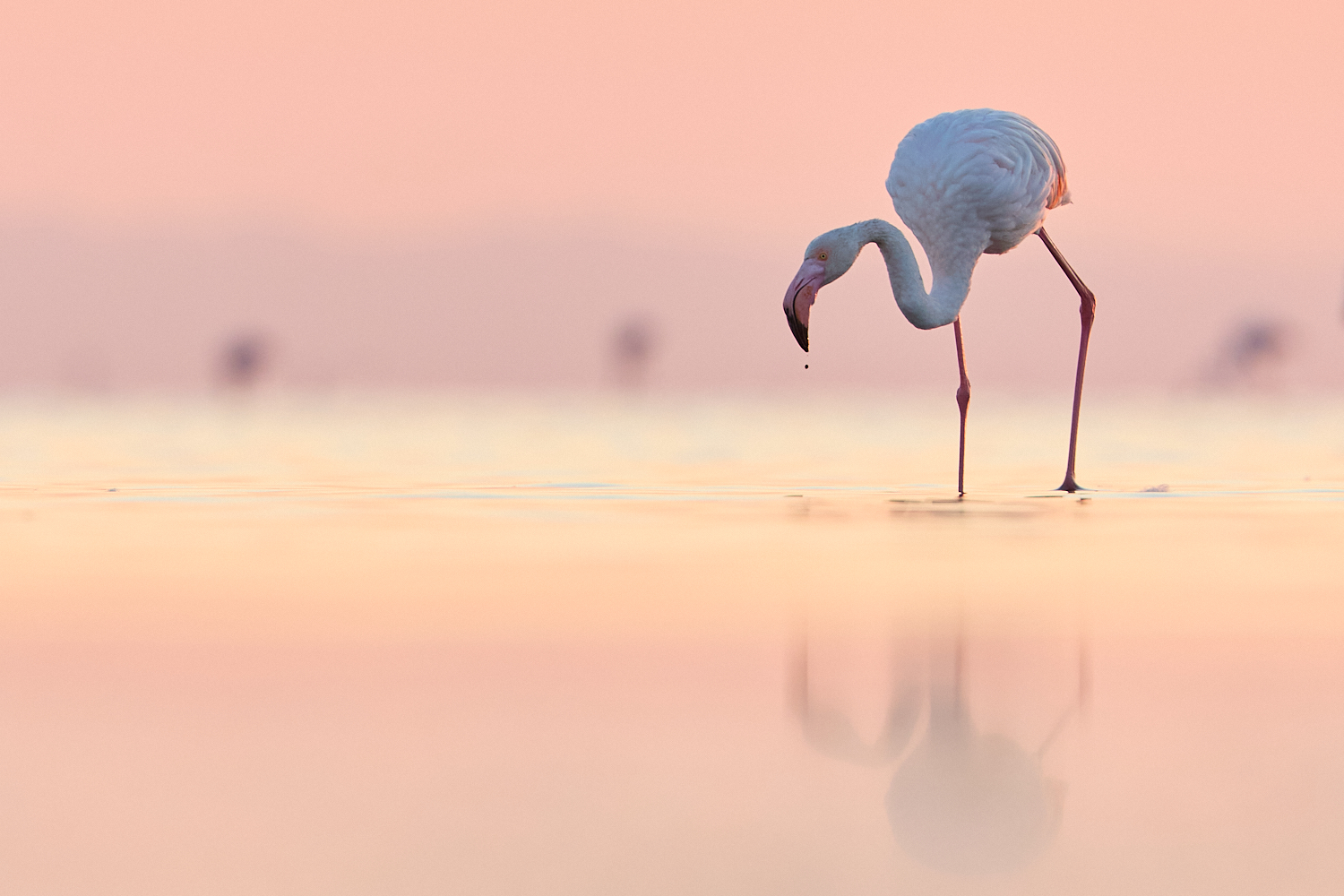
After waiting in vain on the other side of the water for subjects in backlight, I spot a flamingo near the shore on the opposite side. Since the sun is already just about to set, I didn’t expect to make it across in time to reach the flamingo. As it becomes clear that I might still have a chance, I start walking faster and eventually begin running. I just manage to get into position in front of the setting sun and the flamingos, and lie down in time.
The pink color of their plumage comes from tiny crustaceans that contain beta-carotenoids (pigments) and are on the flamingos’ menu. Otherwise, the beautiful pink flamingos would be gray and white and only half as interesting to photograph. My attempt to eat more carrot salad to look like a flamingo and thus sneak up on them more easily, however, was a dismal failure (even though the salad was tasty).
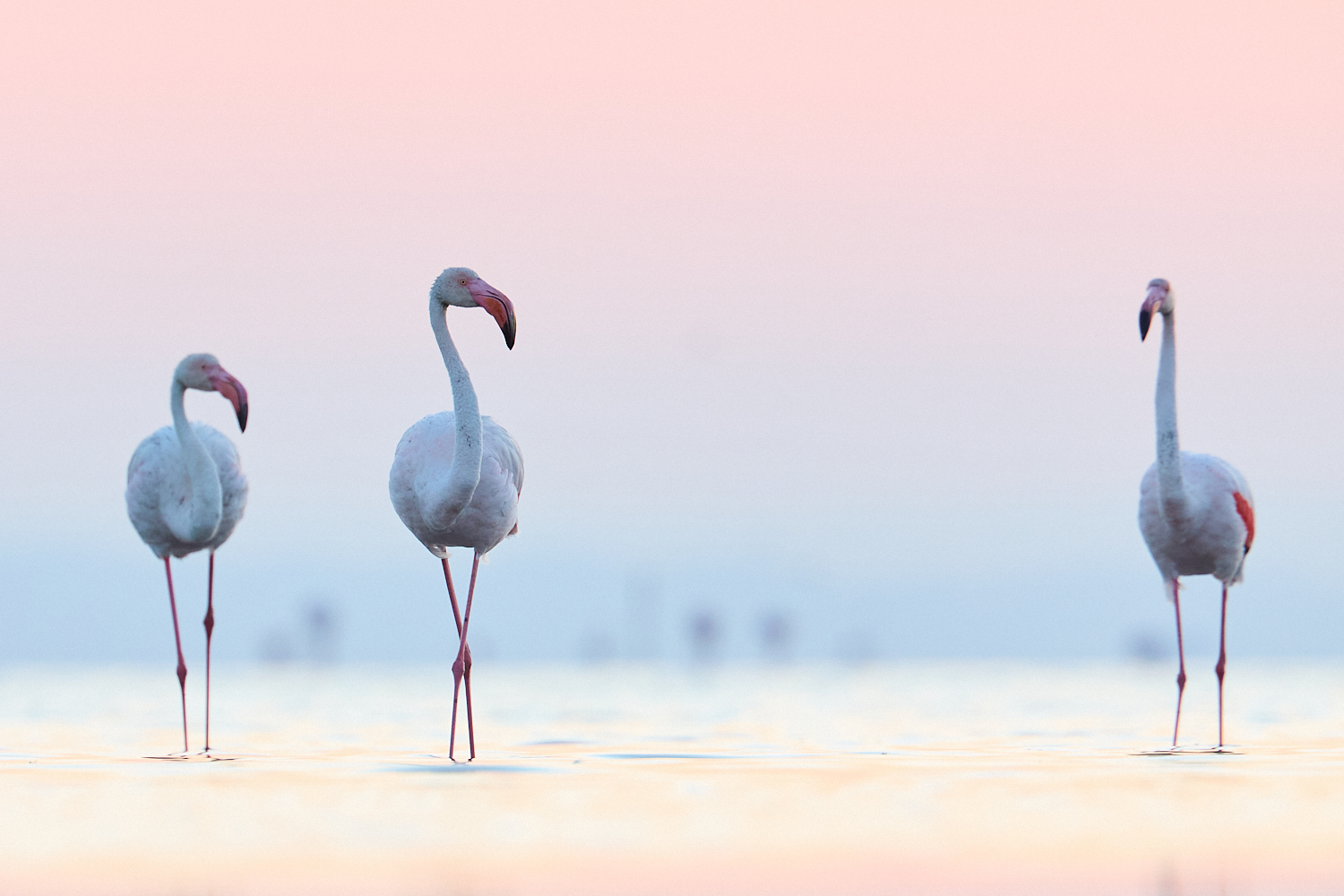
Flamingos are extremely social birds and are rarely seen alone. They are usually moving in larger groups. However, it is not so easy to take a photo of the group without cutting off an individual. For a group shot where all of them are looking nicely in the same direction, I’ll have to return to the Camargue.
With so many flamingos, it is also very difficult to remain unnoticed. Sufficient patience and a bit of luck are necessary for flamingos to come close.
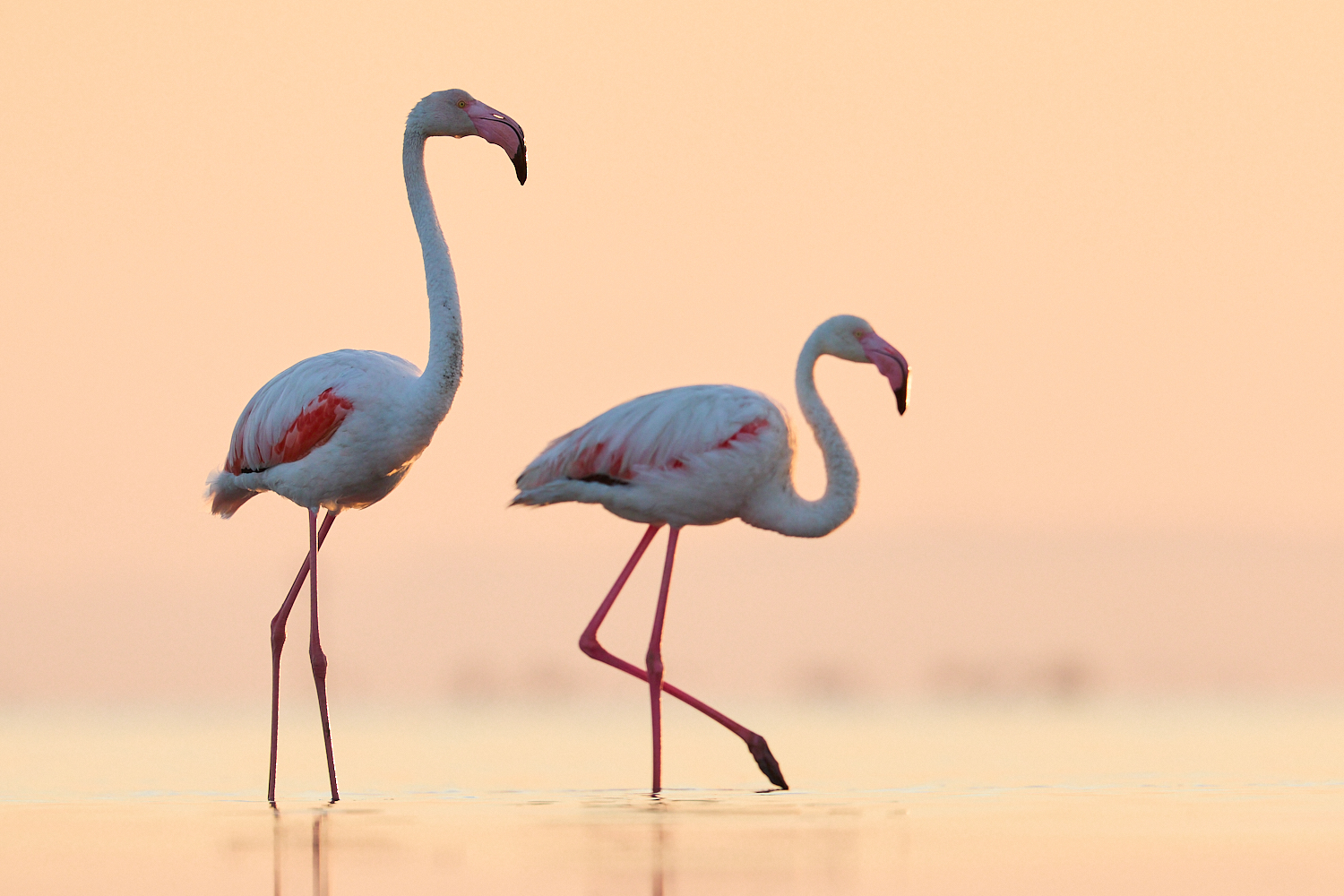
My patience—especially as sunrise or sunset approaches—is usually quite limited. If the flamingos are in a different spot, the temptation is strong to give luck a little push and move closer. However, this is usually a futile effort, especially since my height makes it difficult to hide. Therefore, the rule is to wait patiently in place and resist the temptation. Sometimes – unfortunately less often than I would like – the flamingos come into photo range on their own just in time. For such moments, all the many attempts without the desired shot are worth it, and my heart rate rises rapidly even while lying down when the moment finally arrives.
The flamingo does not stay alone. The presence of one flamingo seems to signal to the others that it is safe here. More and more flamingos start walking in my direction. Soon, I can’t decide which flamingos to photograph – a luxury problem that I would gladly have more often.
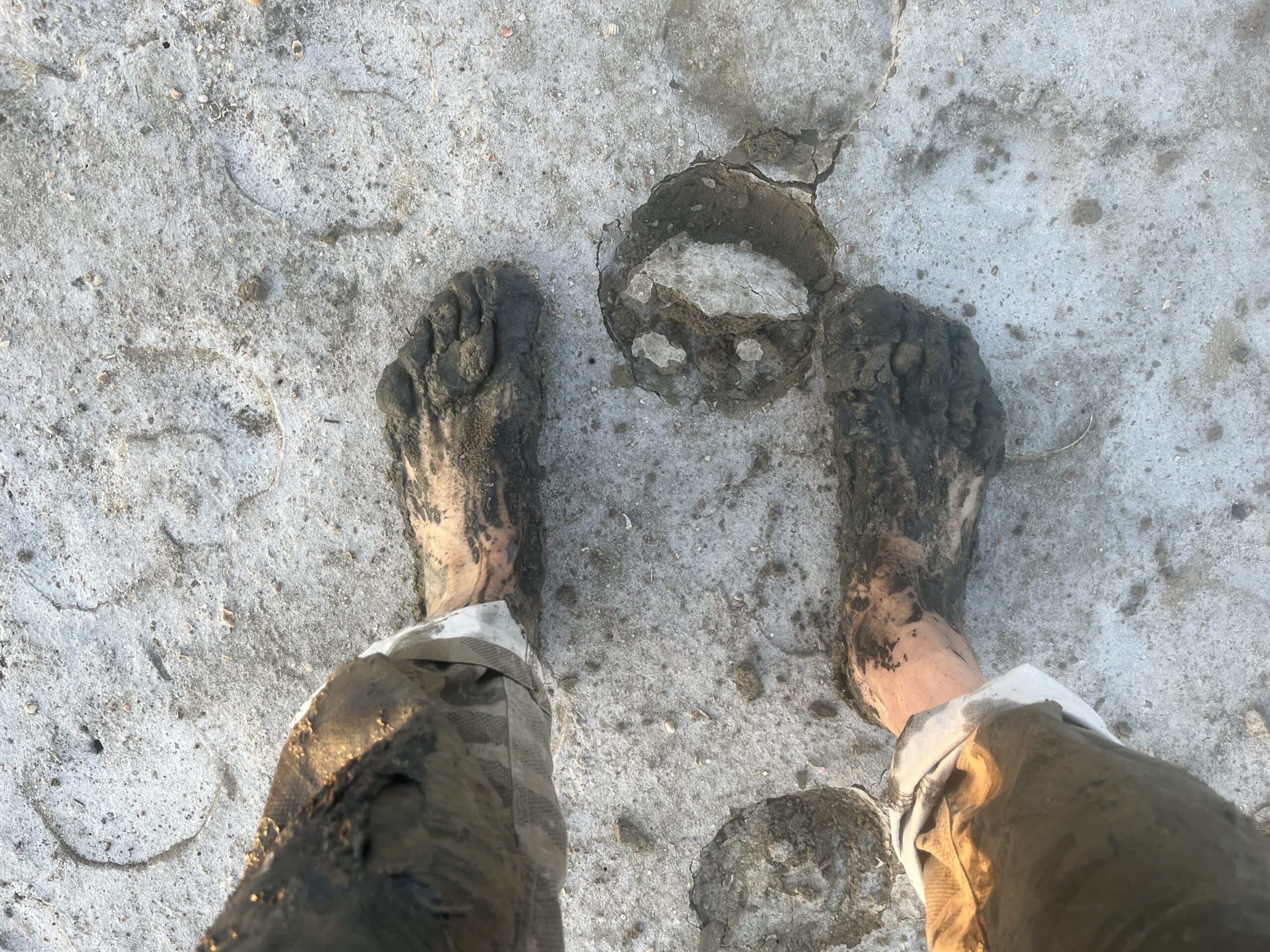
What a morning! By now, I am completely soaked and covered in mud. I had actually planned to set off from the Mediterranean right after breakfast in order to reach Zurich by the next evening if possible. Now, however, I first have to make sure that both I and my clothes get at least somewhat clean and dry…
At quarter past ten, I am finally able to set off from the Mediterranean, refreshed and fueled, to tackle the nearly 660 km ride to Zurich, with many photos and wonderful memories in my luggage.
I soon realize that my legs don’t feel as fresh as they did on the first stage toward southern France. Even before the 200 km mark, I am showing the effects of the strain: thick salt stains are visible on my jersey and shorts. Somehow I started out at a slightly too high intensity, which is now slowly taking its toll. At nine in the evening, I drink a cola in the hope that the caffeine it contains will give me an extra boost. Open restaurants or takeaways are a rarity in the French countryside, and I would have loved to have something salty to eat and a cool drink to enjoy.
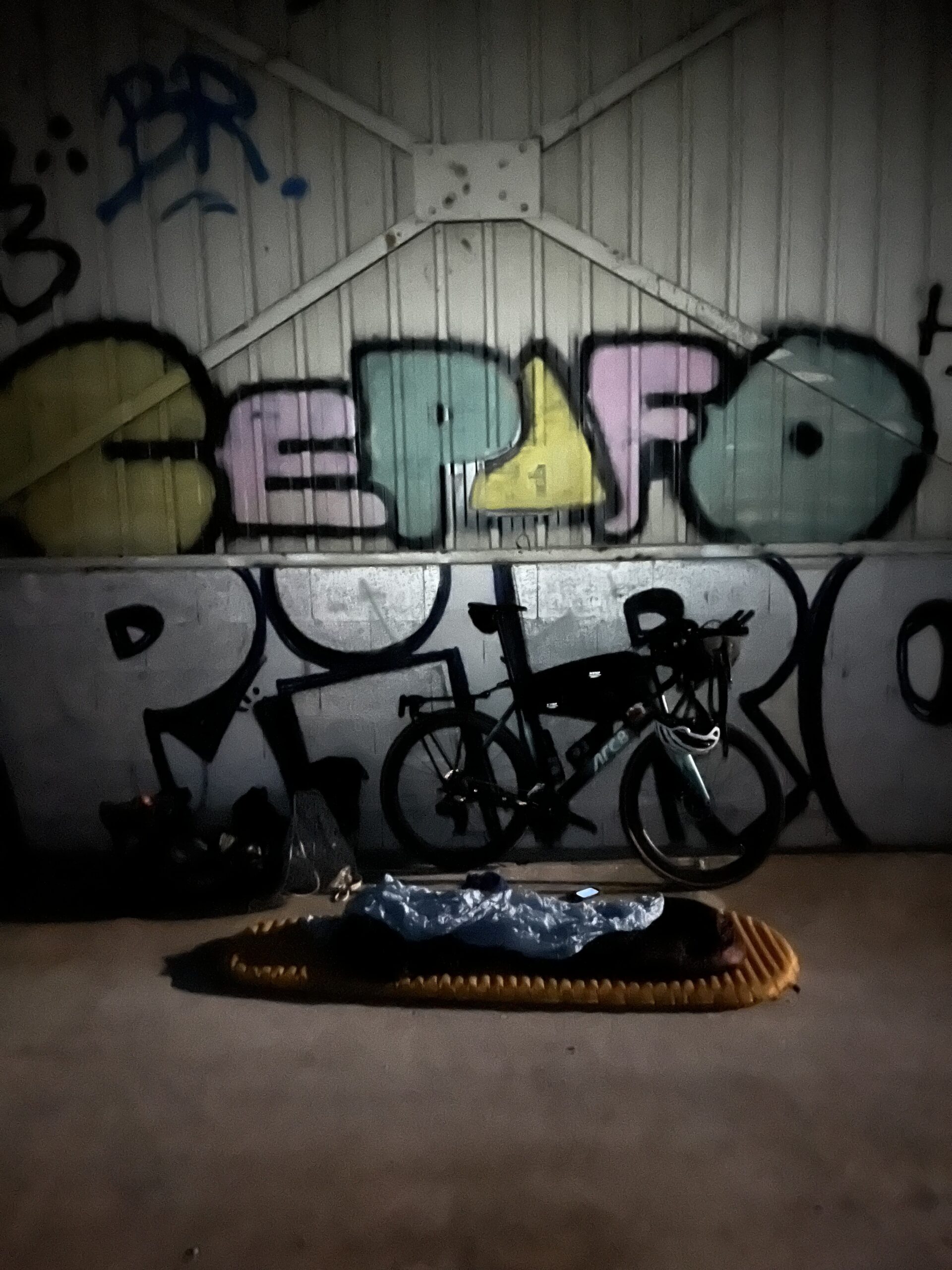
As darkness falls, despite the cola, I hit a mental low. One part of my mind wants to keep riding north, while the other is searching for somewhere to sleep. For a moment, I feel like I will never make it to Zurich by Friday evening. Eventually, I set myself the goal of riding halfway – 330 km. If I just lie down for a short sleep, maybe it will still be barely enough – provided I can recover sufficiently in that short time. It is already well past midnight when I reach the targeted 330 km. Luckily, I quickly find a cozy sleeping spot. To lose as little time as possible, I slip into my inner sleeping bag along with my cycling clothes and eat the last two sandwiches I have left.
After only three hours of sleep, the alarm rings again. No wonder my legs feel – just as you probably guessed – anything but fresh at the start. But slowly I get rolling, and with the dawn breaking, I finally see more of the landscape again. Right on time for the morning traffic, I arrive in Geneva. The stretch between Geneva and Zurich seems to go on forever; suddenly, Switzerland feels huge by bike. Still, I actually manage to reach Zurich well before sunset. I can hardly believe that just the morning before, I was photographing flamingos at the Mediterranean, and now I’ve ridden all the way to Zurich with about 30 kg of gear on the bike. It’s constantly astonishing what one is capable of with enough will – or perhaps just a somewhat stubborn mind.
This gave me two more days to clean the equipment and let the incredible experiences sink in before the final sprint on my doctoral thesis (which I have since submitted).
What motivated me to complete the journey by bike with all the photography gear? As a nature photographer, I want to travel as sustainably as possible, even if the photos themselves don’t reveal whether I arrived by car, plane, or under my own muscle power on a bike. Cycling is not only more ecological, but also a wonderful way to travel slowly and experience the (cultural) landscape with all the senses. Intense and unforgettable experiences are guaranteed. My desire for more is definitely sparked, and plans for the next bikepacking tour with camera gear are already underway…
Leave a reply