
All of a sudden, it is there. On the opposite side of the river, it rises up before me. With its characteristic yellow lichens and patches of white from bird droppings, it looks exactly as I have known it since childhood from bird and nature books. My interest is not in the droppings or the rock itself, but in the birds that call the cliff their home. Ever since I read about Extremadura in those books, and especially since I saw the (vulture) images, I have dreamed of visiting this place one day. And now, after more than 1,700 km by bike, I have finally made it. I have arrived at the first location of my multi-week cycling tour and can hardly wait to finally put the heavy gear (aka things like photo equipment) to use.
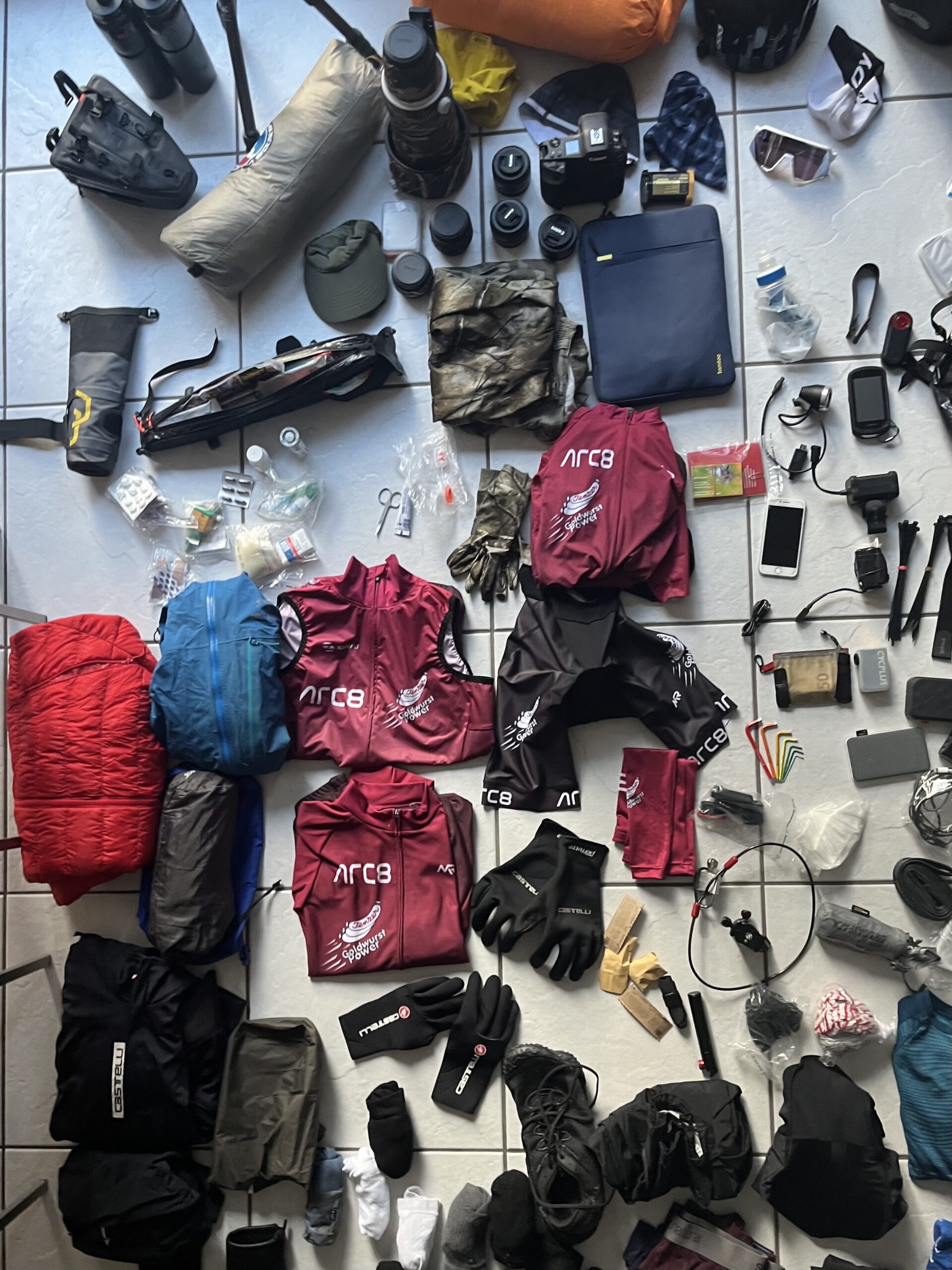
After defending my dissertation, the stress really began. I had to pack up my belongings in Zurich and prepare my bikepacking project “Velomad,” which ended up taking quite a bit of time. Packing clothes and (photo) equipment for several months is a challenge – especially when everything has to be transported by bike.
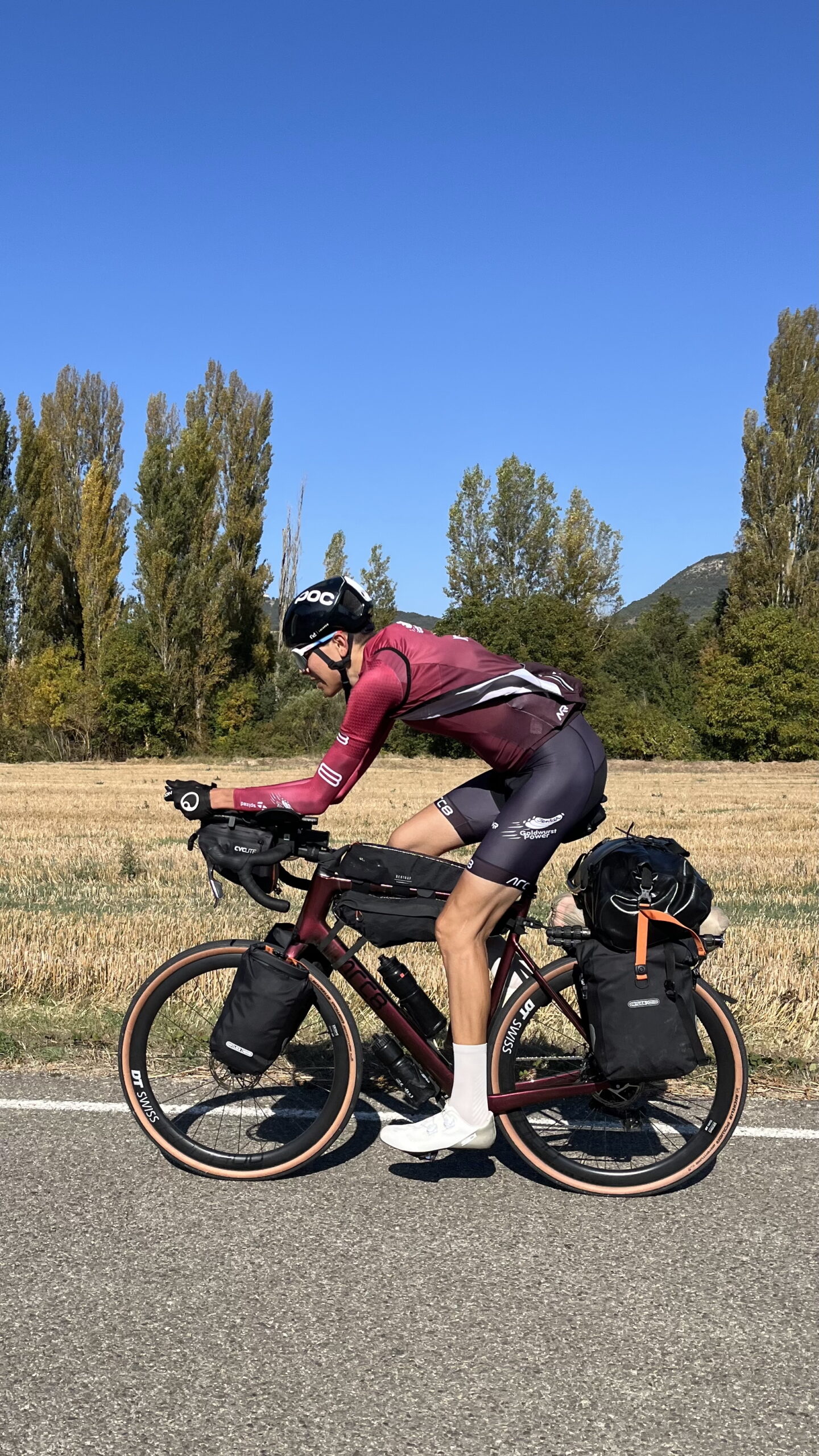
Instead of having a few relaxed days before the start, I was kept busy right up to the end. Late in the evening I had everything packed away – the luggage weighs well over 30 kg. After a (too) short night, the alarm went off at 4 a.m., and still a bit sleepy I climbed onto my ARC8 Eero to set off into the fog and begin the project “Velomad.” Many thanks at this point to ARC8 and Goldwurst-Power for supporting the project (more about the gravel bike will follow later)!
I wanted to kick off the multi-month project with a challenge, while my legs were still reasonably fresh and the surroundings – and the food – still somewhat familiar. And since my first destination was EXTREMadura, I set myself the goal of getting to Spain as quickly as possible. Could I reach the Spanish Basque Country in just four days with all the luggage (>30 kg)? For the first three days I spent almost 13 hours a day on the bike (riding time), allowing me to cover more than 300 km per day, once with an impressive 3,700 meters of elevation gain – and all of that with the full setup. That brought me very close to my ambitious goal.
However, the very short nights in a sleeping bag, more or less right by the roadside, took a heavy toll. On the fourth day, after just 110 km, I crossed the border into Spain already around midday – goal achieved. I managed to push on for almost another 100 km to finally treat myself to a hotel night – and the long-awaited shower. Rarely have I looked forward to a shower so much – after 1,156 km by bike, probably no surprise… With this challenge I wanted to find my limits, and they made themselves very clear. Recovery during short nights while bivouacking by the road is not sufficient for me in the long run. On top of that, my Achilles tendon was far from happy and became so badly inflamed that I couldn’t continue riding for two days (and my foot swelled up significantly).
After two unplanned, frustrating rest days in Arrasate, I was determined to continue. With ibuprofen and a thick layer of ointment, I was able to resume my ride toward Extremadura and the vultures. The irony of the story is that this was possibly only feasible thanks to Voltaren, which contains diclofenac. Unfortunately, this active ingredient has also been used in livestock farming in some regions such as India, leading to a dramatic collapse of vulture populations, as diclofenac accumulates in vultures and causes kidney failure. Diclofenac is now no longer approved for use in livestock in India. So I shouldn’t turn into vulture food just yet – it would also be a bit early 😉 And now, back to Extremadura, to the vulture cliff and the vultures.
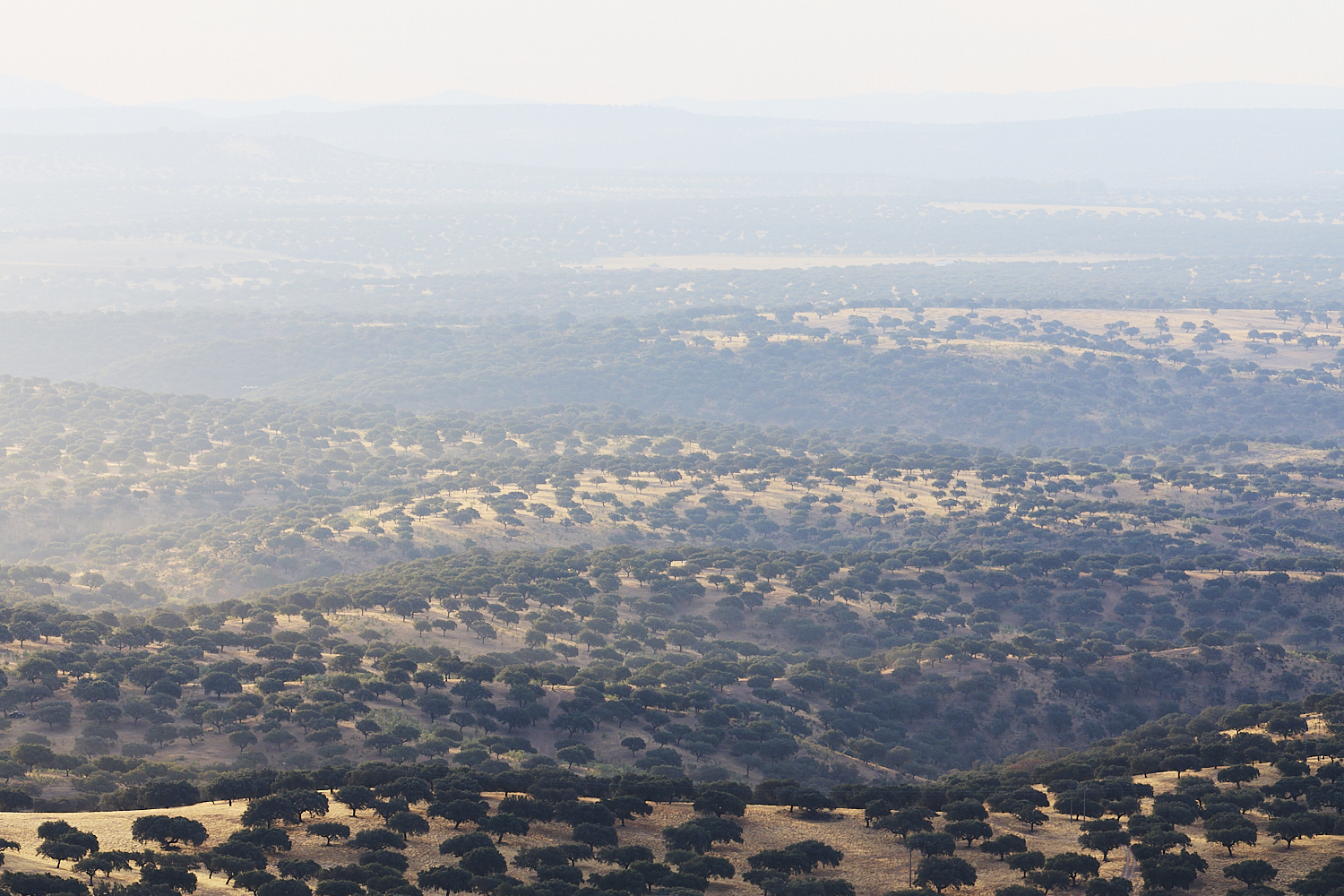
The typical semi-open grazing landscapes of Extremadura (Dehesas) stretch as far as the (vulture) eye can see. The oak trees are used for cork production, while the numerous livestock on the pastures are raised for meat production. If an animal dies beforehand, it becomes a ready meal for the vultures, which can dispose of the carcass in a very short time.
To do this, the vultures use thermals to gain altitude as efficiently as possible and then glide over the area in search of potential carcasses. Without thermals, it is extremely rare to see a vulture in the air, as active flying is far more exhausting compared to the effortless soaring in the thermals.
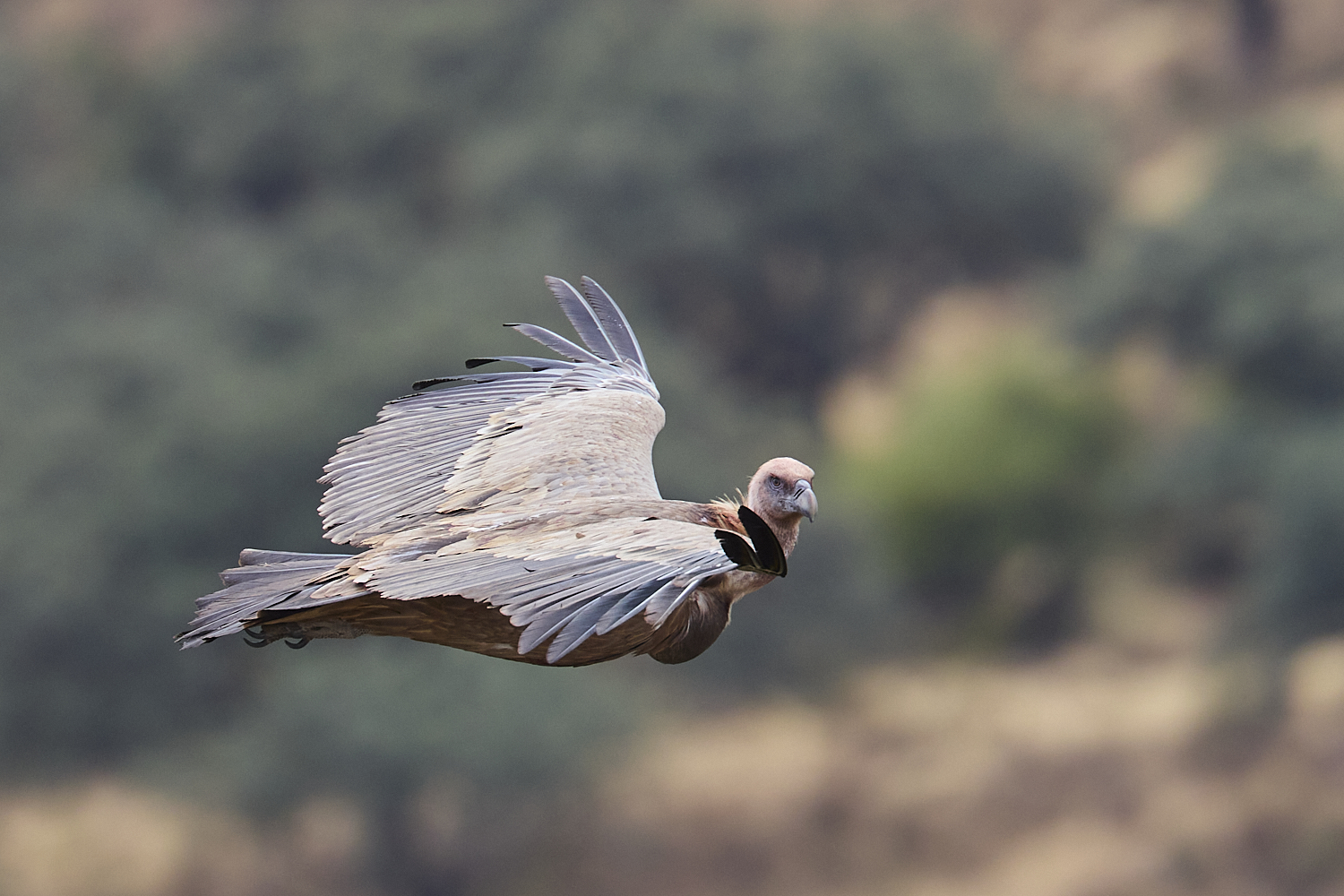
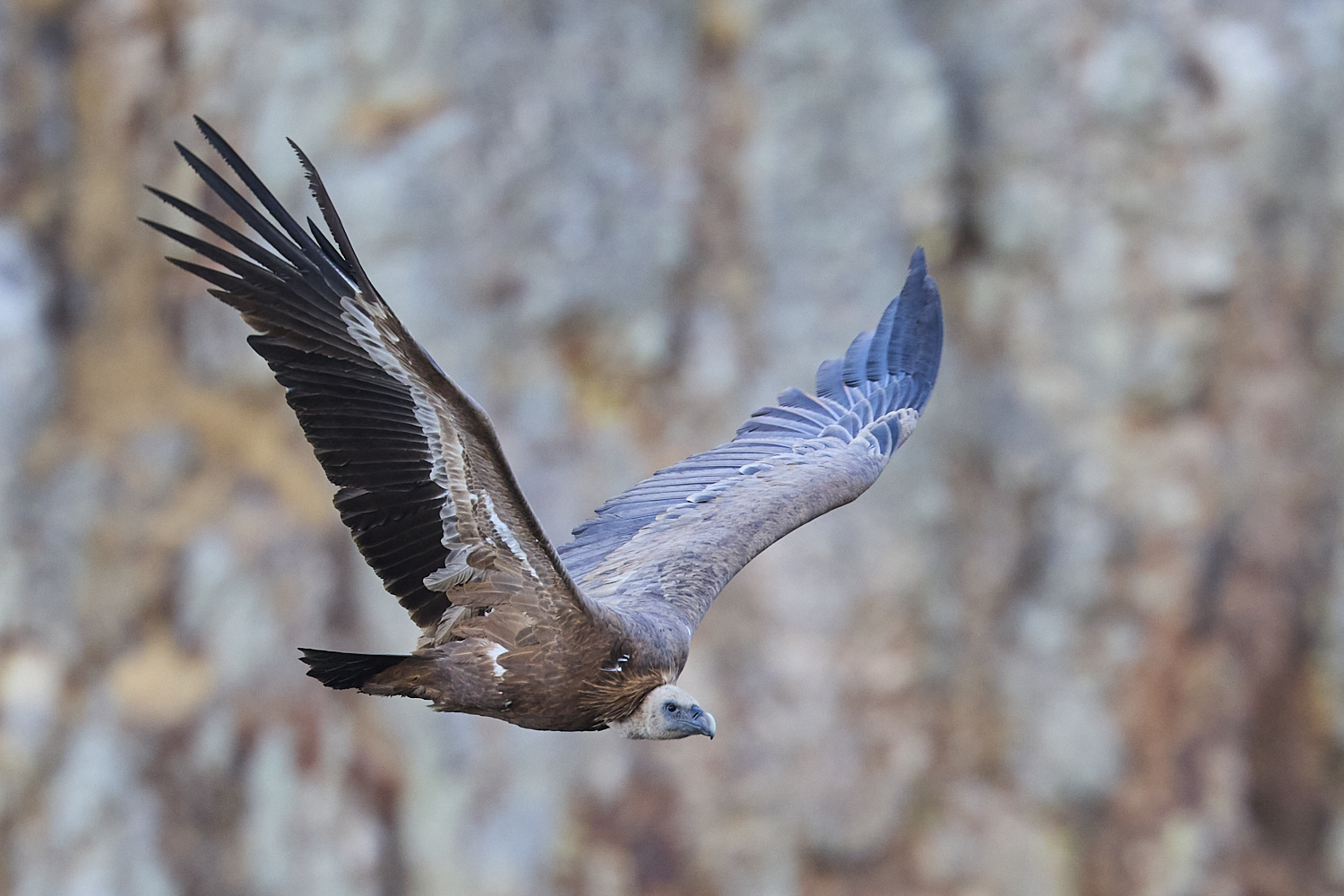
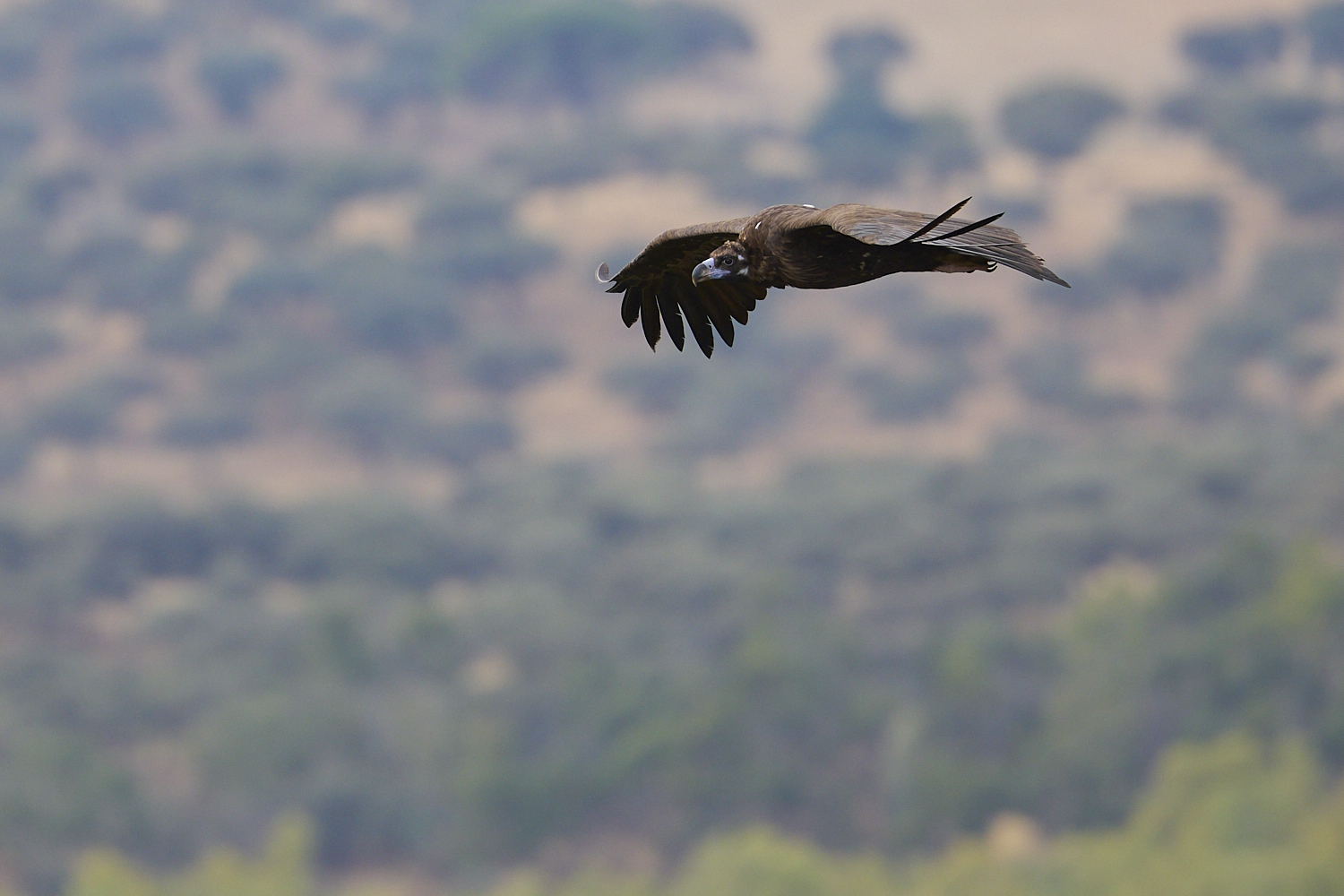
In flight, they show hardly any fear and repeatedly fly close past me. The full crop reveals that this griffon vulture has likely enjoyed a hearty meal.
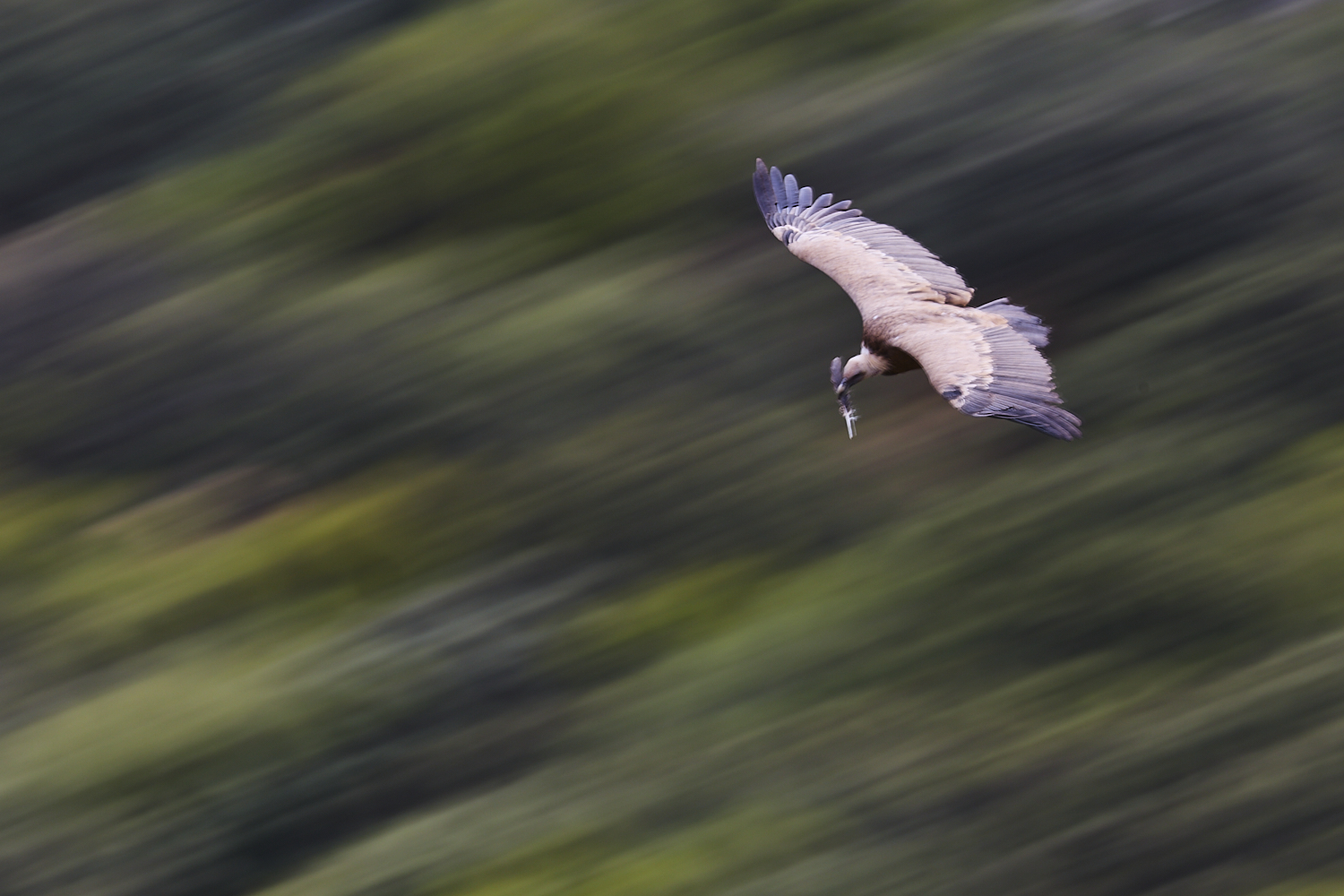
Suddenly, a vulture appears with an object in its beak. I quickly take aim. Only afterward do I realize that the vulture was holding a feather in its beak. Why it does this remains a mystery to me. The chicks have long since fledged, and the next mating season is still several months away.
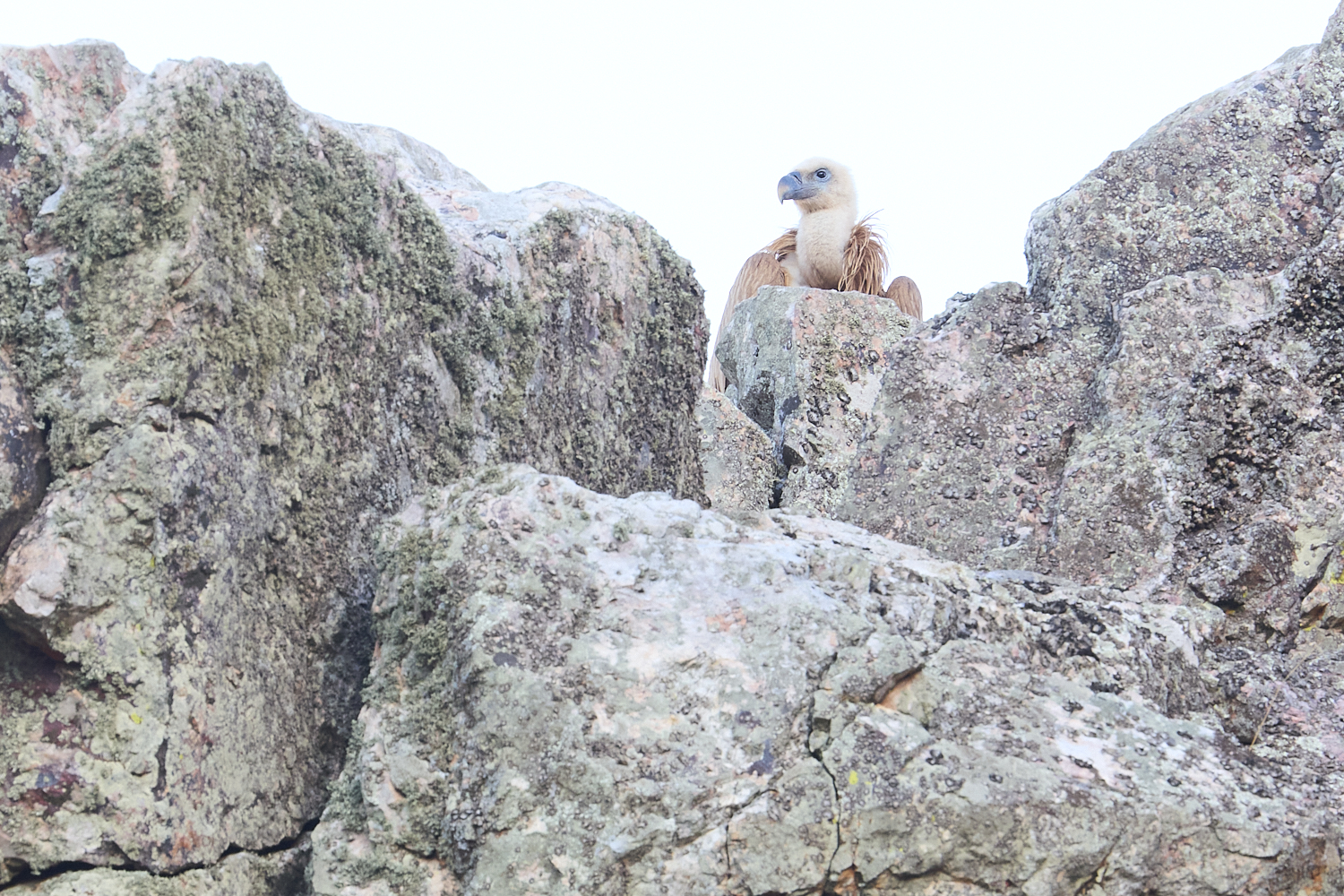
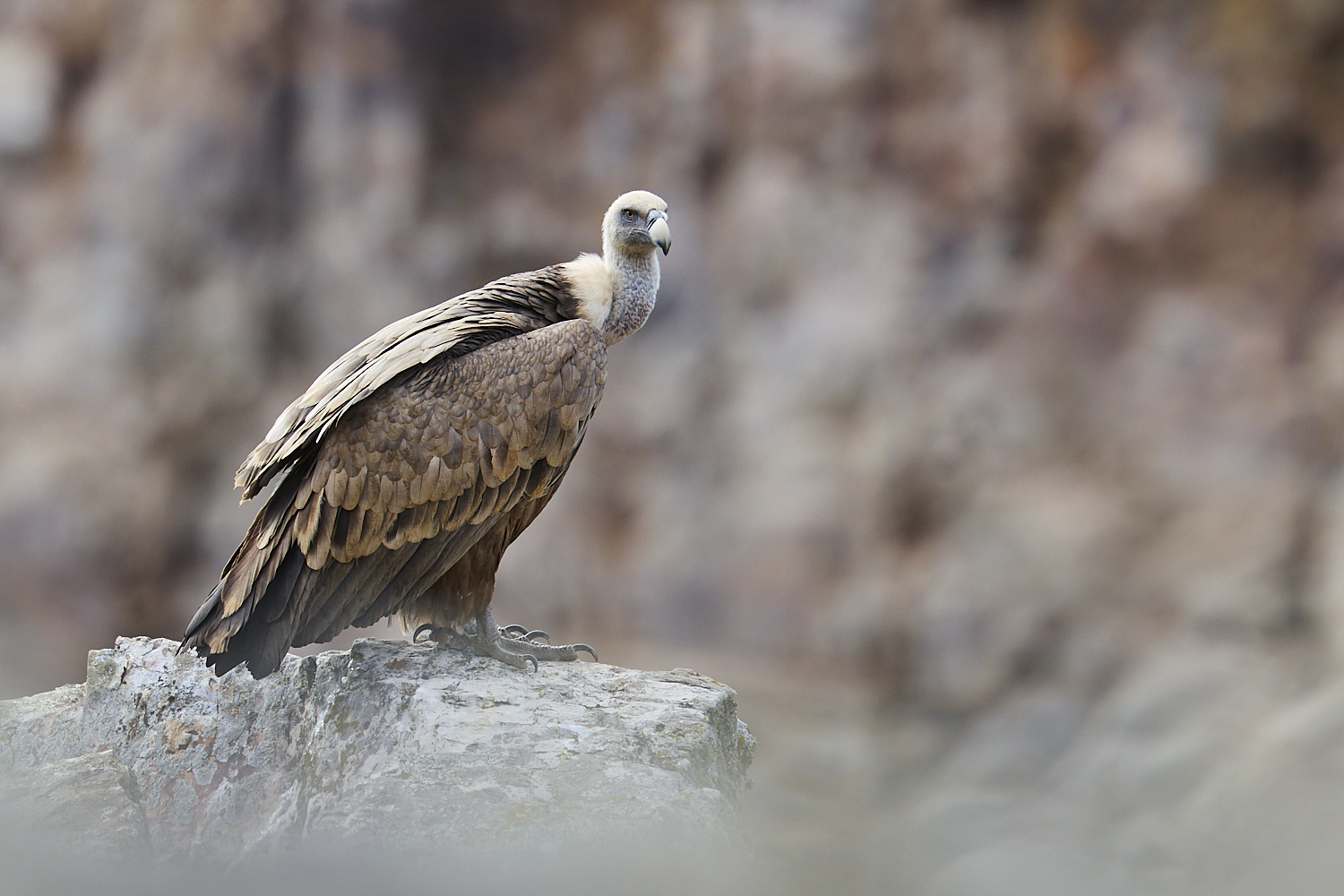
Since the thermals that vultures rely on usually only form under strong sunlight, the vultures, much to my dismay, are mostly active in extremely harsh light – exactly the opposite of what I would want for my photos. That’s why I was all the more delighted when, upon my arrival in the afternoon, a layer of clouds covered the sun, and yet some vultures still settled on the rocks at eye level. For once, the vulture even posed, and I was able to position myself so that the opposite cliff face appeared in the background. Only the friendly look (or providing some action) is something it could still practice a bit.
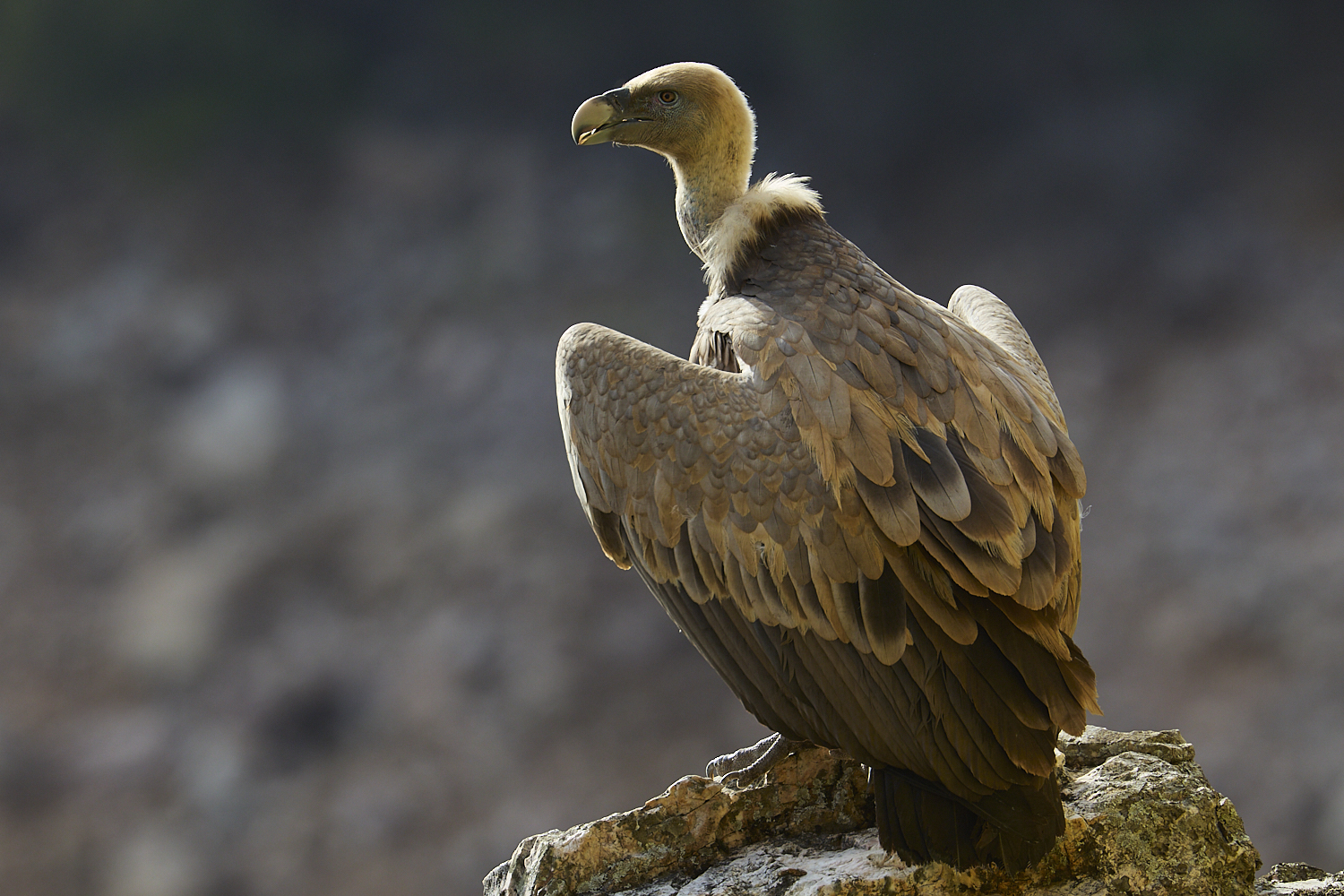
The head and neck area of the griffon vulture is covered with very short feathers, so that as little dirt, insects, or other debris as possible sticks to it while feeding.
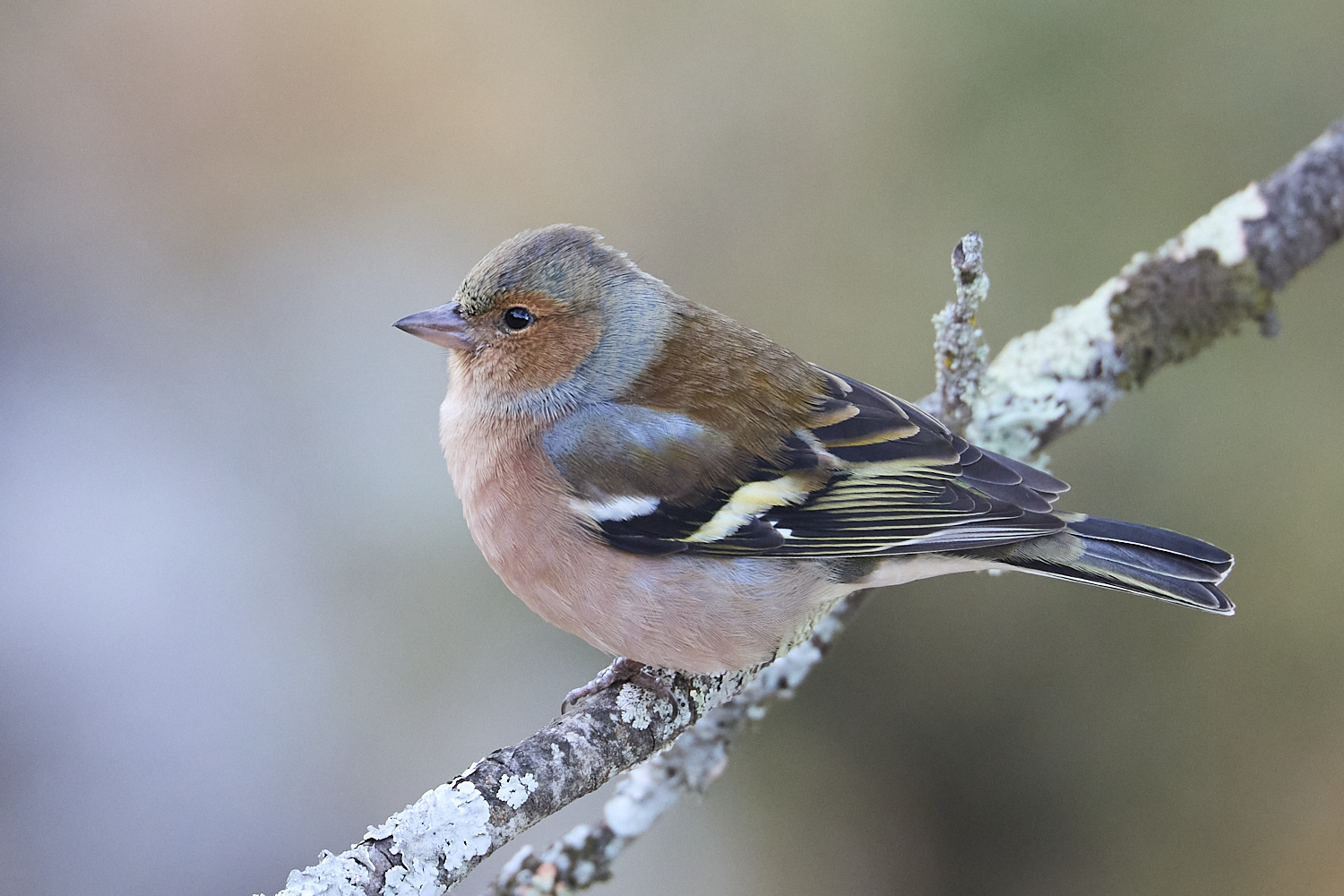
After this spectacular start on the very first afternoon, I was really looking forward to the next day. However, the following day does not go at all as I had hoped. Waiting for the vultures becomes a test of patience. For hours, to my great disappointment, not a single vulture appears within photo distance. I find myself wondering why I rode 1,700 km by bike if, in the end, I am photographing chaffinches – nota bene, the most common breeding bird species in Switzerland.
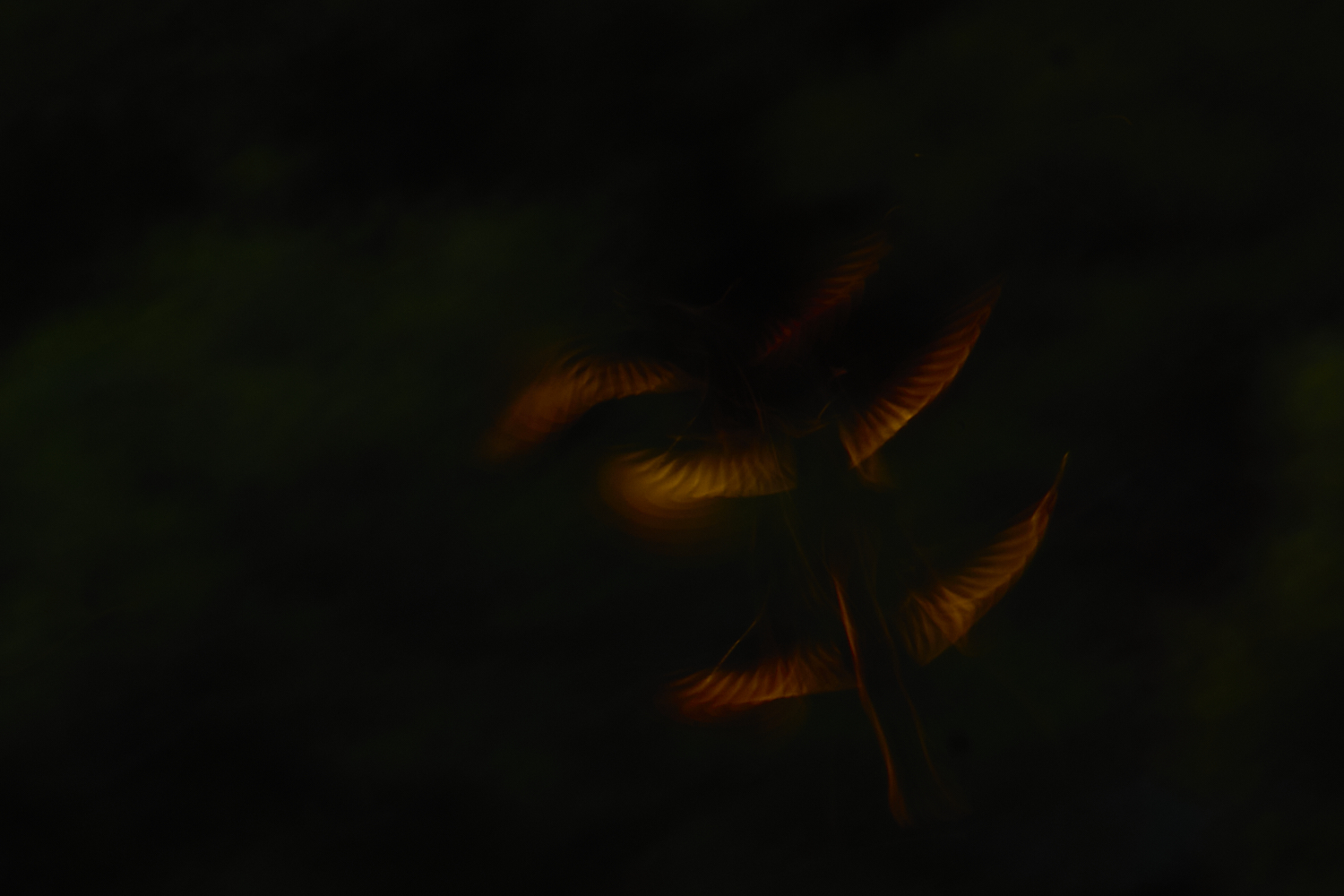
Even though I give myself slim chances, I wait on site until evening. While the vultures continue to be scarce, a few crag martins at least provide some opportunity to play with the camera.
The next day, a few vultures appear again.
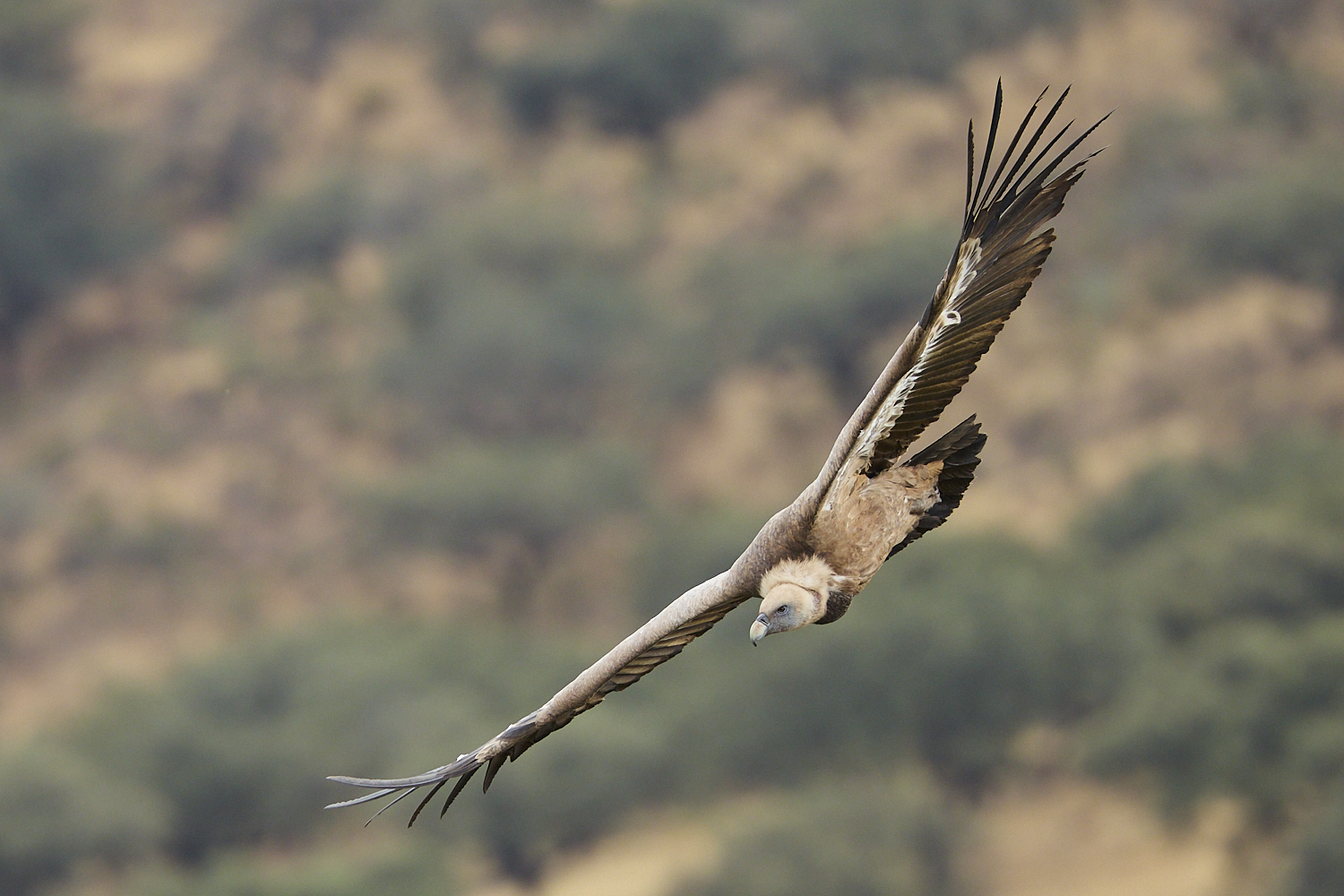
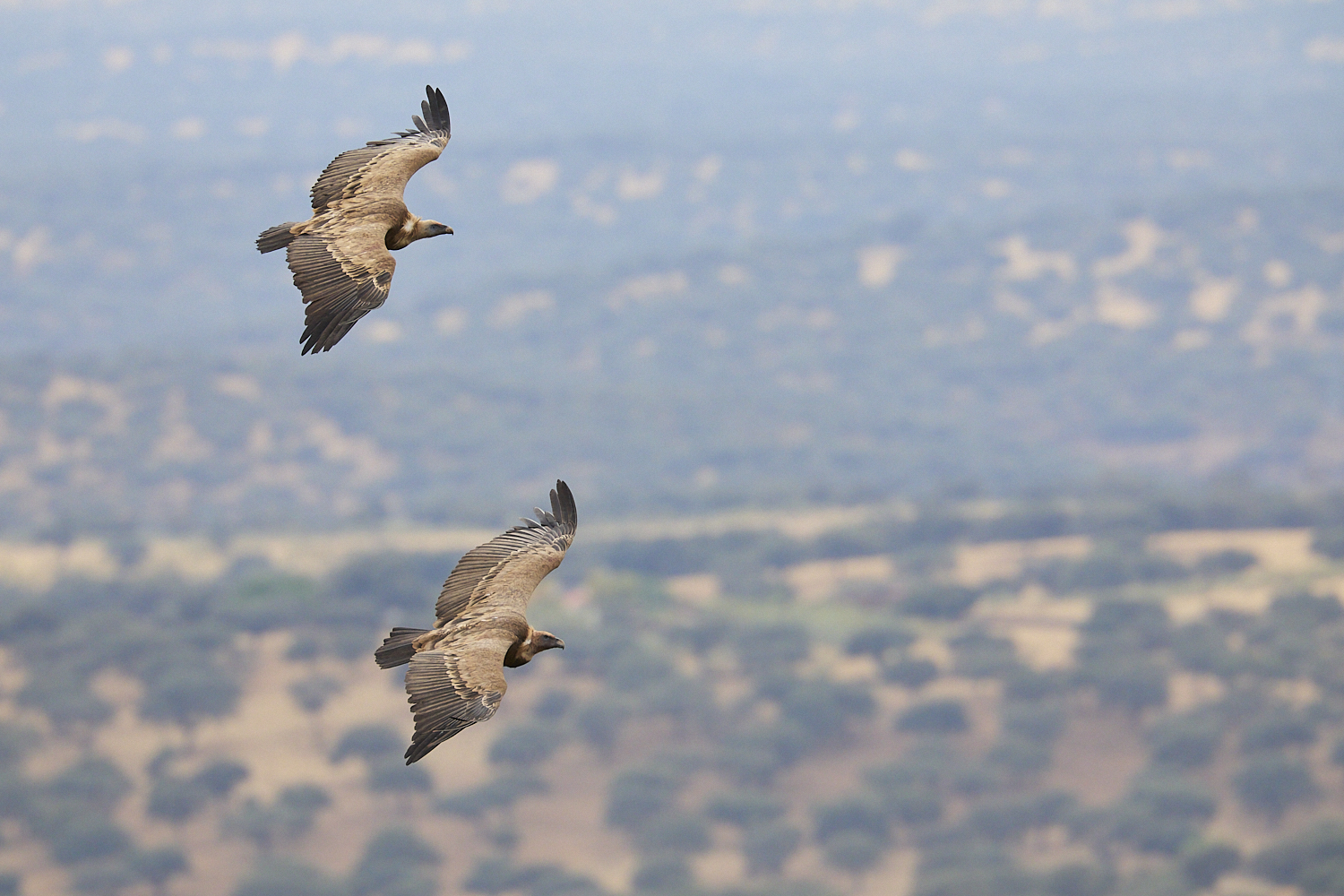
It is always impressive to see the vultures flying along the cliffs. Sometimes the feathers on their heads are still red with traces of blood, so their last meal must not have been long ago.
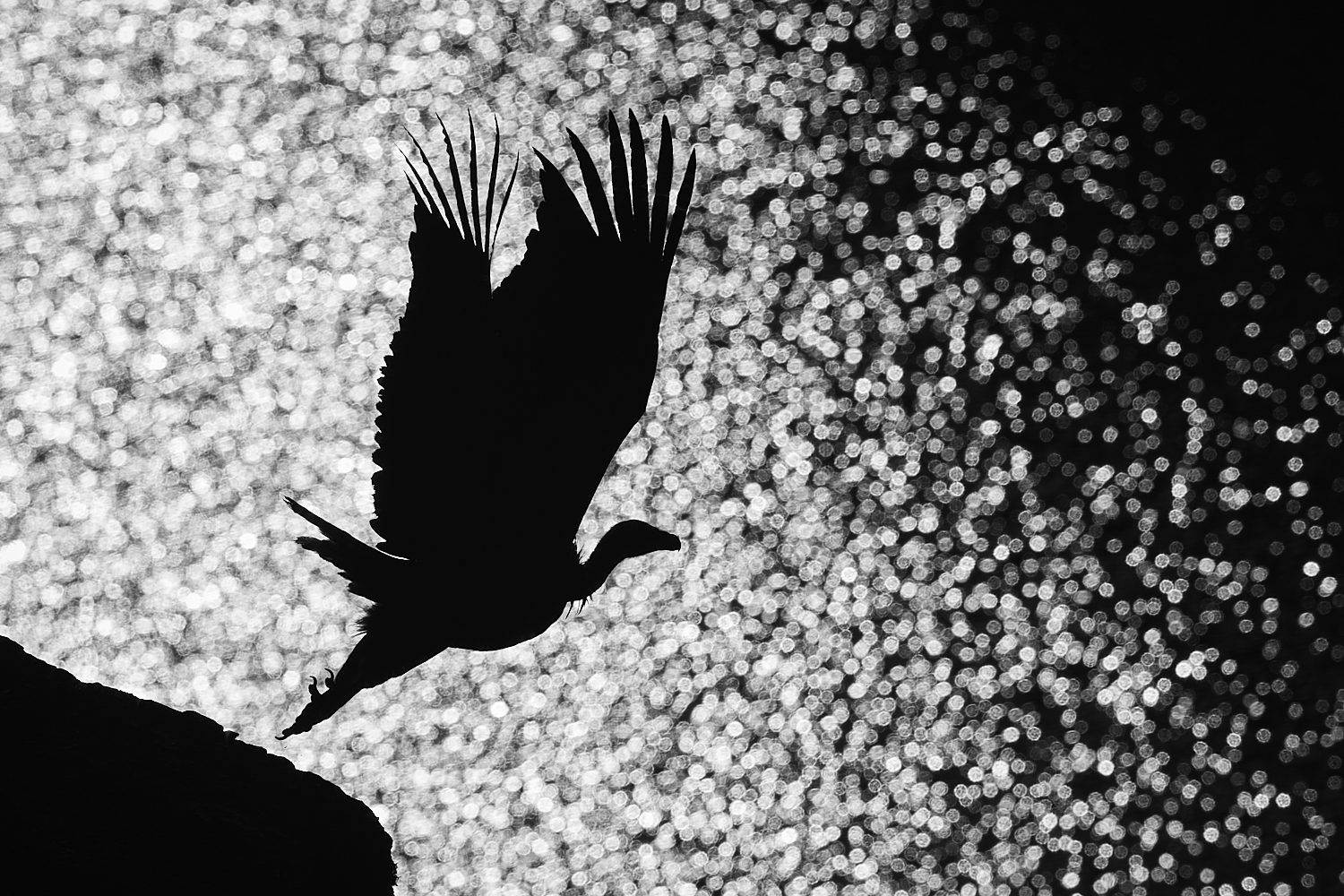
Weighing up to 10 kg, griffon vultures are among the heavier birds in Europe. It’s no surprise, then, that they much prefer to be carried upward by thermals rather than flap their wings themselves. I could have certainly used a “lift” like that on some of the climbs with all my gear on the bike. Despite their mass, their push-off or launch is surprisingly vigorous.
Since I still haven’t been able to realize all of my photo ideas, I decide to stay with the vultures for one more day and postpone my journey south.
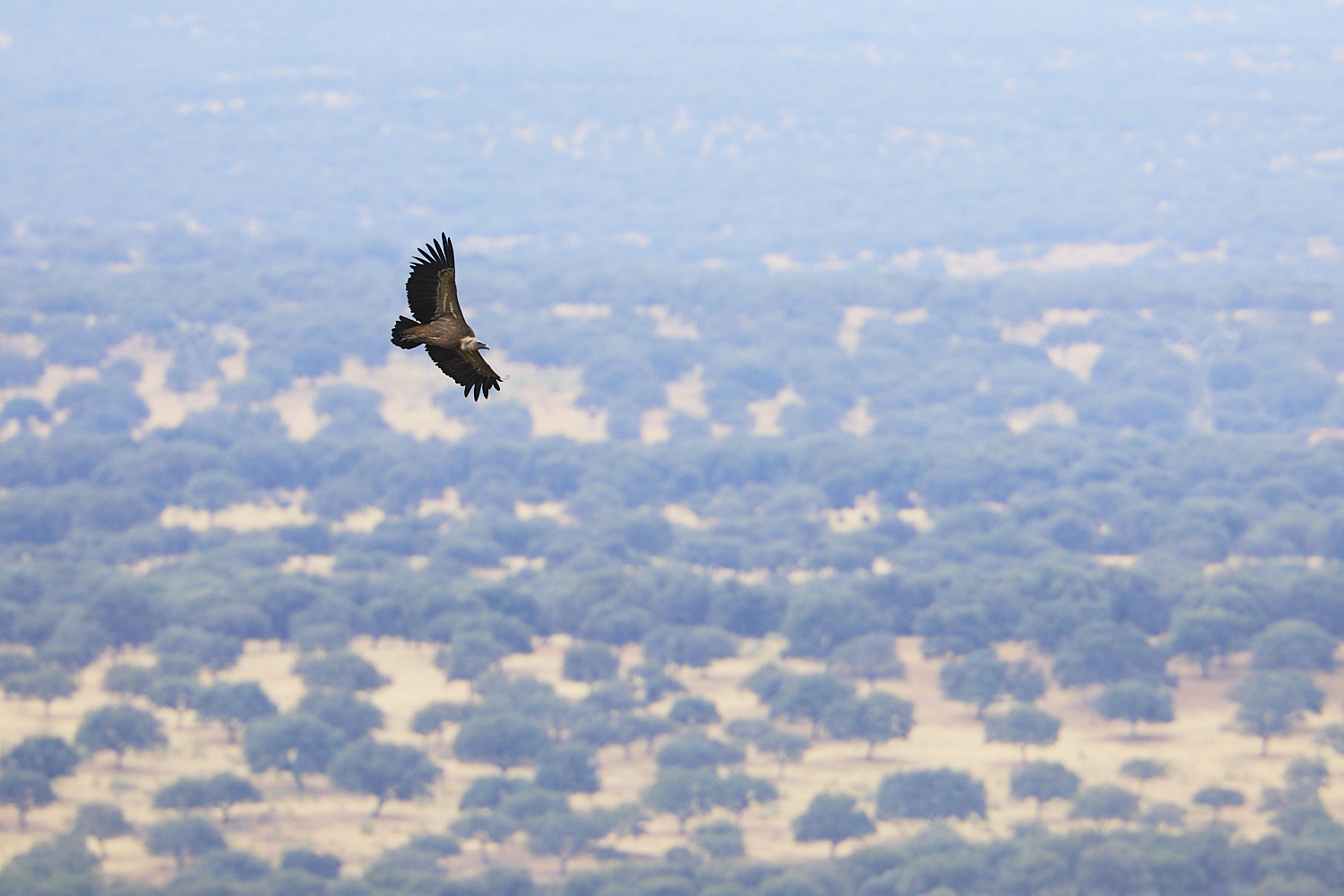
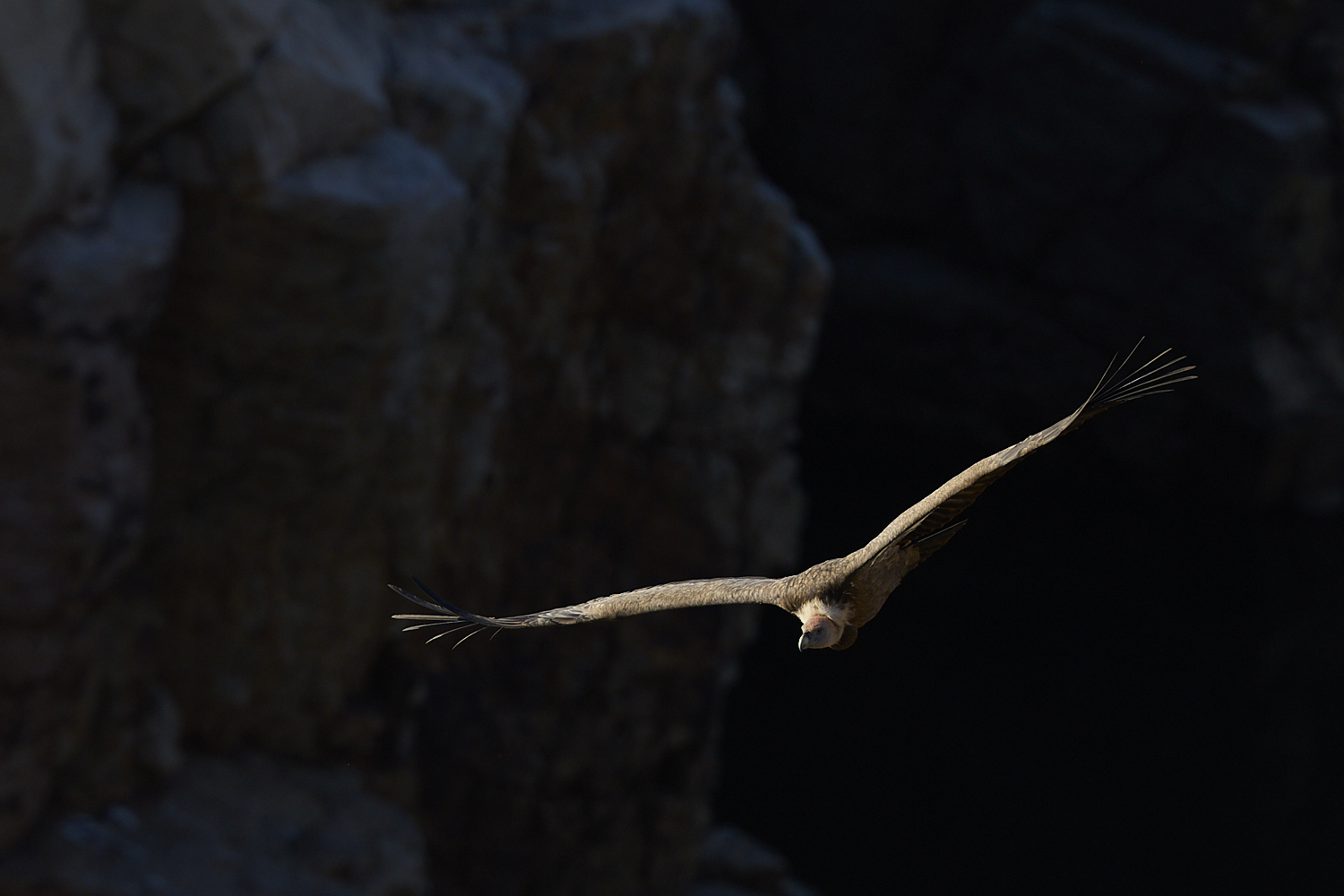
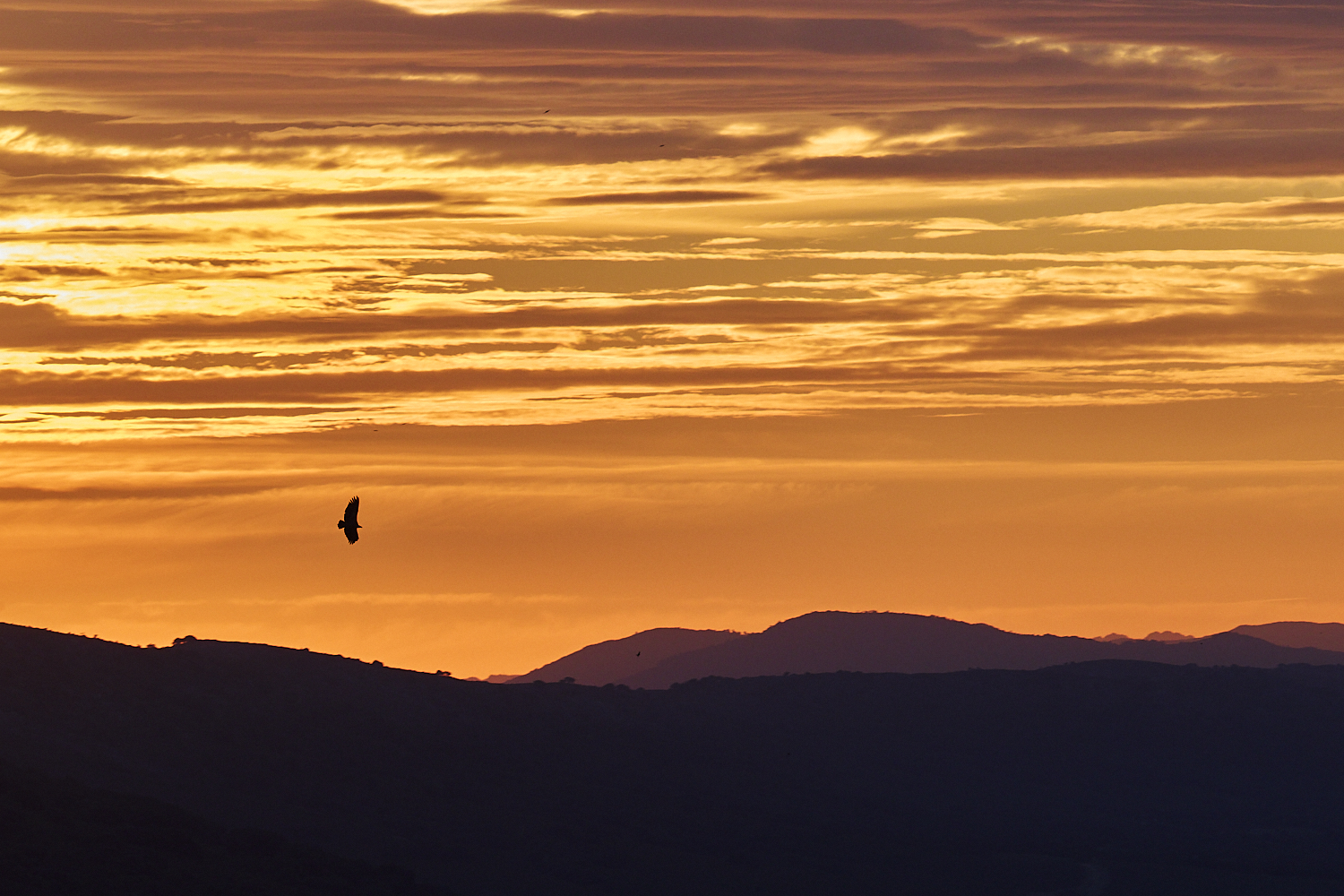
In front of such a backdrop, I would love to capture a vulture in flight. Due to the lack of thermals and therefore inactive vultures at this time, I haven’t been able to do so yet. Suddenly, I spot a vulture in the distance on the horizon, circling alone.
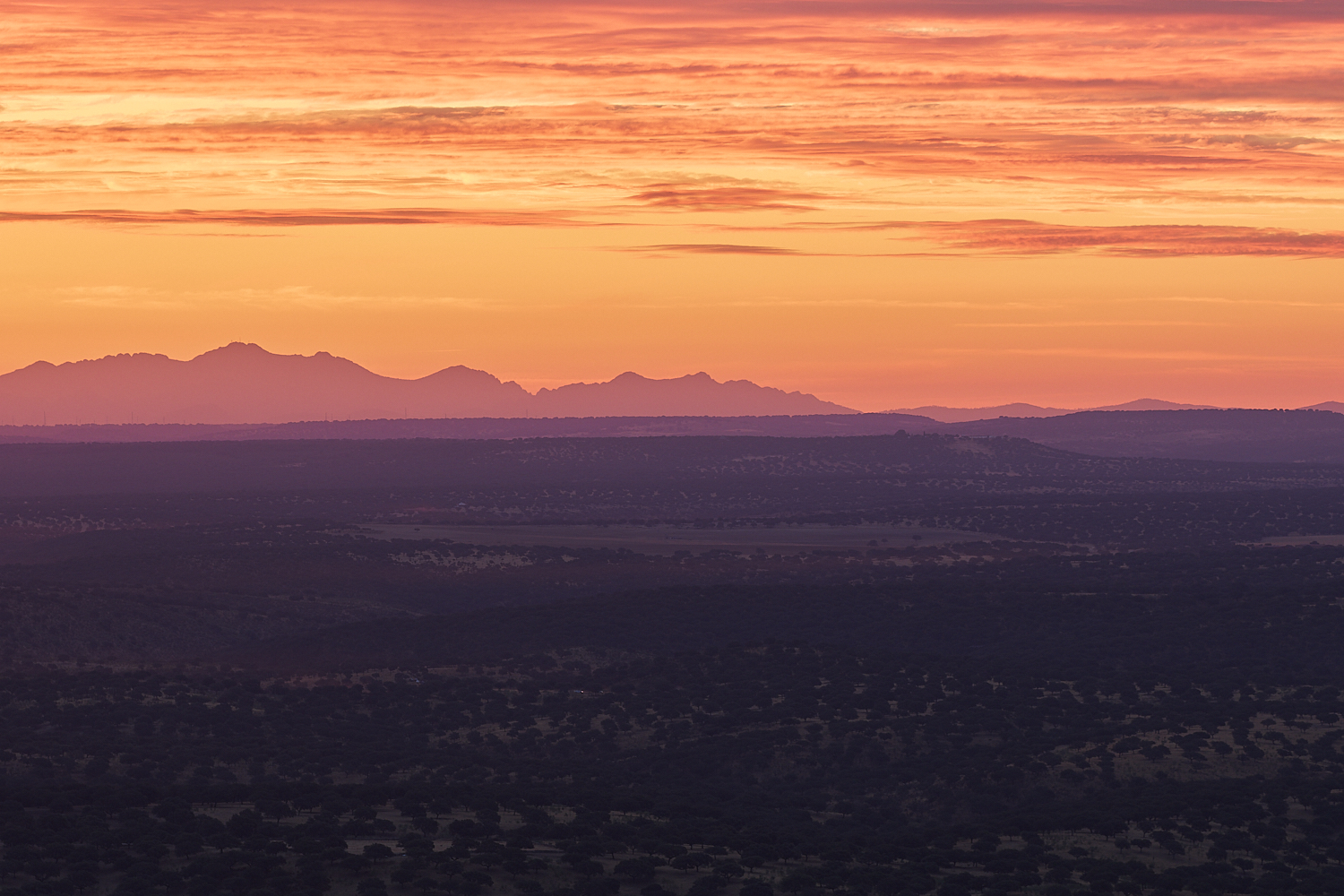
After that, no vultures appear nearby for far too long – and I have to keep waiting for my dream shots. In return, I have time to photograph the landscape. From a bird’s-eye view, the vastness of the terrain becomes apparent. For hours, I rode my bike through this very grazing landscape.
Around midday, the wind picks up, and the thermals seem to be improving. vulture after vulture rises from its niche in the cliff and sails away.
To my great delight, I even spot a monk vulture. In Spain, which hosts the largest population in Europe, monk vultures are about ten times rarer than griffon vultures.
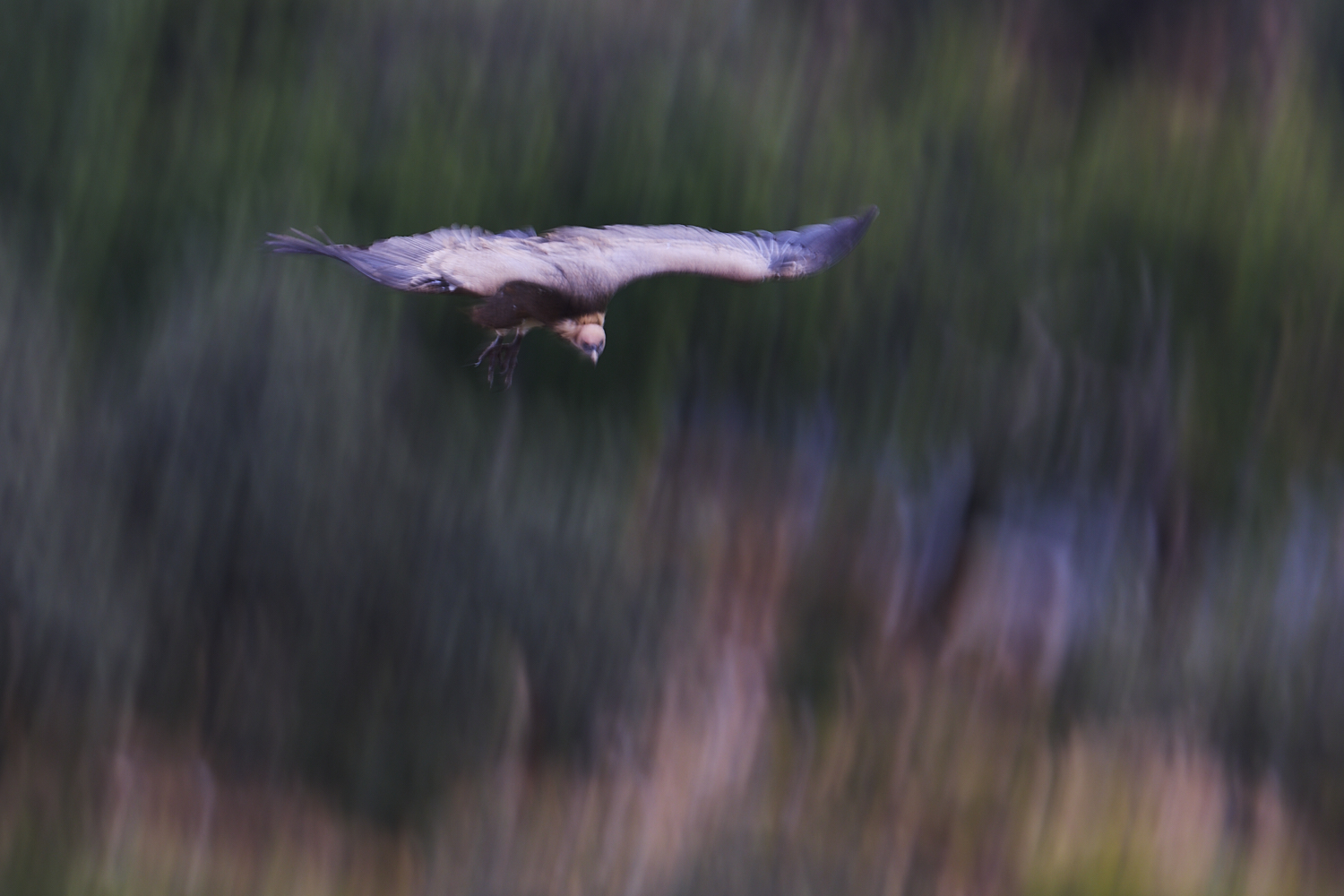
The wind is getting increasingly strong, but it doesn’t bother the vultures in the least. On the contrary, they seem to be playing with the wind, putting on a real aerial show and enjoying the conditions. For me, however, photographing them isn’t so easy, especially when I’m already struggling just to stay upright…
By now, the battery of my camera is practically empty and the memory card full – fortunately, I had decided to stay for one more day. The vultures put on a spectacle like few I have ever witnessed. Now it’s time for me to say goodbye to the vultures and Extremadura, and to pedal further south – full of curiosity for regions I have yet to explore.
Leave a reply