
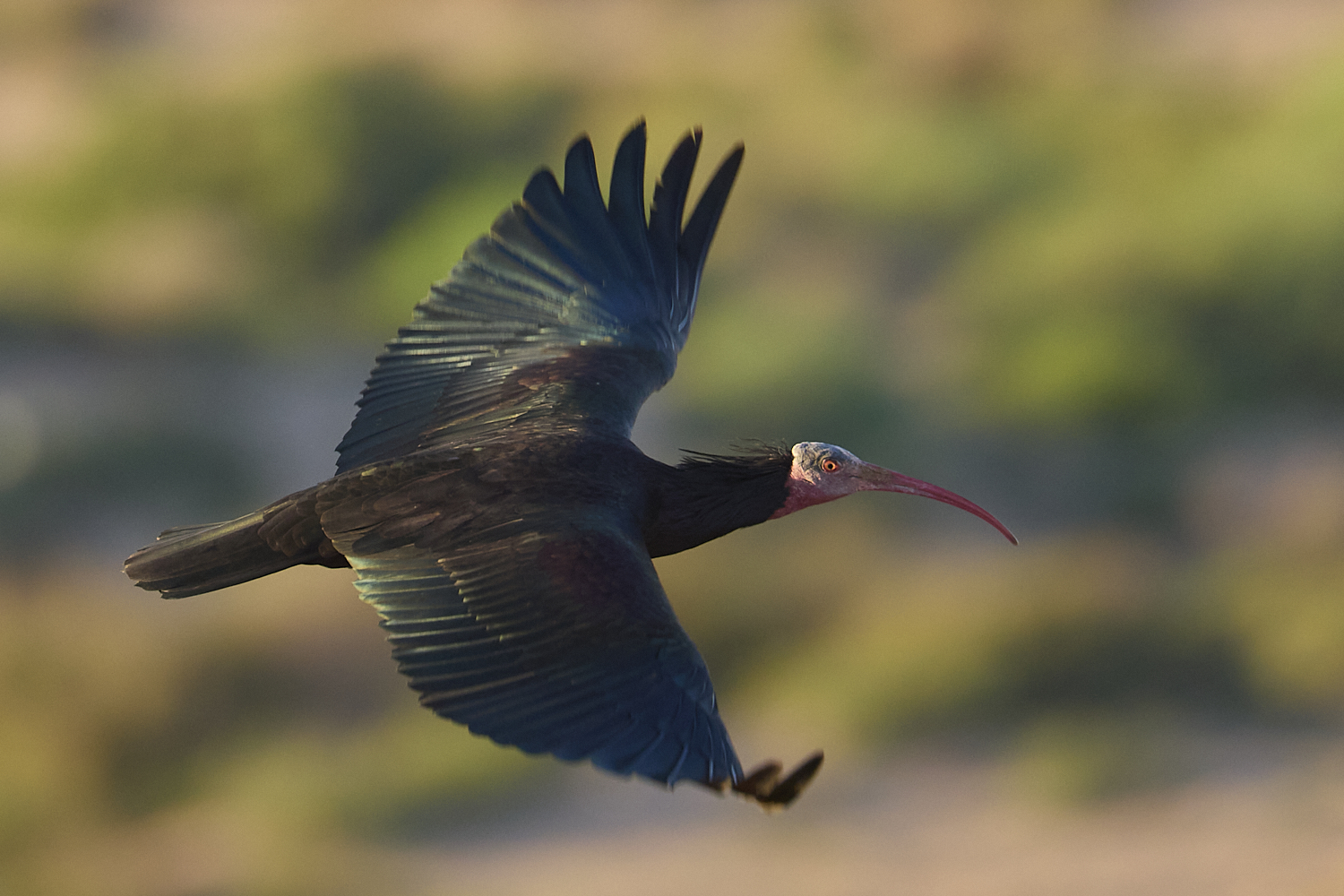
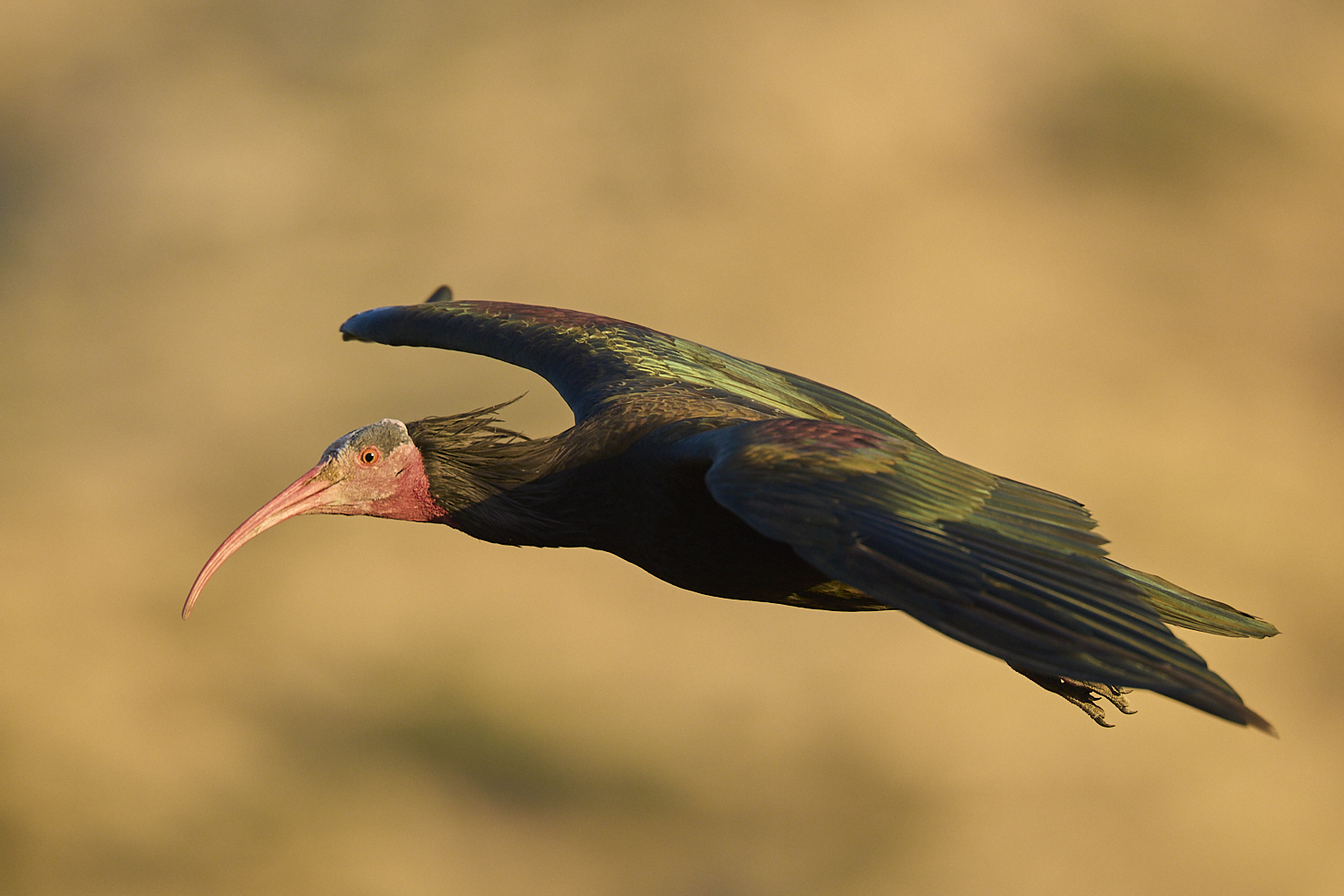
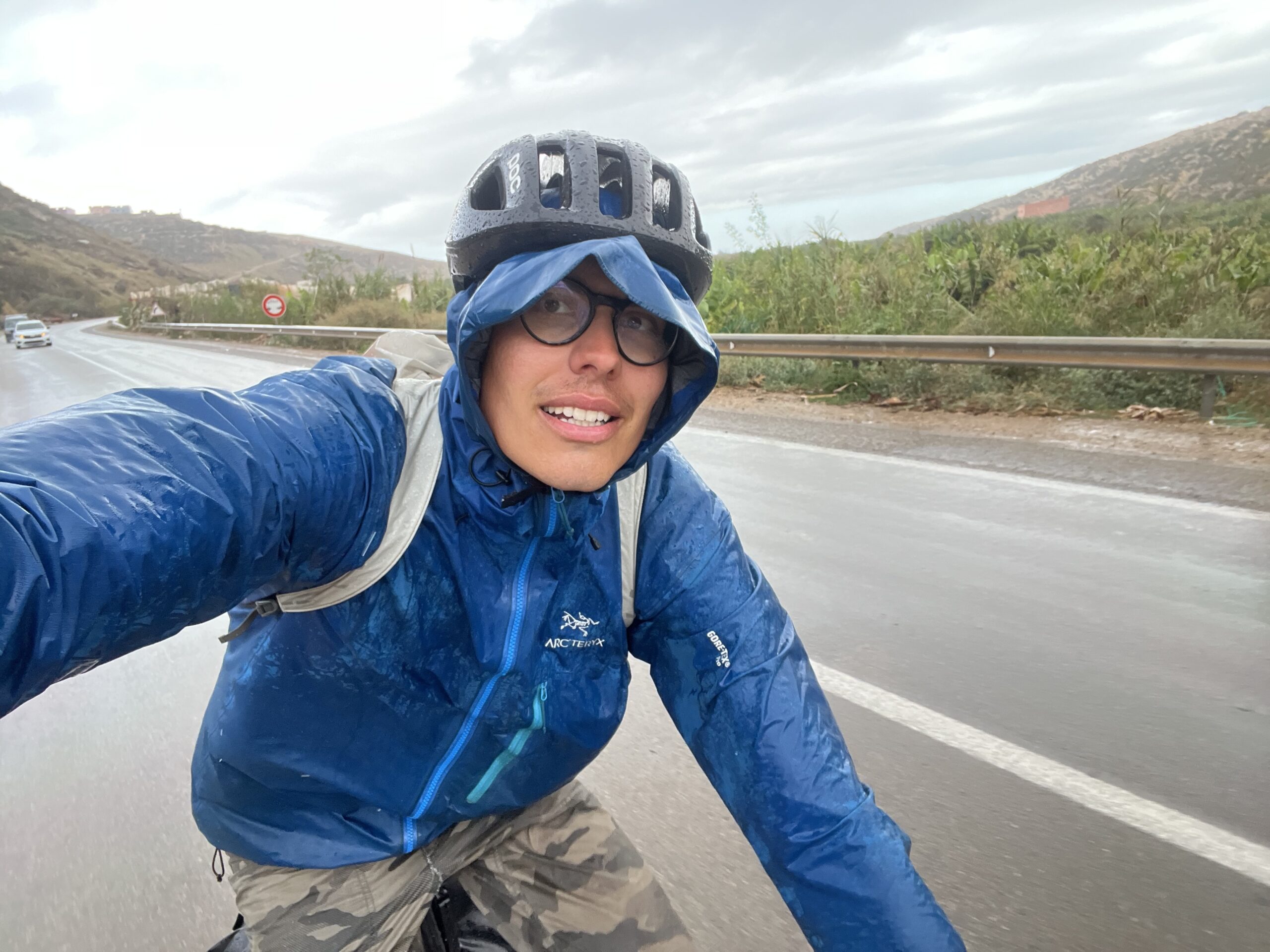
Fully focused, I scan the landscape for suspicious black patches while cycling. So far, however, they have all quickly turned out to be rubbish. It’s not easy to keep an eye on traffic at the same time – in Morocco, a car or even a truck can appear in your lane at any moment – and to search for wildlife. In the days before, sightings of my target species had been reported online along this particular stretch of road. Yet after several hours and more than 50 kilometers along this otherwise promising route, I hadn’t recorded a single fleeting observation of these birds. Gradually but inexorably, a sense of disillusionment sets in. Perhaps it was a bit optimistic to search for one of the world’s rarest bird species alone and by bicycle – especially since, in order to save weight and space, I don’t even have a small pair of binoculars with me.
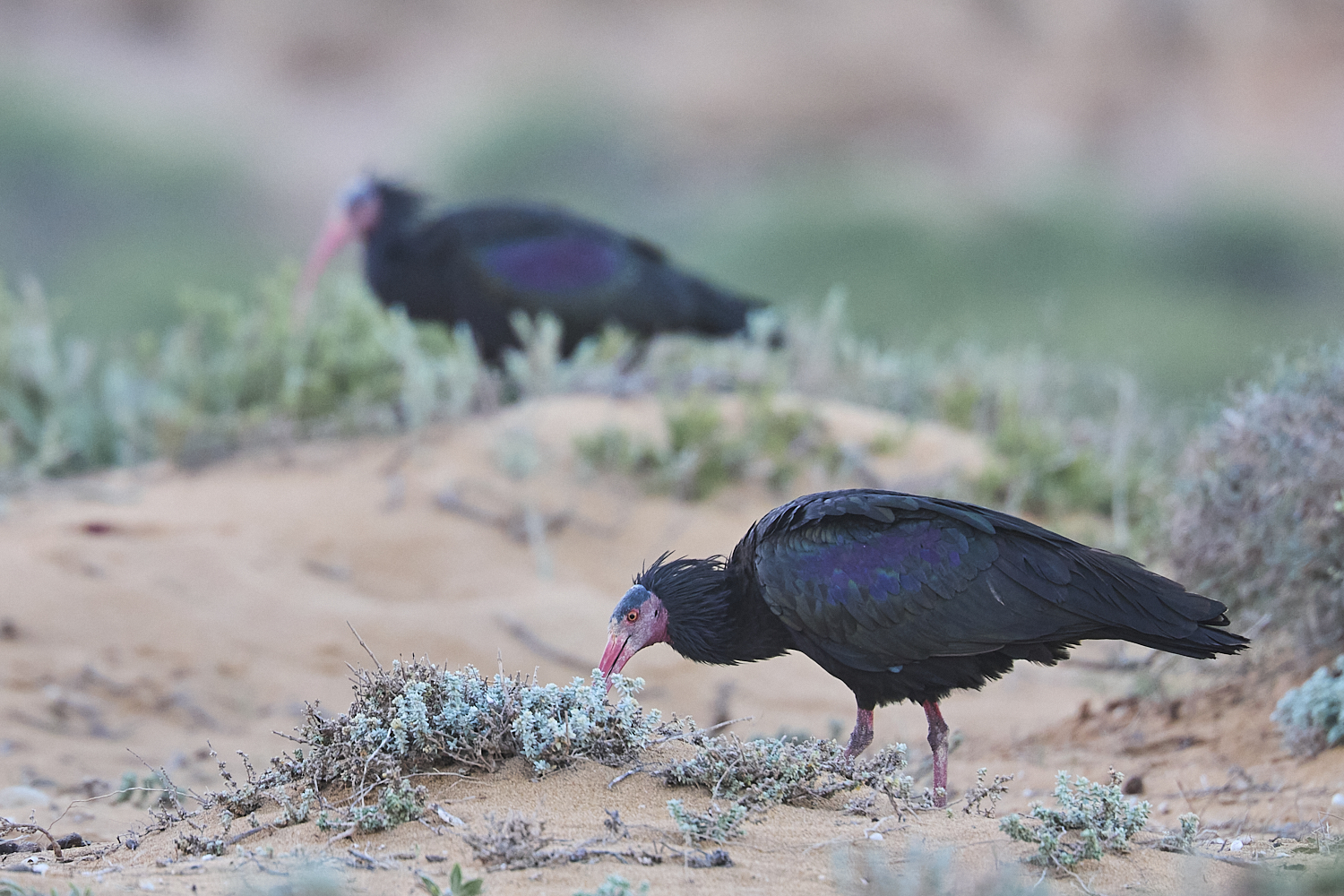
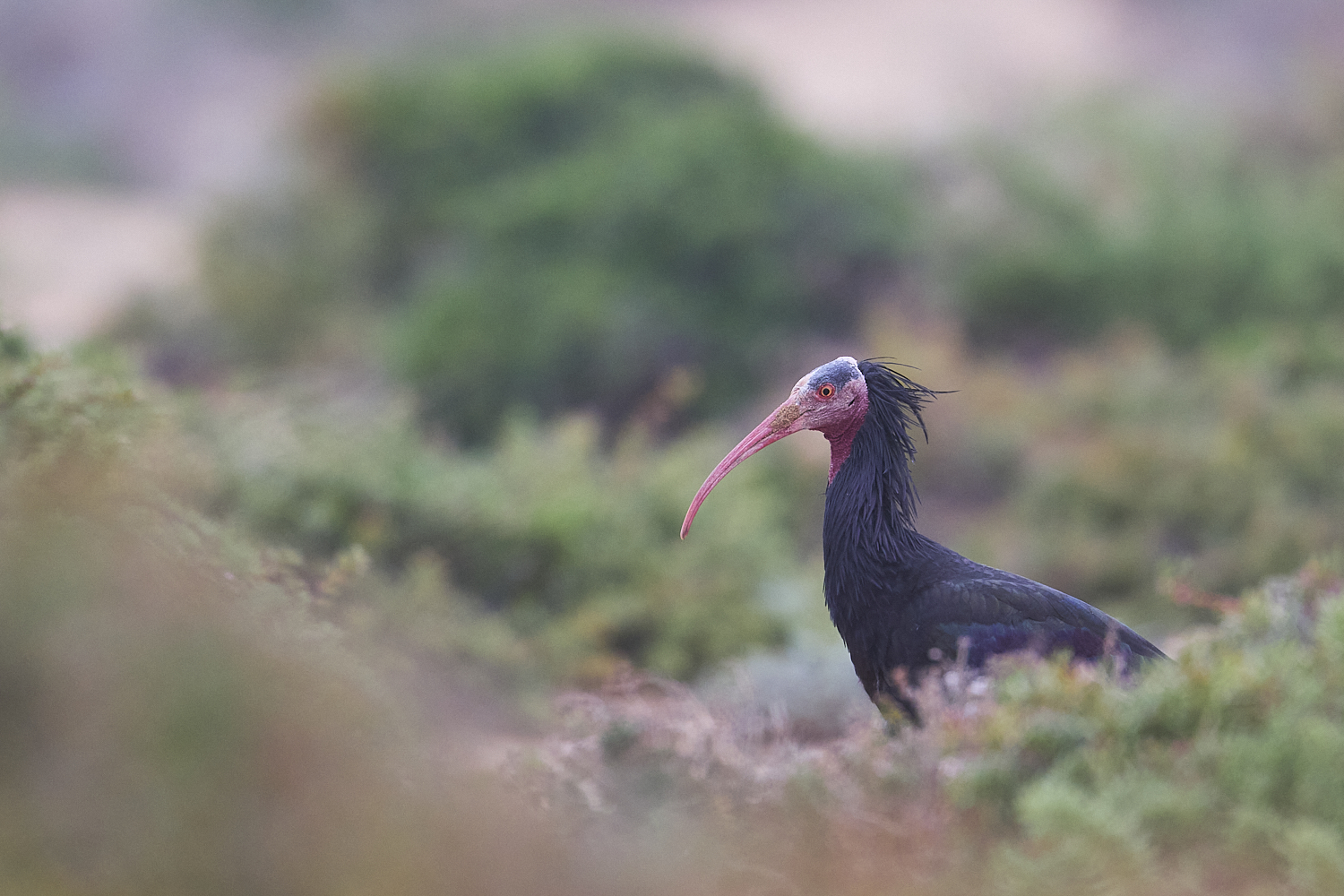
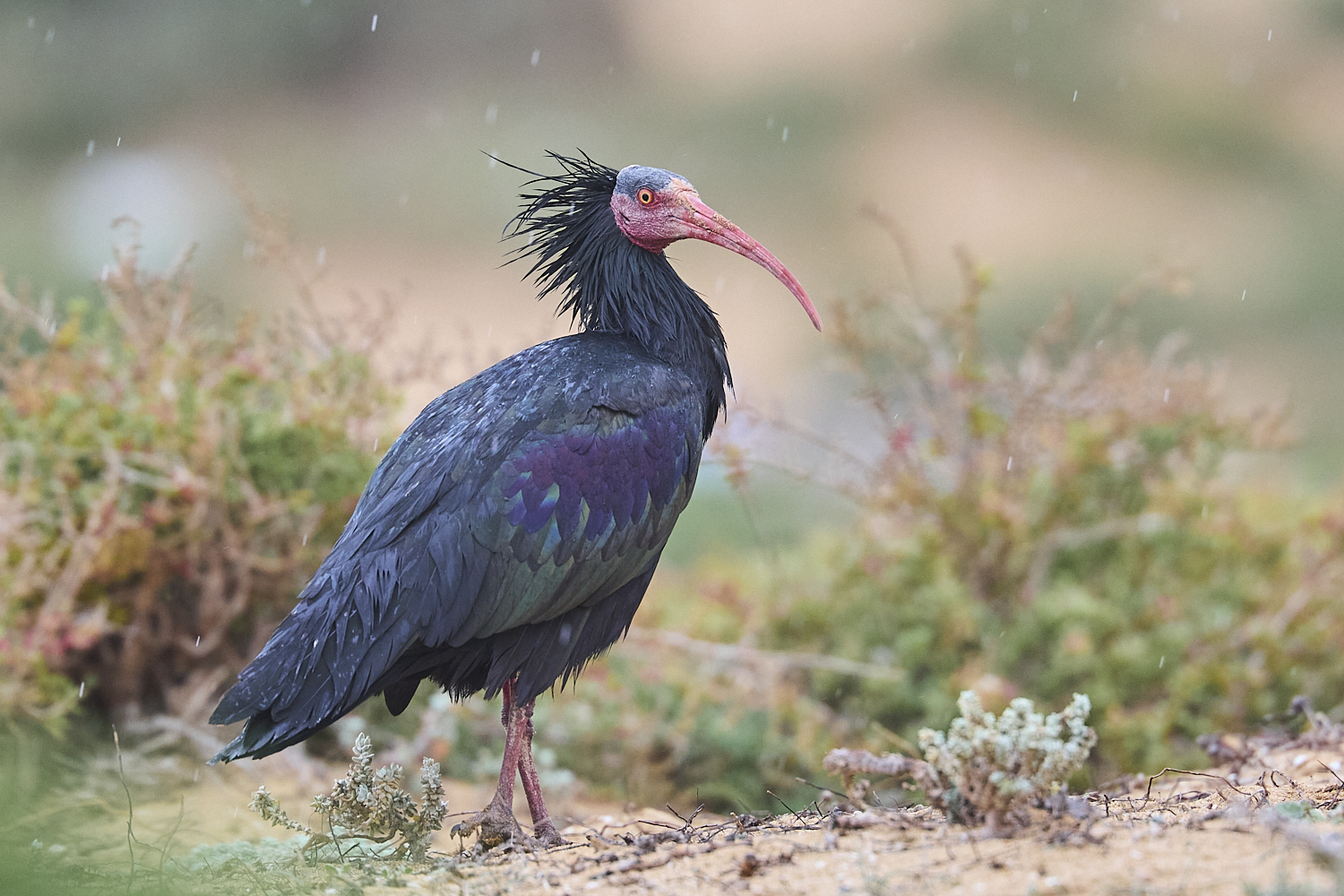
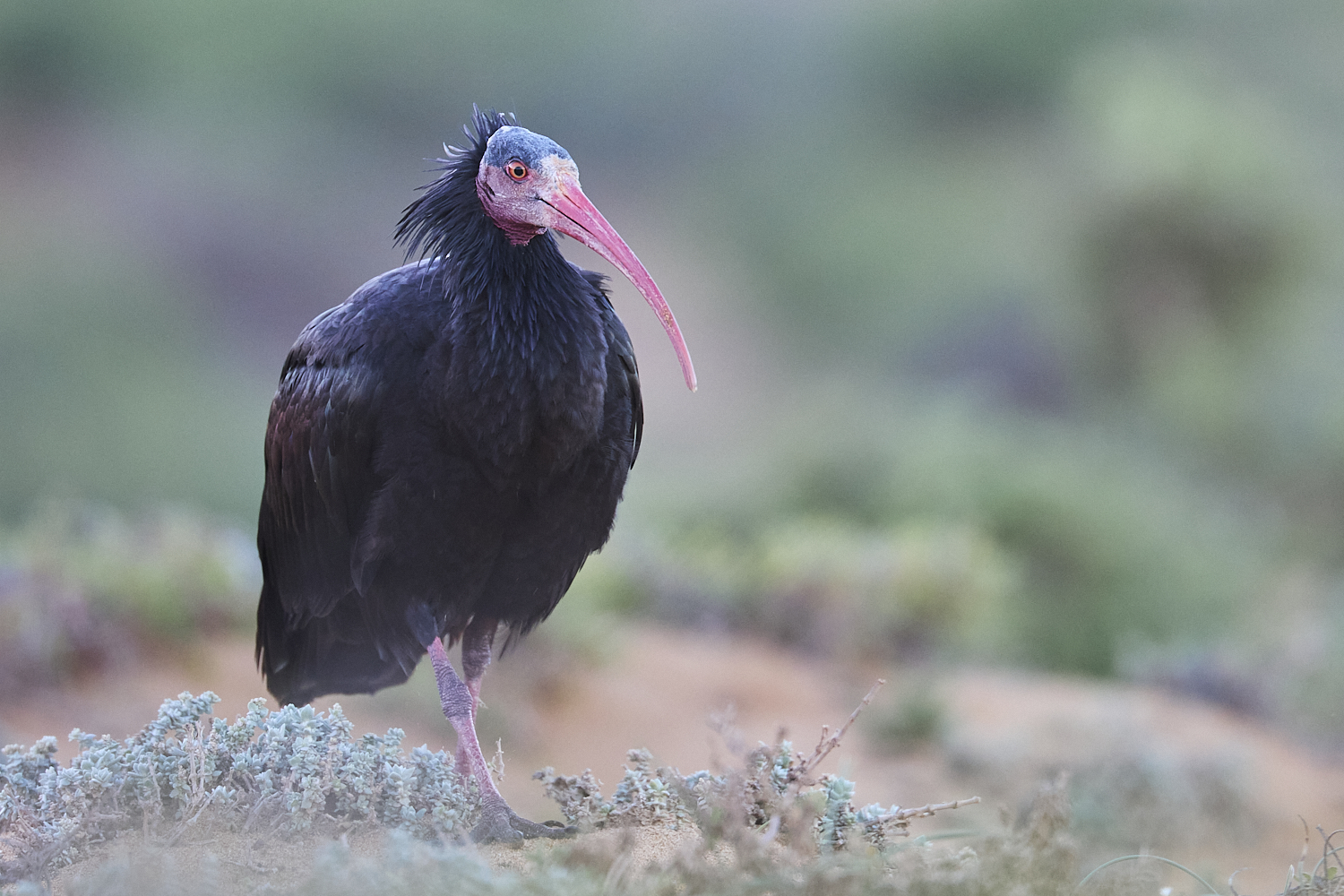
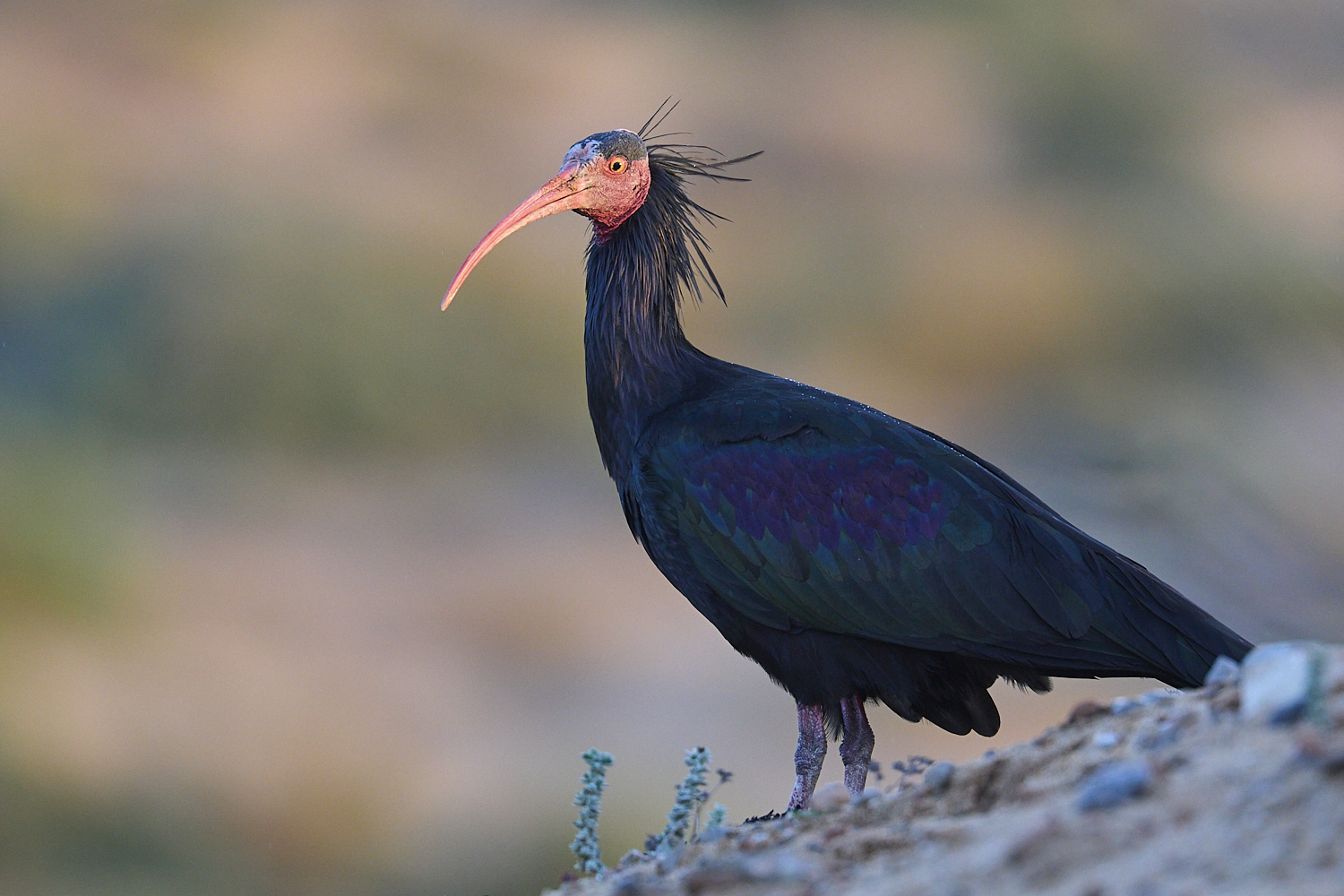
As I question my plan more and more and wonder how I’m supposed to find the birds at all, I at least spot some northern gannets over the Atlantic in the distance. So I can’t be completely blind after all. And then, suddenly, two black birds appear by the roadside. Yes – my search for the northern bald ibis (or waldrapp) has finally been successful! In the sandy ground, they probe for food with their characteristic red bills.
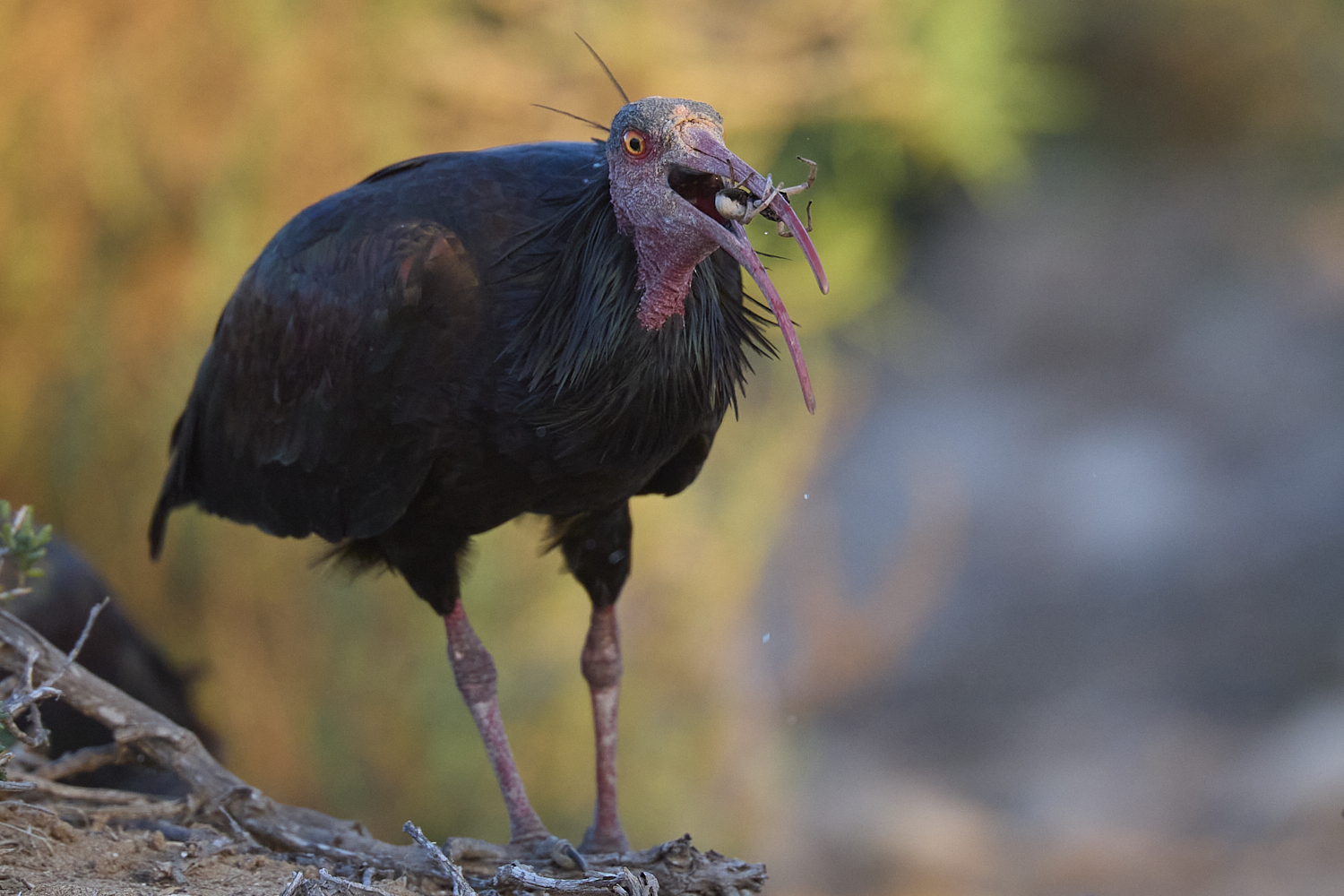
The menu includes a wide range of animal species, from insects and lizards to small mammals – essentially anything that moves and fits into the bill. Sometimes, however, the prey also puts up a fight against being eaten. I imagine that to be quite annoying when your meal tries to crawl back out of your mouth – or rather, your bill 😉
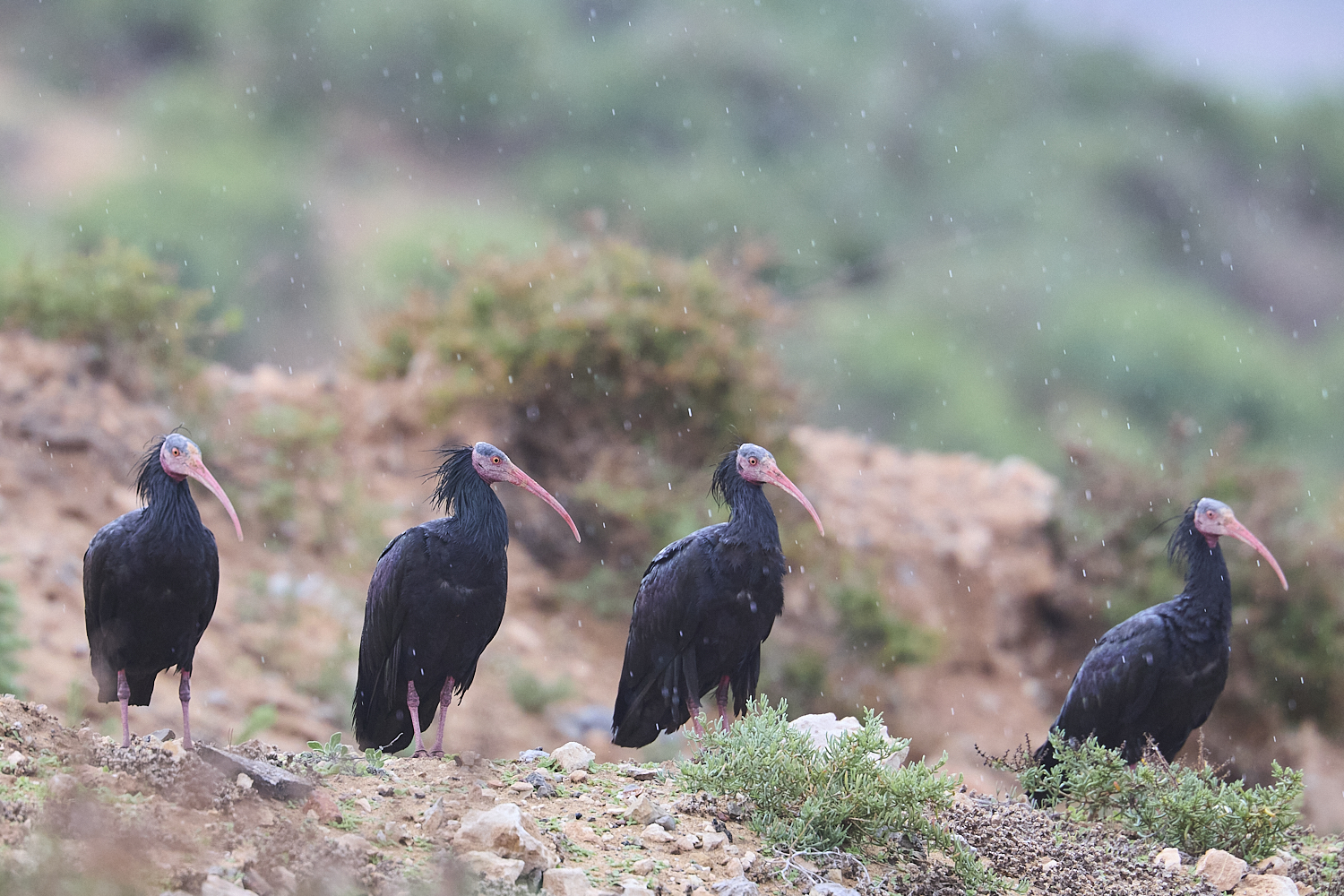
More and more northern bald ibis appear among the vegetation or fly in.
Centuries ago, northern bald ibis also lived in southern and central Europe. Due in part to the loss of steppe habitats and intensive hunting – the birds were considered a delicacy – only a small wild population remains today, found exclusively in Morocco. Thanks to conservation measures, Morocco’s population is increasing again, from around 80 breeding pairs in the 1980s to more than 150 breeding pairs today. In addition, there are extensive reintroduction efforts underway in Europe.
Surprisingly, the entire group rises and flies off, presumably to their roosting spot in the cliffs. Thus, my first photoshoot with these oddly charming birds unfortunately ends before the light could become truly spectacular. For me, it’s also time to find a place to spend the night or a proper accommodation.
The next morning, luckily I don’t have to ride 50 km to find the northern bald ibises. However, they are in a protected, i.e., fenced-off area, so I can’t really photograph them. To my delight, they soon take off and land outside the restricted zone. I try to memorize the landing spot well and am excited to start photographing soon. Yet, apparently, the ibises have a different plan. Even though I actually saw where they landed, it feels like half an hour passes before I manage to find them again. Slowly but surely, it dawns on me why I couldn’t locate them quickly the day before…
As I had hoped, gray clouds cover the sky today. The soft light allows me to photograph all day, giving me a longer opportunity to get the northern bald ibis in front of the lens.
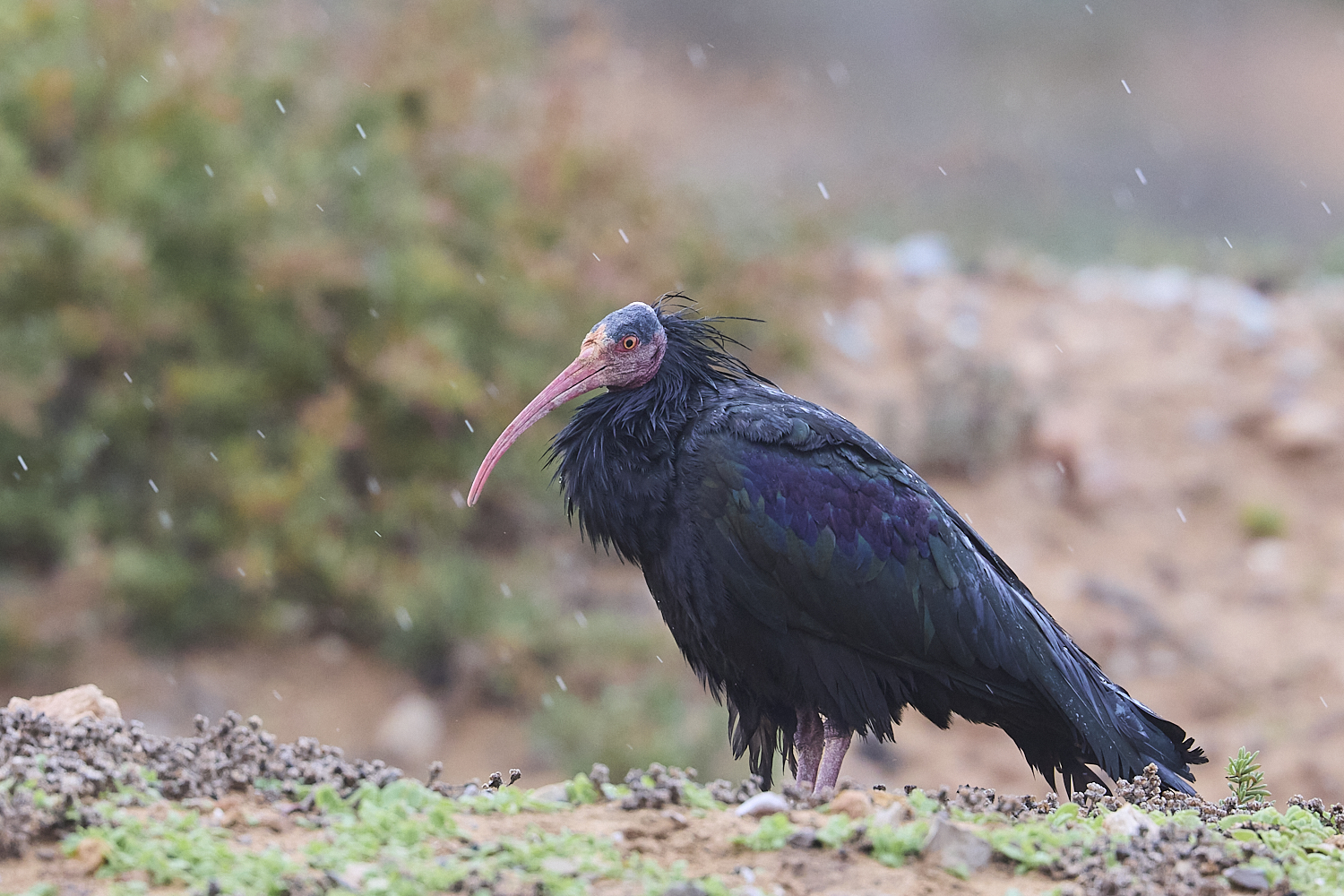
However, the thick clouds don’t come alone: soon the first raindrops start falling from the sky.
The raindrops grow more and more numerous until it’s really pouring. Up to this point, I had never experienced such a heavy downpour in Morocco.
The activity of the northern bald ibis is now slowing down; they, too, don’t seem particularly thrilled about the weather.
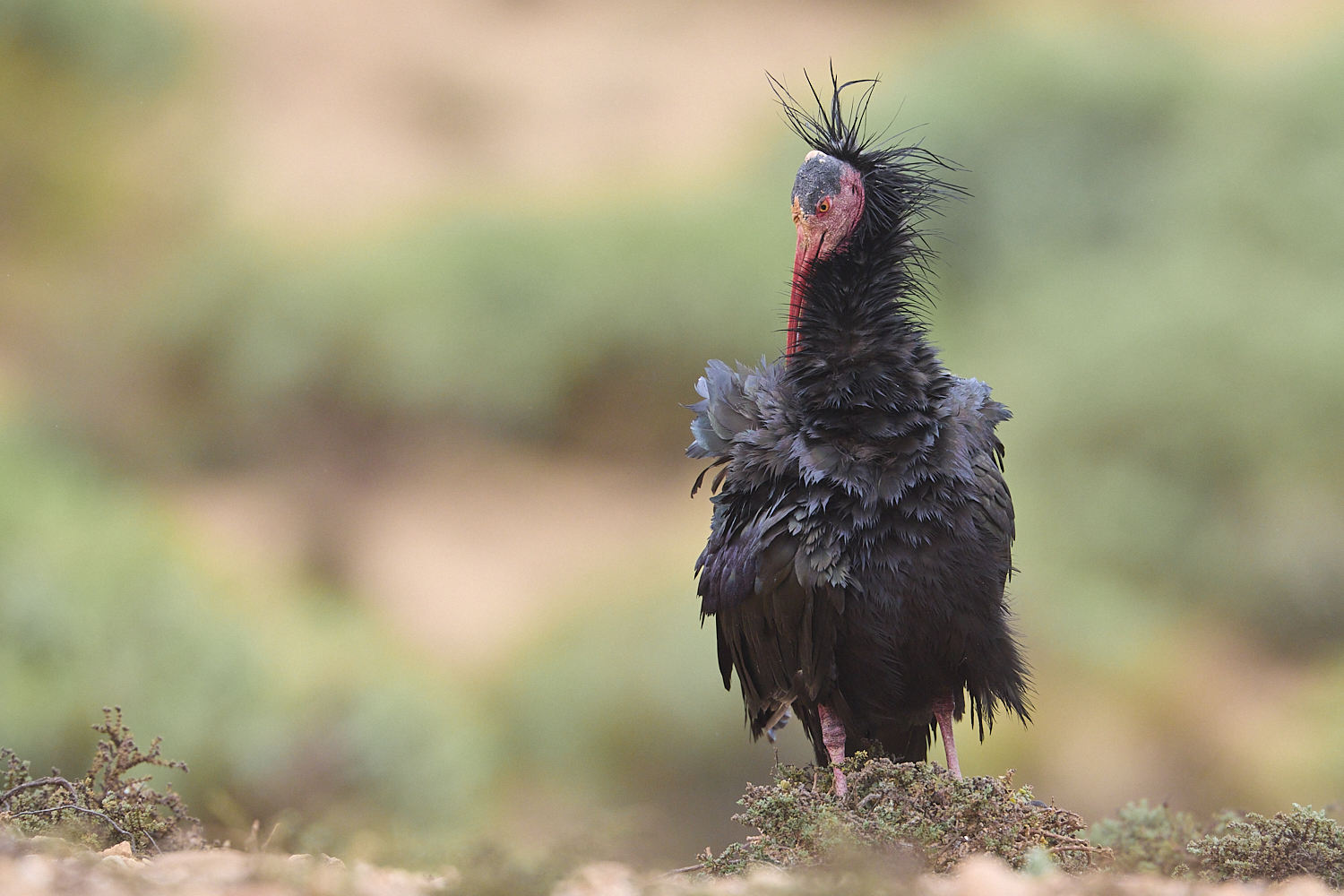
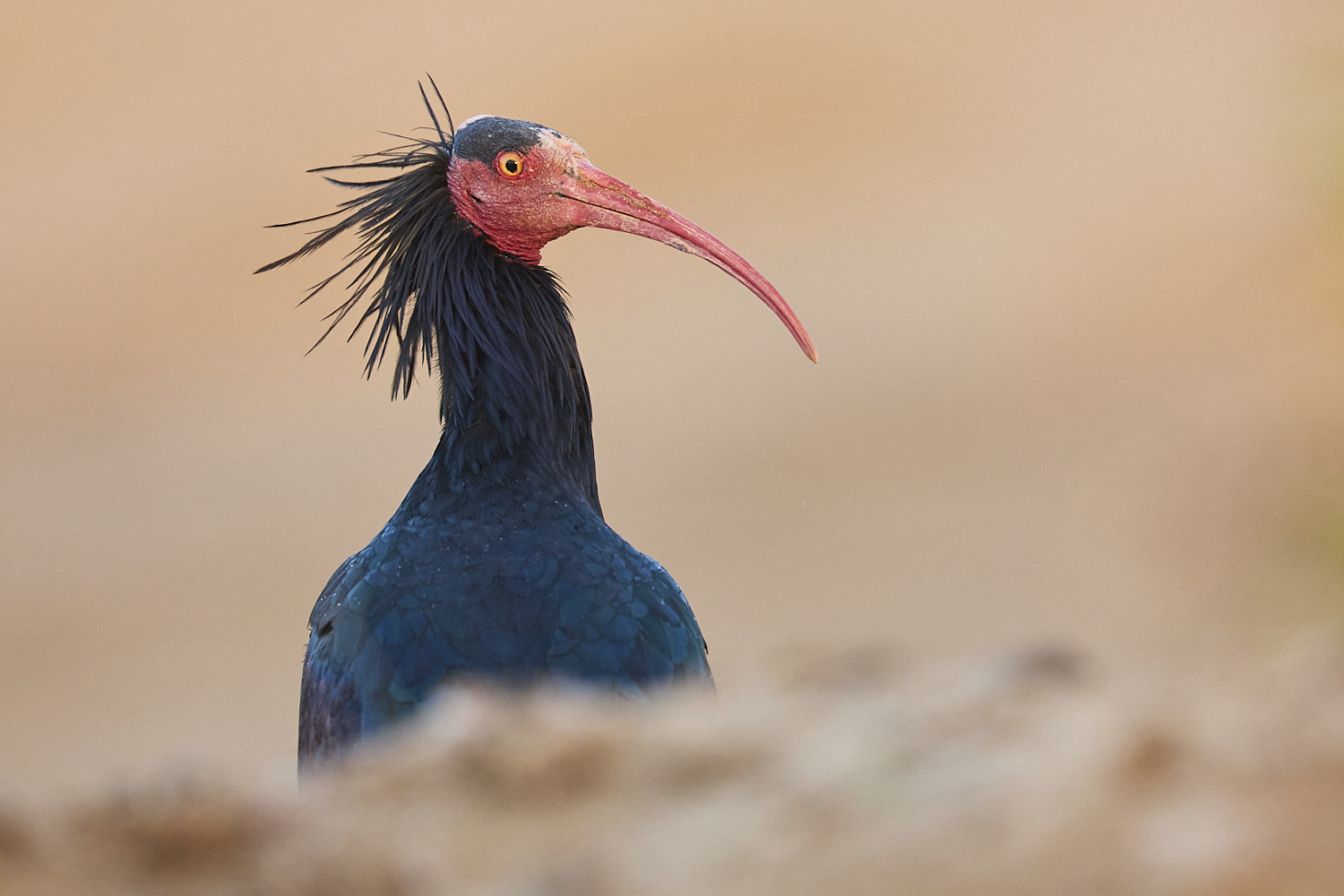
After the rain shower, the northern bald ibis need to straighten their feathers before continuing the photoshoot. If you already have a bald head, at least the remaining feathers should be in place.
However, the rain break doesn’t last long, and it soon starts pouring again. Fortunately – contrary to my original plan – I set up my base camp in a hotel room. At least I have some space to “dry” my clothes, although without heating or a hairdryer, it’s somewhat of a lost cause.
So it’s no real surprise that my clothes are still wet the next day. I have to overcome myself to slip into the damp, cold clothes early in the morning and ride off in the dark, instead of staying cozy in bed. Fortunately, I manage to conquer my inner laziness. Today, I find the northern bald ibis again. The more time I spend with these quirky birds, the better I understand their behavior. Increasingly, I succeed in positioning and hiding myself so that the northern bald ibis walks straight toward me.
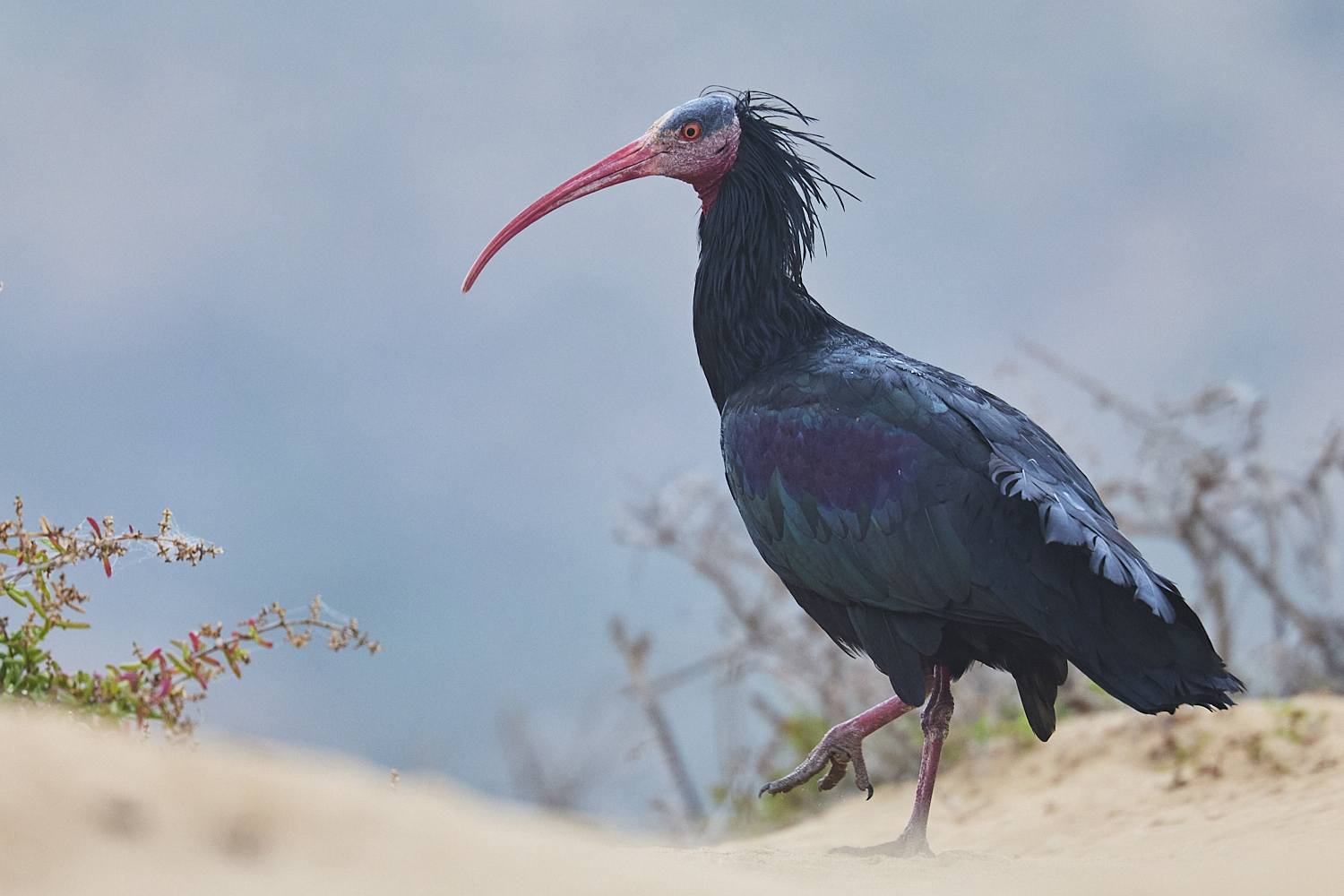
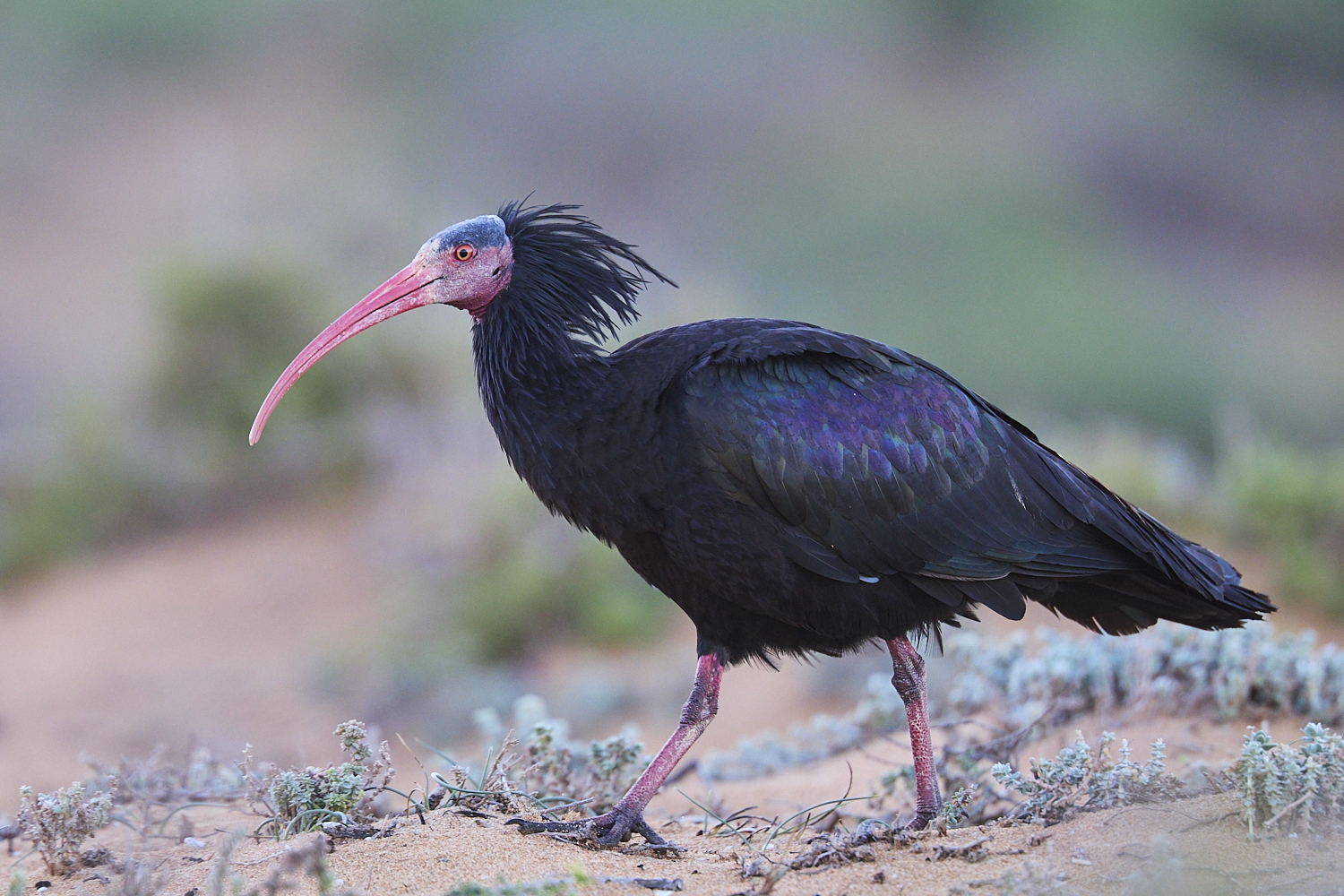
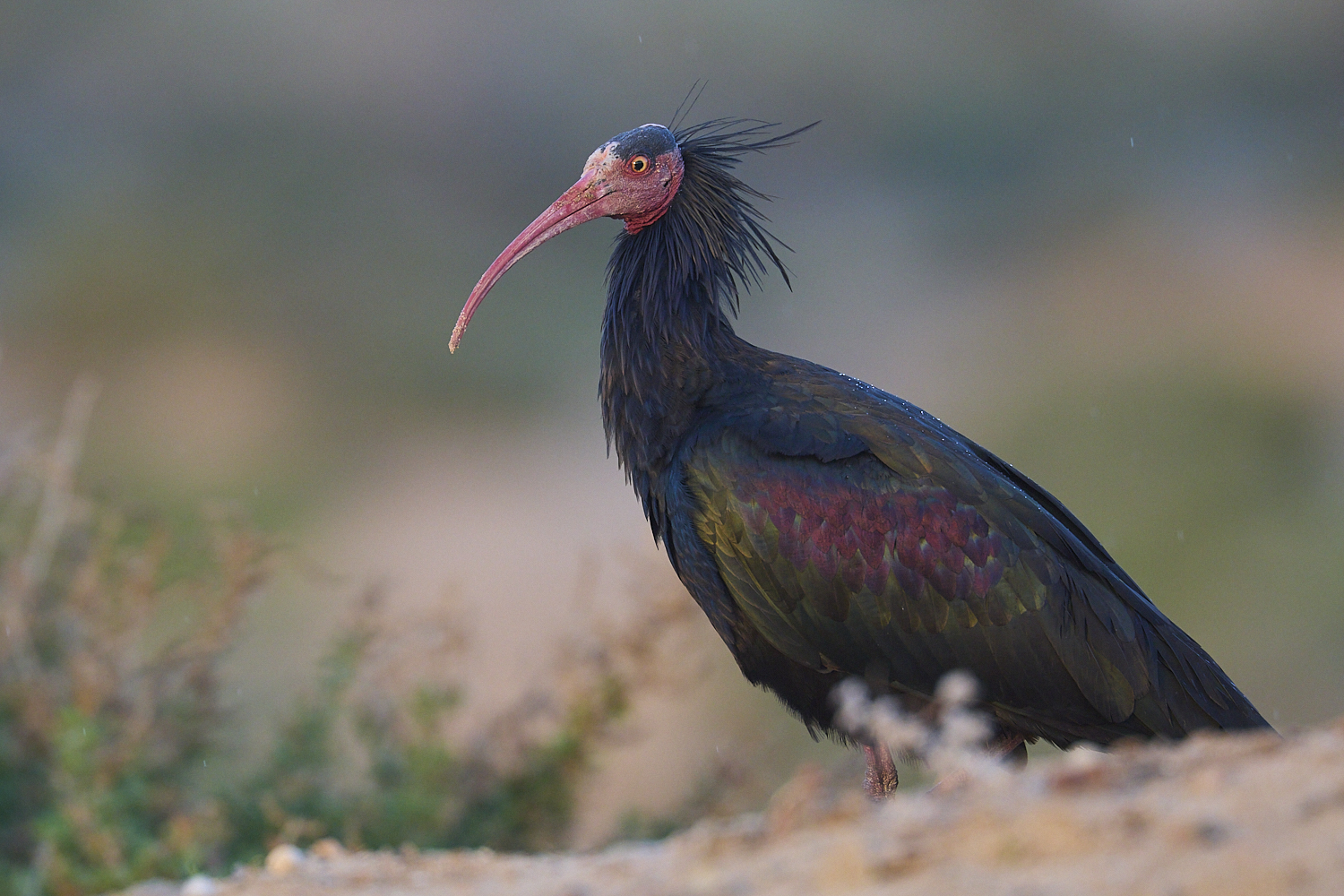
With every step the northern bald ibis takes closer, my tension rises. I hope they don’t notice me and, above all, that they don’t suddenly change direction. My pulse keeps climbing with excitement. Just don’t make a wrong move! Fortunately, today’s cameras have no mirror clatter when firing, so the northern bald ibis cannot hear the shutter. They continue walking toward me. Up close, it’s also clear that their plumage is far from simply black, instead shimmering in a range of colors.
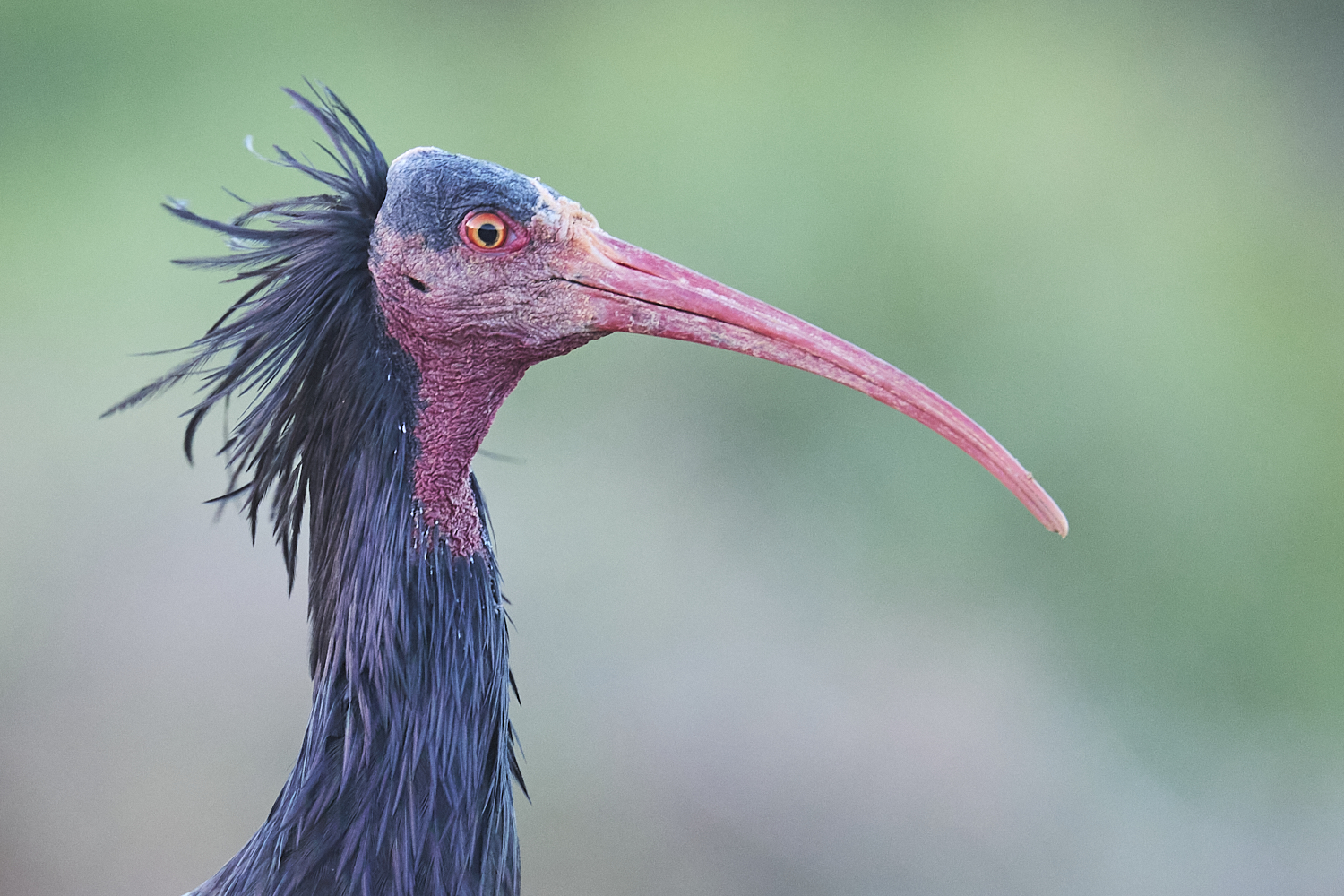
The northern bald ibis is often dismissed as an ugly bird. Yet upon closer inspection, with its shimmering plumage and red bill and head, the bird is actually quite photogenic.
In the evening, the sun breaks through the clouds once more, while it continues to drizzle intermittently, creating a special light atmosphere.
The raindrops bead off the feathers on the back. The body of the northern bald ibis stays nicely dry. I feel even paler with envy than I already am from my damp, wet clothes.
The northern bald ibis’s hairstyle is quite impressive. I wonder how many dirhams that cut – or a visit to the hairdresser – would cost? The pricing here in Morocco never ceases to surprise me, both in a positive way (e.g., a basic trim in a small rural shop: 10 dirhams) and in a negative way (e.g., a little water to clean the bike: 20 dirhams). One of my biggest financial surprises came when I paid 30 dirhams (~3 CHF) for a haircut – despite the fact that rarely has a hairdresser spent so much time styling my hair. That said, the result wasn’t quite as stylish as the northern bald ibis’s haircut 😉
During my days with the northern bald ibis, I kept wondering where the bird actually got its German name (Waldrapp, which translates to forest rapp). Unlike all those desert birds, whose names usually include very fitting references to the “Sahara” or “desert”, there is no forest to be seen anywhere here. I also waited in vain for a “rapp” from the birds – at most, I could hear a faint croak. Just a label or name trick? An internet search reveals that in Old German, “rapp” means “to croak.” However, the word – as the northern bald ibis itself in central Europe – had already gone extinct centuries ago. “Wald” could refer to “wild-living.” Apparently, this was a common naming convention in the past, though I find it quite misleading. Perhaps it’s time for an update to this somewhat dusty German name 😉 The English name is way more accurate. In Morocco, the northern bald ibis has survived in semi-deserts, where human pressure and persecution have historically been low compared with other regions. The conservation project in Morocco has been successful so far, and the growing population gives hope that the northern bald ibis may once again be seen in other regions in the future.
I’m definitely glad that I took a detour to – or made a stop at – the northern bald ibis. After some initial skepticism, I no longer regret not hiring a guide for this. In the end, my emotions are far more intense when, after hours of searching and doubting, I finally find my subject myself, rather than having it presented on a silver platter by a guide from the car. Moreover, for the Velomad project, I want to capture as many images as possible on my own and cover the entire route – except for the strait at Gibraltar – by bike, keeping my ecological footprint small. Fortunately, my memory cards at the northern bald ibis haven’t stayed empty, and I can continue northward with many unforgettable experiences in my backpack.
Leave a reply